|
|
||||||||||||||||||||||||||||||
|
6. Kerosene heaters and cookers
12.
Electrical; generators
Miles Stair's
SURVIVAL
Miles Stair's
SURVIVAL
|
KEROSENE HEATERS Photos of Heaters - Site Index for all things Perfection
World's Largest
Selection of Wicks! There are still excellent heaters available, but care must be taken in their selection. Excellent used heaters can still be found at garage sales or on eBay...most simply need routine maintenance and a new wick to work perfectly. Be sure to read ALL of this page to see the differences between convection heaters and radiant heaters, plus recommendations for various heaters. I have many more articles on various topics concerning modern kerosene heaters, flame spreader heaters, kerosene fuels, center draft lamps such as the B&H, Rayo & P&A Royal on my web site dedicated to all things kerosene - www.MilesStair.com.
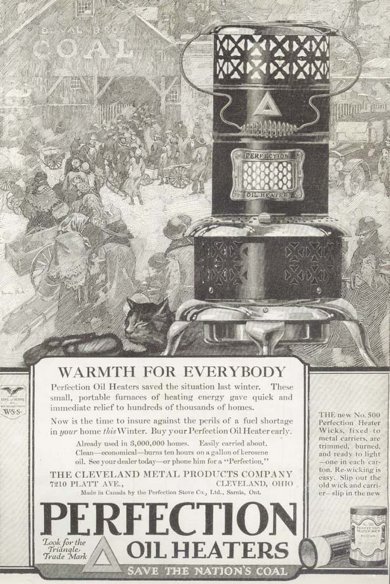
Why have kerosene heaters at all? First, they operate without the use of electricity, so your house can be warm and livable even if the electric power goes out during a winter storm. Second, kerosene itself can be stored in large quantities for a long time, so you are not at the mercy of anyone in an emergency. In actual use for heating a home, a gallon of kerosene will provide about the same heat output as a wheelbarrow load of wood! In the event of a total societal breakdown, obviously you would not be able to store enough kerosene to last a lifetime, and in such a case you would need to turn to wood or coal, whatever is available locally, for winter heat. But burning wood or coal means putting up smoke signals showing exactly where you are and telling anyone who sees the smoke plume that you are warm and most likely have other supplies - like food. Why make yourself a target if you don't have to? If everything went to heck in a hand basket, a hundred gallons of kerosene and a good radiant heater would keep you safe in your home over a winter without attracting attention, and that could be enough to keep your family alive - assuming you also have made other preparations. So few people actually prepare than in a year after a major cataclysmic, the unprepared would not be around to steal what you have. Kerosene heaters have been used for over a century in complete safety. Look at the advertisement for "Perfection Oil Heaters" from 1918. There were more than 3,000,000 Perfection Oil Heaters in use in 1918! The background of the ad shows people lined up in the snow to purchase coal. The first line in the advertisement is: "Perfection Oil Heaters saved the situation last winter." What happened in 1917? A great influenza pandemic swept around the world after WW I. People who had a Perfection Oil Heater did not have to line up with strangers to purchase coal...and catch the deadly flu that killed millions of people. Those with a kerosene heater and a supply of kerosene could avoid crowds - and survive. The current situation of "Homeland Security" is very unstable, with Muslim terrorists just waiting for the chance to release a biological or chemical attack on our cities, and of course the predictions of an avian flu pandemic in the near future to rival the pandemic of 1917. Kerosene heaters and stoves could again mean the difference between life or death...very inexpensive insurance! THE DIFFERENT TYPES OF KEROSENE HEATERS "Pure" kerosene heaters have a dual combustion unit (catalytic converter) and burn very cleanly and efficiently -- up to 99.9% fuel efficiency. Once broken in, a kerosene heater produces virtually odor-free heating; only at start up and shut down do they produce fumes, and then only for a few minutes. A couple of windows opened for 5 minutes during that time takes care of the fumes, and then need only be cracked an inch or so during normal operation of the heater. The design efficiency of almost all kerosene heaters occurs within a very limited heat range: your choice of heating from 90% to 100% of the maximum designed production. If a unit is rated at 22,300 BTUs, it will NOT operate efficiently at much below 20,000 BTUs. That is a lot of heat, so the choice of which model to purchase depends upon how cold it is where you live, how much space you need to heat, and of course if you have a modern insulated home or an older, drafty home with high ceilings and open stairwells to upstairs areas. Kerosene heaters themselves can be classified into two distinctive subtypes: radiant and convection, with the now discontinued Toyostove DC-100 being a unique combination of the two types of heaters. All kerosene heaters need to have the wick "burned dry" after a week of steady use, as tar balls will build up on the top of the wick, inhibiting correct capillary action by the wick.
Both convection and radiant heaters use a circular fiberglass wick to transport fuel via capillary action from the tank to the burner unit, often called a catalytic converter. That burner unit is the heart of the heater. In a radiant heater the burner unit is encased in a glass cylinder, with a half circle of reflective polished stainless steel behind it. The burner glows red and reflects infrared heat waves directly to things (like people). Radiant heaters do produce some convective heat, but that is ancillary to their primary design. Radiant heaters are usually rated at 10,000 BTUs or less and project that heat forward; therefore, they may be placed against a wall or window. Convective heaters heat the air, which then heats the environment. The burner unit is encased in a steel sleeve, not glass. New convective heaters are generally rated at 20,000 BTUs or more and radiate heat in all directions. They need at least three feet of clearance all around from combustible materials, or your home could become uncomfortably hot. Older convection heaters that produced 10000 BTU are still available, and if in good condition they can be reconditioned, a new wick installed, and they will work just fine for years.
The reason for knowing the differences between radiant and convective units is because of the effect on the burner units. The very act of radiating heat robs the burner of heat during start-up, so a radiant heater may take up to 6 minutes to warm up to operating temperatures, whereas convective heaters can be at full operating temperatures in as little as three minutes. And BTU output is directly related to fuel consumption: radiant heaters use only half the fuel of large convective heaters but put out only half the heat. As most kerosene heaters have one optimum position for efficient operation, choosing the proper size heater for the space to be heated is important: there is no low or medium heat position, just "high" as the most efficient setting for the particular design. Sorry. Open windows to regulate the household temperature.
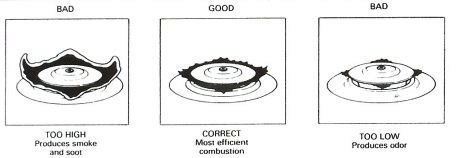
The wick height must be adjusted correctly for clean burning, and it the same for both convection and radiant heaters.
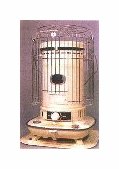
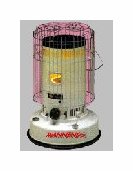
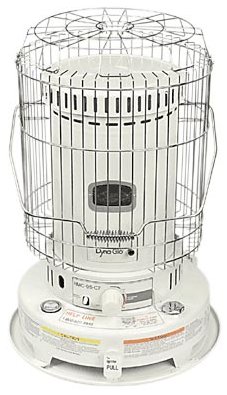
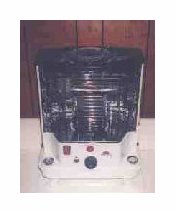
CONVECTION HEATERS These heaters are characterized by their circular tower design and safety grillwork (on newer models). Heat is distributed omni directionally, so they must be placed at least 3 feet from any combustible surface -- often the middle of a room. The Perfection (patented in 1849) and the Aladdin Blue Flame were the first widely distributed omni directional kerosene heaters, but most of the units available now are visual clones of the Toyotomi (Toyostove or Kero-Sun) model WC-105. These units are 99.9% efficient with only a few fumes at start up and shut down. They can be used as a primary heat source. Most of the units now have an electric (battery powered) igniter, so they are extremely easy to use. There are a few problems with using a convection heater. Most new convection heaters are large - the heat output is over 22,000 BTUs. And they don't adjust down much, either. With an outside temperature of 45 F and an inside temperature of 65 F, a Toyotomi WC 105 will drive the temperature in our large home up to 75 F within 2 hours (set on "low"!!!), and then must be shut down for 6 hours or so until needed again. I now use the WC-105 to heat my uninsulated shop in the winter, and for that purpose it is magnificent. People with large homes in really cold country would find these heaters perfectly safe and capable of heating their entire home quite easily, but one part of the house may be quite warm while areas away from the heater are too cool. Those with small homes or not living in the north would have more versatility using two smaller heaters (usually radiant heaters) placed in different areas of the house. Small (10,000 BTU) convection heaters used to be common, and can often be found at flea markets, etc. If they are in good condition, grab them! I can supply a new wick, and you're in business with a well-sized heater at a bargain price. Smaller convection heaters may be found for sale on eBay. Make sure they are in good condition, and you must know the make and model number precisely. With that information, you can then find which wick fits the heater. Wick size is directly proportional to heat output, as the capillary action of the wick determines the amount of fuel burned...the smaller the wick, the less fuel is burned, and the heat output is lower. The small diameter wicks are from 2 to 2 15/16" in diameter, and are numbers 4, 4A, 4B, 6, 7, 12, 19, 24, 25, 30, 31, 34A, 37, 38, 39, 41, 42 and 42A. If you live in the far North, you are probably using a heater with a large diameter wick during the day for maximum heat output. The large diameter wicks are from 4 1/8" to 4 3/4" in diameter, and are numbers 3, 3A, 3B, 3C, 3X, 5, 5A, 5B, 5C, 5X, 8, 13, 14, 18, 20, 21, 23, 28, 29, 32, 33 and 40. Medium diameter wicks would be a good choice for nighttime heaters in the far North and daytime heaters in more moderate climes. Medium diameter wick numbers are 1, 2, 7, 10, 11, 15, 16, 17, 22, 26, 27, 34, 35 and 36. So, when you purchase a heater for a specific purpose, check the "All Heaters" list by wick number to see what size wick that heater uses, and compare that with the lists above of comparative wick diameters. As the buyer of a heater, you have your choice from thousands of different models. Choose wisely. A heater that has been used can be easily cleaned and rebuilt, whereas a heater that has been abused is not a good investment. You also have your choice of not buying heaters that take certain wicks: try to avoid heaters that take wicks #15, 16, 20 or any wick number 45 and above, and heaters that require an expensive or rare wick. The list alphabetical list of heater wicks is a convenient way to find the precise wick for your heater. I have the wicks in stock for immediate delivery at my Wick Shop.
Most convection heaters have a fuel tank of about 2 gallons in capacity and will burn for 9 to 12 hours on one filling. The prices range from $125 to about $220, generally, and wicks cost from $10 to $20 each. Plan on purchasing at least 4 spare wicks, just for the sake of safety. The Corona model #23-DK is an excellent, quality heater, but no longer available new and can only be found on eBay and similar sites.
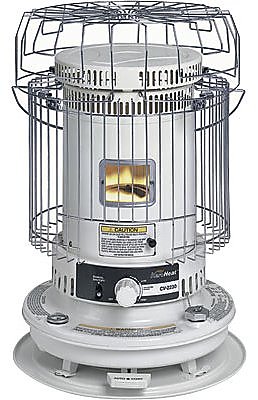
UPDATE November 29, 2016: RuralKing has the CV-2230 the same as the heater above, for $99.99 plus shipping. http://www.ruralking.com/portable-kerosene-heater-23-000-btu-model-cv-2230.html Do-It-Best hardware stores can order these heaters. True Value Hardware lists only Dyna Glo heaters at outrageous prices.
~~~~~~~~~~~~~~~~~~~~~~~~~~~~~~~~~~~~~~~~~~~~~~~~~~~~~~~~ RADIANT HEATERS
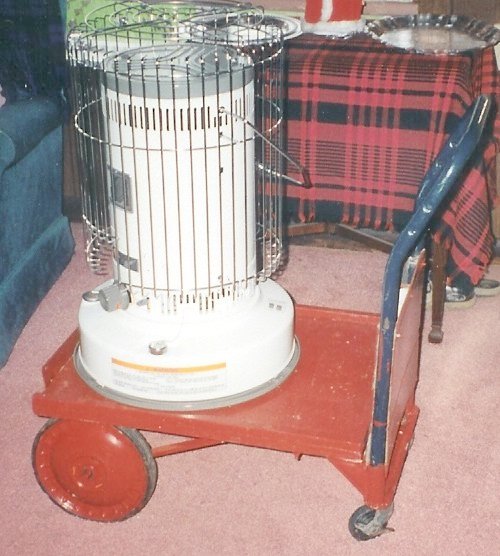
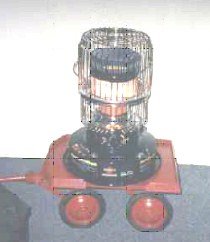
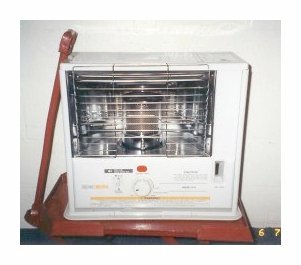
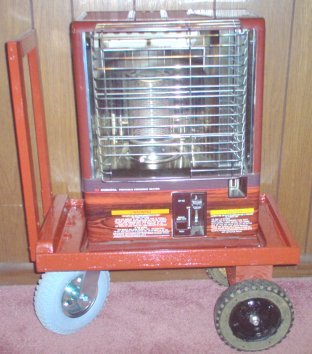
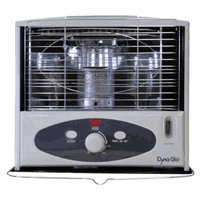
[Heat Mate HNHR-1101 on a wagon I built for it, left. Corona SX-2E on a different cart, middle, and the Dyna-Glo RMC-55R7 on the right.] Radiant kerosene heaters project their heat in one direction, so they may be placed against a wall, and they generally produce less than 10,000 BTUs. For small apartments or homes, radiant heaters are the obvious choice, as they don't need to be in the middle of cramped living space - and their heat output is not overpowering. This allows continuous burning of one unit (and therefore eliminating the constant shut off and restart that would be necessary for larger units -- the major source of fumes from kerosene heaters) with the same or with less overall fuel consumption. Choose a radiant kerosene heater to fit your particular application, based upon your room design and the design of the heater itself.
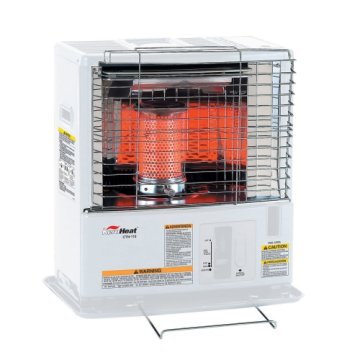
The design of most radiant heaters allows for the convenient removal of the fuel tank for refilling, and the quality of the units is such that they could be the primary heat source for small homes or apartments. In northern climes where winter temperatures frequently fall below freezing, several radiant heaters placed in different rooms (or as far apart as possible) would provide enough heat for comfort. And dual units allow one to be cooled down for refueling while another is still operating; redundancy equals safety. Most of the radiant heaters will operate for 12 to 15 hours on one filling (approximately 1 gallon) of the fuel tank. Those with arthritis will appreciate the focused heat from a radiant heater - it warms you directly, and that includes your stiff arthritic joints, relieving pain and swelling. The instructions that come with kerosene heaters warn not to burn them at night unattended. For my opinion on this, read Burning Kerosene Heaters at Night. My personal prejudices on radiant heaters centers on the quality (and price) of the heater and the shape of the reflector. I have the Heat Mate HMHR-1101, a Toyostove RCA-87, a Corona SX-2E and a couple of Aladdin Tropic's. The quality of the Heat Mate is not quite as good as the others, but it costs considerably less and works very well indeed. The Corona SX-2E is unique is that it has a very deep parabolic reflector, approximately 9" deep and 11" wide. It is ideally suited for heating a long, narrow room if the heater is placed at one end, as it projects focused radiant heat much better than other radiant heaters with a shallow reflector. The Corona has a small diameter wick with clips and the wick has a notch for the igniter, so it is not adjustable at all and is almost impossible to light with a match. However, the very high quality of the Corona itself overcomes my built in prejudices about the wick. If the D cell batteries that power the igniter are replaced every year or two, the wick ignites easily. The Corona is also unique in that it has a very tall, narrow catalytic converter. Combining a small diameter wick with a tall catalytic converter means the Corona burns exceptionally clean without any adjustments required. Available from Manning Service, www.MSIWIX.com...they are good people. I also stock Corona heater wicks at my Wick Shop. The Heat Mate HMHR 1101 actually burns cleaner (after adjusting the wick height and centering the central air pillar) than the RCA-87, as the catalytic converter is taller, thus having more surface area to properly burn the hydrocarbons (kerosene) brought up via the wick. The approximately 7" deep, 14" wide reflector is typical of most kerosene radiant heaters, and works well in a typical square room. I have no doubt whatever that the six spare wicks and spare glass globe for the burner I have for the Heat Mate will keep it burning for decades. The Heat Mate HMHR 1101 uses unpinned wicks, so wicks can be trimmed 1/4" and readjusted higher about 3 times, so each wick should last for about 3 heating seasons. The Heat Mate HMHR 1101 works very well indeed, and is very inexpensive...it IS worth the little bit of extra trouble to find one. The KeroHeat Model CT-1100 is identical to the Heat Mate HMHR-1101. There is a model of this heater which has a built in electric fan, with the model number RF-1100. This is an excellent heater, and the design is such that it will still work if the electricity goes out. Wick #1X for the -1101 is here. The Newest Radiant Heater - and Recommended UNTIL NOW, JANUARY, 2013
From reports I have received from my customers the newest batch of -110 heaters have several problems based on cheap OEM wicks. I can no longer recommend them unless the wick is replaced. With one of my wicks they burn well, but not with the cheap, thin wicks supplied with the heater. UPDATE Nov. 29, 2016: It looks like NorthernTool.com is out of HMN/CTN-110 heaters this winter. Ace Hardware has the HMN-110 on sale for $129.99 with free in-store pickup. Sears has the HMN-110 heaters listed for $117.57. Click the blue links to go to those sites. True Value Hardware lists only Dyna Glo heaters at outrageous prices. Used radiant heaters which are excellent include the Aladdin Tropic, EverGlo P-E2 and many others. The Aladdin Tropic is an excellent little radiant heater for use in a motor home or travel trailer, as they are all metal. That's right...even the catalytic converter chimney is metal, yet it is a radiant! They are round, not rectangular as are almost all other radiant heaters. The Tropic has a bottom fuel tank rather than the usual radiant drop in tank, so there is no open sump to spill when being moved in a motor home or trailer. With a diameter of 14" and height of 18" (approximately), the Tropic is small enough not be in the way too much in a trailer or motor home. Best of all, their low heat output of 7,800 Btu is sized correctly for the smaller areas encountered in motor homes or travel trailers. Finding an Aladdin Tropic is not easy, but they can be found at times on eBay or garage sales, Saturday markets, etc. THESE HEATERS ARE RECOMMENDED. ~~~~~~~~ OMNI-DIRECTIONAL
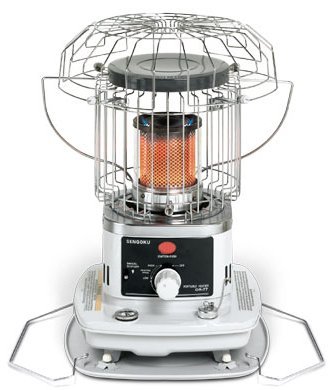
RADIANT HEATERS The Sengoku OR-78 OMNI-Radiant kerosene heater: Early models were not recommended, but the latest incarnation is pretty good with the qualifiers below. Notice the height between the top of the catalytic converter and the fuel tank in the image above? That is a long way for the wick to suck fuel to the top - capillary action has its limits. It is best if this heater is lighted on a full tank of fuel. There is still the problem with the design: the OR-77/78 was designed to use parts from the side-tank Heat Mate HMHR 1101. The sump from the Heat Mate was actually welded into the bottom of the fuel tank, so the wick does not reach the bottom of the font. I commented on this to Sengoku back in 2002 and nothing was changed (see comment below). Always light this heater with a full tank of fuel!
~~~~~~~~~~~~~ [Note: I have been asked how I would rate the Radiant 40 to the Corona SX-2E and Heat Mate HMHR 1101. In my opinion, I prefer either of the heaters mentioned above over the Radiant 40.] See Sources of Supply for kerosene heaters and wicks. ~~~~~~~~~~~~~ Kerosene appliances need regular maintenance as well as replacement wicks. To find out if a heater you are interested in has a pinned wick or not, check the extensive list of kerosene heater wicks I have assembled. NOTE: All of the heaters mentioned above have an electric start mechanism using batteries (usually two "D" size) to ignite the wick by heating a coil in what appears to be a flashlight bulb without the glass globe. Sometimes the heating coil will fail, but replacement is easy (push it in and twist 1/4 turn) and the cost is only $3.75 each. If the electric start system fails, DO NOT use a kitchen match to ignite the wick! Kitchen matches are too short (2 1/8"), and they have the nasty tendency of the head falling off - right into the space where the catalytic converter must seat properly for proper combustion. Available at almost every grocery store are bamboo skewers, and a pack of one hundred 12" long skewers costs less than $1.30. Just light one end of a bamboo skewer, raise the catalytic converter and light the wick. Blow out the skewer, rub off the charred end, and it can be used dozens of times...a single pack of skewers will last for years. Bamboo skewers can also be used to light the stoves listed below. Long barbeque butane lighters can also be used to light some kerosene heaters, but not all, as some, such as the Corona SX-2E have an internal post which keeps the catalytic converter from being tipped, so while there is room for a bamboo skewer, there isn't room for a butane lighter tip.
------------------------------------------------------------ Kerosene Stoves
READER COMMENTS AND QUESTIONS --------------------- Question: What's wrong with pinned wicks? (Your articles say they're undesirable but doesn't give the exact reason) Answer: They are non adjustable...one shot use. All fiberglass heater wicks become ragged on the top edge after a season or so of use. With a pinned wick, you replace it. With an unpinned wick, you can cut off 1/4", raise the wick in the holder 1/4", and have a new surface to burn. The trimming can be done up to 3 times. Plus, an unpinned wick is much easier to install. The downside is that unpinned wicks can be installed too high or too low, whereas with a pinned wick there is only one height possible, so manufacturers of kerosene heaters must consider that factor in light of the "product liability" issue and the plethora of lawyers in the US. ---------------------- Comment from a visitor to this site, dated Feb. 17, 2004 You have know idea how much I have saved this winter on gas bills!!! We have a very, very cold winter this year. A lot of temps below 10 degrees at night. My bills would have been a killer. I bet I would of had $250.00 to $300.00 per month. I used about $80.00 in kero and my gas bill ran about $28.00!!!!!!! So I got off so cheap. I would not have tried Kero heaters if not for reading your site. And both selections of heater I made on the basis of your recommendation and have been "more than pleased." Big thumbs up to you. And my house has been WARM!!!!!! Something it has never been since I built it five years ago. It was always a big battle over the thermostats. I would turn it down and my wife would turn it up!!!!!! Now we are both happy and WARM!!!!! John H. ------------------------------------------------------------- A question from a visitor to this site, dated October 21, 2004 I just checked on kerosene and it is about $2.50 per gallon in a 55 gal drum, $3.05 if you buy a gallon at a time. Doesn't look to reasonable. Thanks, Bill A. Answer: It is absolutely true that the price of kerosene is more than double what it was last year. Last month I had my tanks topped off, and it cost me $2.04 per gallon. A year ago the price was $1.05 per gallon, delivered, with a 100 gallon minimum. Last winter we heated the house for less than $300.00, and this year would be double that. In some parts of the country, kerosene is much less expensive than in Oregon. But everywhere, electricity and natural gas are up in price quite a bit as well. Our Corona SX-2e will burn 3/4 of a gallon of kerosene per 12 hours of use, but because the radiant aspect heats the walls and furniture, the heater need not be on all the time as the residual heat keeps the house warm for a long time. Because the heater is at full heat output within minutes of being lit, people are warmed by the radiant heat immediately, then the convection heat produced heats the air and the whole house warms up. Therefore, we need not burn the heater at night except on extremely cold nights when the temperature drops below freezing. On the coldest nights of the winter, we can heat the house up to 70 F in the morning with only an hour of burning a convection heater, then a radiant heater will maintain that heat throughout the day. The cost of electricity here is $0.06 per KWH, plus a $33.00 per month meter charge. Natural gas is not available. Those who heat with electricity often see electric utility bills of $200 to $300 per month. Even at the inflated price of kerosene in this winter of 2005, our monthly heating costs during the coldest months should not exceed $60.00 per month...considerably less than the cost of heating with electricity. The heat output obtained from a gallon of kerosene burned in an efficient kerosene heater is approximately the same as a wheelbarrow full of wood. Firewood is over $200 per cord, so unless firewood can be obtained for free, heating with kerosene space heaters is less expensive than heating with a wood stove. The cost savings of heating with kerosene space heaters used to be phenomenal, but the high price of kerosene this year has definitely cut into the tremendous advantage available in previous years. Because of the war in Iraq and the unsettled conditions in the oil fields of Nigeria, this winter of 2004/2005 will see unheard of prices for kerosene. But the price of oil, now approaching $58 per barrel, will also be reflected in increased costs for electricity, and natural gas is already priced at an all time high. This may well be a winter when mixing heating sources could be advantageous. On days when the temperature is moderate, heat the house quickly in the morning with a kerosene heater, then perhaps maintain the heat during the day with a small electric space heater. Reading the electric meter and keeping a record of those readings will let you know when the point is reached when using an electric heater in no longer cost effective. Everyone will pay more for heating their homes this winter. Kerosene space heaters are still very cost effective when compared to other methods of home heating, plus they have the advantage of providing heat when the electricity is out. And electricity WILL go out this winter, either from storms or from terrorist actions. When that happens, a kerosene space heater could keep your house warm and prevent all the plumbing from freezing, resulting in a huge bill to replace broken pipes, frozen and cracked toilets and water heaters, etc. Plus, you can stay safely at home when others must go to a public shelter and get sick from the crowded conditions! Miles ~~~~~~~~~~~~~~~~~~~~~~~~~
HEATER/STOVE
COMBINATIONS
It is possible to use a kerosene cook stove as a space heater in emergency situations -- just don't expect the efficiency of a real kerosene heater. The Alpaca is advertised for just this purpose...and in my opinion it does not work very well at all. A multi-wick stove like the Swastik or Premier will work much better as a heater, as the wicks are extremely inexpensive and the tips can be snipped off when they become charred.
|
|
||||||||||||||||||||||||||||