|
A guide to self reliant living |
|||||||
|
6. Kerosene heaters and cookers
12.
Electrical; generators
Miles Stair's SURVIVAL
Miles Stair's
SURVIVAL |
12.
Electrical;
generators and
power
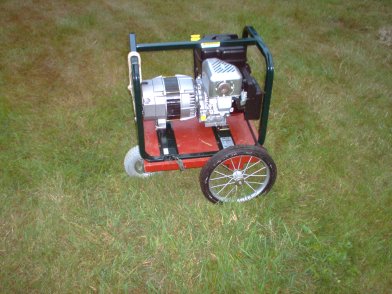
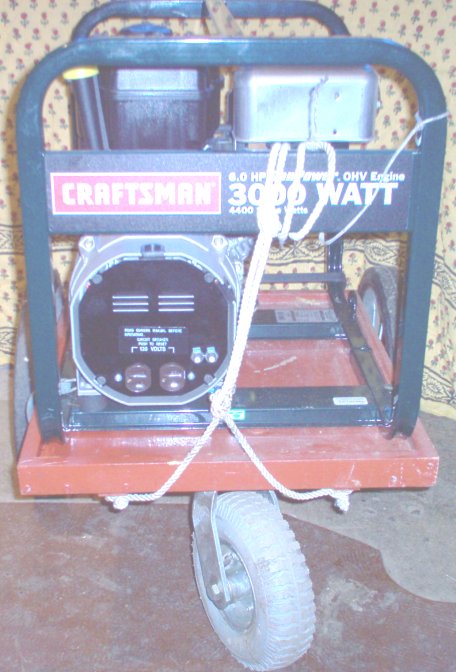
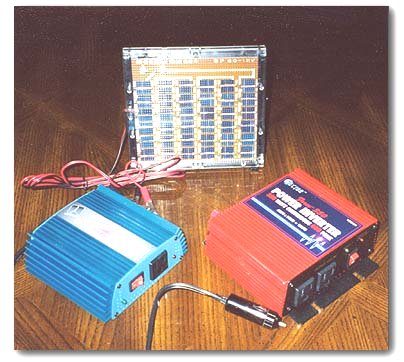
By Miles Stair Modern civilization is almost literally based on the use of electrical energy. We have become addicted to electricity and the marvelous devices it powers. Even if the electric grid goes down, we will still need to generate some electric power ourselves. Whole-house electrical generation to power standard appliances is a goal that is almost impossible to attain, but it is possible to generate enough electrical power for more modest uses. It is imperative that you understand the importance of EMP and how to properly ground electrical appliances and devices so they will not be burned out by an EMP attack! Iran is planning such an attack with their first atomic bomb, so preparations now are essential. Click here for more information on Electromagnetic Pulse and the dangers it has for our civilization. A standard gasoline or diesel powered generator is very useful, but to depend upon one to provide continuous power for a long time is not very realistic. The generator must also be sized correctly to fit your particular requirements. Storing fuel is a problem: how much can be stored, and how would it be replenished? Then there is the problem that generator engines make quite a bit of noise, and that sound can be a very direct indication of where you are and what you have: you would become a target of every have-not in the area! But for short term use, generators are extremely useful. My old 2000 watt Montgomery Ward generator ran 27 years like a dream (I have had to re-energize it once, rebuild the carburetor once, and install several ignition overhaul kits.), but I replaced it with a 3000 watt Sears generator. In six hours of running time I can power a water pump in my well and completely fill a 1250 gallon water tank at the cost of a single gallon of gasoline. The water can then flow by gravity into the house, and 1250 gallons will last for months because the dishwasher and automatic clothes washer would not be in use. Because the water tank is also filled via the rain gutters, I only have to employ the generator perhaps once in the summer to fill the tank - IF there is no tertiary fallout. The well is 93 feet deep, so that water would always be clean, and knowing I can pump water at 60 PSI to fight fires on my own is a great benefit to mental stability. Click here for more on generators. When generators sit unused for a long time, they can lose their magnetism, but it is possible to re-energize dead generators following simple directions. Generators also need oil in the crankcase of their engines, and it is possible to clean dirty oil for reuse in the event it becomes impossible to find new engine oil. It is far better to use preventative care to avoid problems with a generator, and you will know that it is always ready to work for you. Every month or two, pour enough fuel into the tank to run the engine for about a half hour. The idea is to run the engine long enough to get hot, so the oil itself comes up to normal operating temperatures, then run out of fuel and completely empty the fuel system. When starting from cold, the choke provides too rich a mixture, the rings and cylinder walls are not warm enough to provide a proper seal, so some gasoline escapes past the rings into the oil sump. Running the engine long enough for the engine and oil to come up to normal operating temperatures allows the gasoline, which is volatile and corrosive, to evaporate. And letting the engine run until out of fuel means there is no fuel in the carburetor to evaporate, which can leave varnish deposits on the interior of the float bowl, etc. While running the engine for the generator, make the generator work, too! Plug in a trouble light or any kind of light bulb to each 110 volt socket on the generator, so each winding gets energized, the contacts used, so the alternator portion of the gen-set also gets the use it needs to keep working. Finally, change the oil once a year whether it needs it or not. Of course the oil is not "worn out." What you are doing is removing oil that contains residual acids from previous use at low temperatures, so the bearings do not become corroded. All of this may cost a gallon or two of gasoline and a quart of oil once a year...not much to spend for the gain of protecting a valuable investment! When the electric grid begins to fail there are voltage spikes, or surges, as well as cycle fluctuations. Generators also are well known to produce variable voltage as the load changes. Those voltage fluctuations are known as "dirty power," and are extremely hard on sensitive electrical equipment like computers. At times such as these, it is possible to filter the electricity through a battery, then convert the voltage back from 12 volts DC to 110 volts AC with an inverter, and the result is a stable power supply. But that brings on another problem: powering battery operated tools and other appliances which use a transformer plugged into a 110 volt power supply. Inverter s are not recommended for powering transformers, but there are methods of alternative charging, and you may want to build a battery adapter. As an example, a plug in electric razor will work directly off a small inverter, and in the few minutes it takes a man to shave very little energy is consumed. But a rechargeable razor that requires a transformer plugged into an electrical outlet will not charge properly unless special precautions are taken.
If civilization completely fails, one can improvise and generate a considerable amount of electricity using homebred steam power to turn an alternator. This system requires a steam turbine and uses quite a bit of wood for fuel, but it can work with home made equipment.
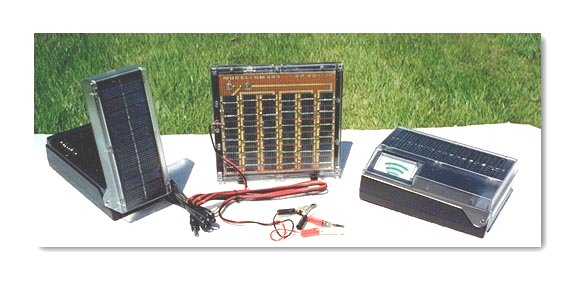
In a survival scenario, however, electrical generation for many people will be confined to charging batteries for operating flashlights and a radio. Solar battery chargers work very well, but take time: up to 12 hours to charge a pair of "D" batteries is common, but only 3 hours or so of direct sunlight will charge two "AA" size batteries. For that reason, I have quite a few nicad AA s and NiMH batteries and the flashlights to fit them. There are quite a few solar battery chargers on the market for under $15.00, like the SBC Universal Solar Battery Charger sold by www.CCrane.com . I prefer solar battery chargers that have the ability to run low voltage appliances as well as charge batteries, such as the Multi-Purpose Solar Panel & Battery Charger sold by www.solareagle.com/radios.html . These units cost about $22.00, but the versatility is worth the little extra they cost. Of course a hand-pump LED flashlight never needs batteries and is always ready to work. In a home setting, lighting with kerosene lamps and lanterns make more sense than relying on flashlights. But for quick emergency use at night, or for use outside or in a barn, kerosene lanterns are next to useless, and can well be dangerous: sleepy people are not too safety conscious, lanterns do not project a beam of light, and in the case of use in a barn, it is not very safe to have open flames in untrained hands near flammable materials such as hay. The LED flashlight shown above is ideal for this purpose, and it never needs batteries!
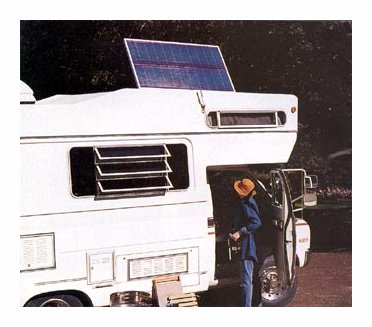
Moving up in scale, it is entirely possible to use larger solar panels to charge 12 volt RV batteries in an RV, such as a motor home or camp trailer. Now we are talking real usefulness! This system will give you an integrated electrical system in a self contained, mobile unit. Not only is this less expensive than a whole house solar installation, the RV solar panels are very sturdy, and if evacuation is required, the solar panels go with you! Parked close to a home, the RV solar electrical system can be used for a multitude of purposes. The 12 volt power may be used to pump water under pressure using a 12 volt RV water pump, for example, if a gravity flow water system is impossible to install on your home. This system is described in my booklet, "Rainwater Collection." One good source of large solar panels is http://www.siliconsolar.com/solar_battery_chargers.htm . Alternatively, 12 volt DC power can be converted to 110 volts AC with an inverter, and if the inverter is large enough, one could power a television set and VCR for a few hours a day, or run a computer for several hours. In this case, the solar panel must be far larger than the small trickle chargers employed to simply maintain a charge at least a 5 watt solar panel is required: if the panel itself is not at least 18" square, it isn t big enough. Several solar panels can be used at one time, so it is possible to start small and add equipment as funds permit. Added to that concept is the safety factor of redundancy: if one panel breaks, you are not completely out of the electrical generation business, just slowed down somewhat. It is the small, miscellaneous details that are important for long term survivability: knowledge, equipment, redundancy, and alertness.
|
|
|||||