|
|
|||||
|
6. Kerosene heaters and cookers
12.
Electrical; generators
Miles Stair's SURVIVAL Miles
Stair's
SURVIVAL |
6. Kerosene
heaters & stoves
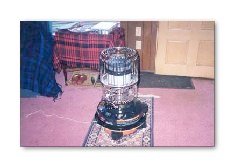
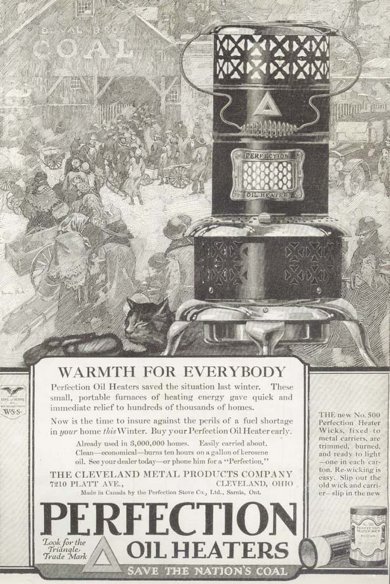
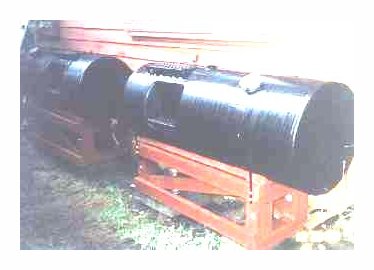
Why have kerosene heaters and stoves at all? First, they operate without the use of electricity, so your house can be warm and livable even if the electric power goes out during a winter storm - and you can cook meals, so you will not have to be at the mercy of a public shelter. Second, kerosene itself can be stored in large quantities for a long time. In actual use for heating a home, a gallon of kerosene will provide about the same heat output as a wheelbarrow load of wood! In the event of a total societal breakdown, obviously you would not be able to store enough kerosene to last a lifetime, and in such a case you would need to turn to wood or coal, whatever is available locally, for winter heat. But burning wood or coal means putting up smoke signals showing exactly where you are and telling anyone who sees the smoke plume that you are warm and most likely have other supplies - like food. Why make yourself a target if you don't have to? If everything went to heck in a hand basket, a hundred gallons of kerosene and a good radiant heater would keep you safe in your home over a winter without attracting attention, and that could be enough to keep your family alive - assuming you also have made other preparations. So few people actually prepare than in a year after a major cataclysmic, the unprepared would not be around to steal what you have. Kerosene heaters have been used for over a century in complete safety. Look at the advertisement for "Perfection Oil Heaters" from 1918. There were more than 3,000,000 Perfection Oil Heaters in use in 1918! The background of the ad shows people lined up in the snow to purchase coal. The first line in the advertisement is: "Perfection Oil Heaters saved the situation last winter." What happened in 1917? A great influenza pandemic swept around the world after WW I. People who had a Perfection Oil Heater did not have to line up with strangers to purchase coal...and catch the deadly flu that killed millions of people. Those with a kerosene heater and a supply of kerosene could avoid crowds - and survive. The current situation of "Homeland Security" is very unstable, with Muslim terrorists just waiting for the chance to release a biological or chemical attack on our cities. Kerosene heaters and stoves could again mean the difference between life or death...very inexpensive insurance! Ultimately, wood stove cooking and heating will be required (see Wood Cooking and Heating). But wood appliances are not the answer for the short term, as their use means a smoke and heat plume...dead giveaways as to your location and preparations. Why send up smoke signals to advertise your presence? Kerosene stoves and heaters are ideal for survival use. They are inexpensive to purchase, reliable, portable, safe and easy to use. A kerosene convection heater costing about $150 can rival a pellet stove costing $1,500 in useable heat output - cost a third less to operate, and work without electricity. Smaller kerosene radiant heaters are fine heaters in milder climates. Because kerosene heaters operate most efficiently at their maximum heat setting, choosing the proper model is very important. See Kerosene Heaters for eight pages of extensive details. Kerosene cookers (stoves) have been used all over the world for almost a century, and are marvelous for use when electricity is not available. They should not be saved just for emergency use, though, as they have great utility for many everyday tasks. I use mine for canning, for example. As they are portable, I can use them indoors on the porch, or outdoors on the patio, so canning need not mess up a pretty kitchen or interfere with normal kitchen use. I use them for heating wax to make candles, just about anything. Choosing a model to fit your needs is covered under Kerosene Cookers. You can make your own mini kerosene heater and stove from an old brooder house heater very easily. Century old P & A and Miller brooder house heaters sell on eBay for about $10.00, and they have a very fine tip-over burner unit which uses a 1 1/2" flat lamp wick (some are duplex burners). Brooder house heaters made by Miller have a very well designed burner and do not have an aroma when being used. It is difficult to find one with a chimney, but it is easy to make a nice chimney from a section of 4" metal stove pipe and some pop rivets. These little heaters burn very little fuel, produce about 1,700 BTU/hr, and are extremely useful in the winter as greenhouse heaters, well house heaters, and storage shed heaters to keep ATV's and other equipment warm enough to start easily. You can see the ones I have made, and how I constructed the chimney, at www.milesstair.com/Mini_Kerosene_Heaters.html You cannot take a kerosene appliance right out of the box and expect it to work properly: they need to be properly seasoned before use. Read Breaking In New Kerosene Appliances before attempting to use them for the first time. Kerosene appliances also require regular maintenance to maintain efficient operation, and that may mean weekly maintenance. Do not ignore this important element in their use! The recommended kerosene cookers and heaters are not "under pressure:" a wick brings the kerosene up from the tank via capillary action to the burner unit. It seems that every model of stove and heater uses a different wick, so understanding how they work, and having spare wicks, is extremely important. See Kerosene Appliance Wicks for more details. One of the great advantages of kerosene cookers and heaters is that fuel for their use can be stored in quantity: try that with electricity or natural gas! The best way to store kerosene is to use large bulk tanks. I used a 220 gallon fuel oil tank which I found used, and set it up in a shed in a protected area. Then I found some old saddle tanks from a Mack truck, the old, heavy steel 110 gallon tanks seen 30 years ago. These I set on cradles I built from 4 x 4 and 2 x 4 pressure treated lumber. I had previously found an old 30 gallon service station bulk engine oil tank, at least 70 years old. After cleaning, it holds and dispenses kerosene perfectly. The result? With a little work in cleaning and painting the tanks, I now have 470 gallons of kerosene storage. Last winter I used 250 gallons of kerosene for heating and cooking, so if I'm a little careful, there is enough to last for 2 years. See Kerosene Fuel Primer for more details. Of course you must use pure kerosene fuel. This product has several names: 1-K (clear), or #1 stove oil. The main difference is price. Clear 1-K is sold in small containers and generally priced at more than $3.50 per gallon. No. 1 stove oil is delivered in bulk by heating oil distributors to your tank...at about $1.50 per gallon for quantities over 100 gallons. There is generally a surcharge of 25 cents per gallon for deliveries of less than 100 gallons. No. 1 stove oil also has a red dye (since July, 1998) to indicate the road tax has not been paid, as it can be used in some diesel engines. The red dye does not change the burning qualities...it just looks weird.
|
|
|||