|
A guide to self reliant living |
||||
|
6. Kerosene heaters and cookers
12.
Electrical; generators
Miles Stair's SURVIVAL
Miles Stair's
SURVIVAL |

BREAKING IN NEW KEROSENE APPLIANCES Any new appliance should be treated with respect. Before use, all exposed metal surfaces should be given a coat of good automotive polish to seal the pores of the enamel finish and help preserve the finish. Before storage in late spring, they should again be cleaned up and given a coat of polish. Polish is cheap, and you paid good money for the appliance. Why not keep it in good condition, as it only takes a few minutes a year to do it?
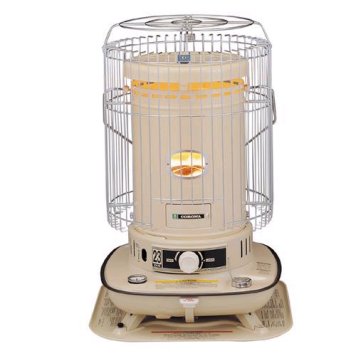
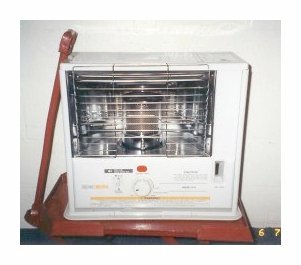
Familiarize yourself with the details of the unit. Carefully remove the burner unit and raise the wick. Note the appearance and height of the wick. With all of the kerosene heaters with which I am familiar, the wick should protrude about inch at maximum height, and completely retract into its slot when in the off position. (With radiant units, the grill can be opened and the burner removed. With convective units, three perimeter screws around the base of the tower must be removed, then the circular tower carefully lifted straight up and removed to gain access to the burner unit.)
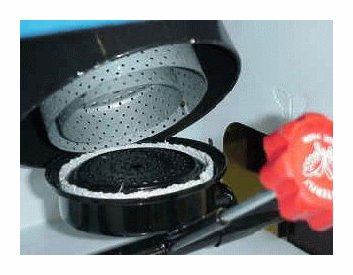
Kerosene stoves with normal wicks that rise should have the wick trimmed to the height of the trimming guide visible when the catalytic converter is removed. The saturated wick design used on some Butterfly stoves (#2413, 2416, 2418, etc) is unique in that the wick itself does not move, but rather the fuel flow is what controls the heat output. The catalytic converter of these Butterfly stoves is virtually identical to all other catalytic converters, so the illustration below is graphic enough to show you what the inside of a catalytic converter look like. Click to enlarge.
The reason for the exercise mentioned above is because it will become a regular ritual, so you might as well see how easy it is to do...the units are all designed for this. Reassemble the unit in the reverse order. Initial Seasoning Your unit, regardless of type or style, is now ready for initial seasoning. Take the unit out of the home, say to a garage or covered patio for ventilation. This will protect it from strong drafts and from rain for this session. Pour at least a half gallon of kerosene into the tank, then let it be for at least a half hour so the wick can become fully saturated. After the half hour, light the unit with the wick set at the maximum height, and let it burn in that position until the burner is completely red and flames of 1" appear above the top of the burner. Then turn the wick down about half way between the high and low settings and let it burn. During this initial burning, all of the preservative oil on the combustor unit is burned off (smelly), the metal becomes properly annealed, the enamel surfaces are fully cured, and the entire unit "conditioned" to its designed configuration for use. After hours of burning, the flames will begin to die down and the upper part of the burner unit will change color from red to black. Now is the time to turn the wick to its maximum height and let it burn. It will take at least another hour before the flames die out, and then the tar residues on the top of the fiberglass wicks will burn off (very smelly). The reason for this initial seasoning burn being done at a reduced wick height is because the new wick is in pristine condition, so its capillary action is at maximum capacity. By burning the wick dry during the first burn, the wick itself becomes seasoned and will last considerably longer in use. Your kerosene appliance is now ready to give you years of odor free performance. Inexpensive kerosene appliances in particular will perform much better if properly seasoned. Remember that kerosene appliances need regular maintenance.
Related subjects: Kerosene heaters:
Kerosene Stoves, Lanterns and Ovens:
Kerosene, The Fuel, and Storage Tanks _________________________
|
|
||