~~~~~~~~ Feb. 28, 2017
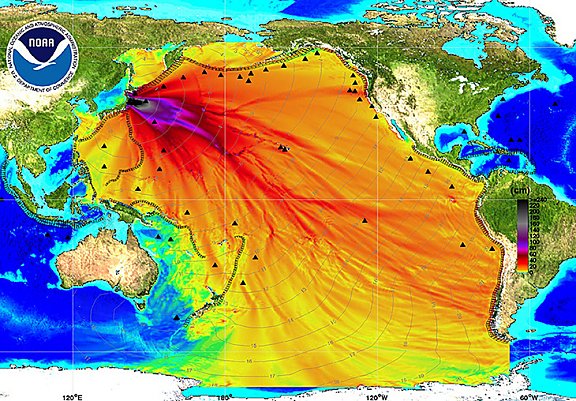
Fukushima Radiation Has Contaminated
The Entire Pacific Ocean (And It's Going To Get Worse)
http://www.zerohedge.com/news/2016-10-02/fukushima-radiation-has-contaminated-entire-pacific-ocean-and-its-going-get-worse
by Tyler Durden Oct 2, 2016 12:19 PM
Submitted by Whitney Webb via TrueActivist. com
Japan Begins Purposely Dumping 100s
Of Tons Of Radioactive Water From Fukushima Into The
Pacific
Submitted by Tyler Durden on 05/23/2014 21:34 -0400
http://www.zerohedge.com/news/2014-05-23/japan-begins-purposely-dumping-100s-tons-radioactive-water-fukushima-pacific
Submitted by Michael Snyder of The Economic
Collapse blog,
How do you get rid of hundreds of tons of highly
radioactive water? You dump it into the Pacific Ocean of
course! In Japan, the Tokyo Electric Power Co. has made
the "painful decision" to begin purposely dumping massive
amounts of radioactive water currently being stored at the
destroyed Fukushima nuclear facility directly into the
Pacific. This is being done even though water radiation
levels near Fukushima spiked to a brand new all-time
record high just a few days ago. The radioactive material
that is being released will enter our food chain and will
potentially stay with us for decades to come. Fukushima is
an environmental nightmare that never seems to end, but
the mainstream media in the United States decided to
pretty much stop talking about it long ago. So don't
expect the big news networks to make a big deal out of the
fact that Japan is choosing to use the Pacific Ocean as a
toilet for their nuclear waste. But even though they
aren't talking about it, that doesn't mean that
radioactive material from Fukushima is not seriously
affecting the health of millions of people all over the
planet.
According to the Japan Times, Tepco released 560 tons of
radioactive water into the Pacific on Wednesday, and Tepco
says that for the foreseeable future we should expect
another 100 tons of radioactive water to be released into
the ocean every single day.
"Nothing like this has ever been attempted" --
Yale Professor: "All of humanity will be threatened for
1000s of years" if rods in Unit 4 pool touch and have
nuclear reaction during removal process -- Tepco: "Not
clear" if fuel is already damaged.
http://enenews.com/nothing-like-this-has-ever-been-attempted-yale-professor-all-of-humanity-will-be-threatened-for-1000s-of-years-if-rods-in-unit-4-pool-touch-during-removal-process-tepco-not-clear
----
West Coast of North America
to Be Hit Hard by Fukushima Radiation
http://www.thetreeofliberty.com/vb/showthread.php?t=188101
Radiation Levels Will Concentrate in Pockets In Baja
California and Other West Coast Locations
An ocean current called the North Pacific Gyre is bringing
Japanese radiation to the West Coast of North America:
While many people assume that the ocean will dilute the
Fukushima radiation, a previously-secret 1955 U. S.
government report concluded that the ocean may not
adequately dilute radiation from nuclear accidents, and
there could be "pockets" and "streams" of
highly-concentrated radiation. The University of Hawaii's
International Pacific Research Center created a graphic
showing the projected dispersion of debris from Japan:
Last year, scientists from the National Oceanic and
Atmospheric Administration's (NOAA) Pacific Marine
Environmental Laboratory and 3 scientists from the GEOMAR
Research Center for Marine Geosciences showed that
radiation on the West Coast of North America could end up
being 10 times higher than in Japan:
After 10 years the concentrations become nearly
homogeneous over the whole Pacific, with higher values in
the east, extending along the North American coast with a
maximum (~1 x 10⁻⁴) off Baja California.
(More, plus active maps at website above.)
------
Japan Finally Admits The
Truth: "Right Now, We Have An Emergency At Fukushima"
Submitted by
Tyler Durden on 08/05/2013 10:44 -0400
http://www.zerohedge.com/news/2013-08-05/japan-finally-admits-truth-right-now-we-have-emergency-fukushima
Tepco is struggling to
contain the highly radioactive water that is seeping
into the ocean near Fukushima. The head of Japan's NRA,
Shinji Kinjo exclaimed, "right now, we have an
emergency," as he noted the contaminated groundwater has
breached an underground barrier and is rising toward the
surface - exceeding the limits of radioactive discharge.
In a rather outspoken comment for the typically stoic
Japanese, Kinjo said Tepco's "sense of crisis was weak,"
adding that "this is why you can't just leave it up to
Tepco alone" to grapple with the ongoing disaster. As
Reuters notes, Tepco has been accused of covering up
shortcomings and has been lambasted for its ineptness in
the response and while the company says it is taking
actions to contain the leaks, Kinjo fears if the water
reaches the surface "it would flow extremely fast," with
some suggesting as little as three weeks until this
critical point.
------
Fukushima – Cover It Up
Never in all of history has a world event with such
reaching consequences to human life as those represented
by the meltdown of the reactors at Fukushima been so
thoroughly and absolutely covered up. By now the
effects of the radioactive pollution from the plant have
encompassed our planet and, as higher radiation levels
for the aquatic life in the Pacific Ocean are scantly
reported, life, or more probably death goes on as if
nothing of any real consequence has actually occurred.
After the meltdown of a single reactor in Chernobyl in
1986, there seemed to be a constant vigil to track the
spread of the radiation and the consequences to human
life in the Soviet Union and around the world. But back
then, the coverage served a political purpose. We
weren’t to look at the failure of Chernobyl as a
consequence of the bad decision in building these death
plants, but rather the inferior system of government in
the Soviet Union that allowed the failure to occur.
In the instance of Fukushima, this was the last thing
we wanted because Japan had been Americanized and the
technology and the use thereof, including safety
measures, were
written by the United States. That and the fact that
Japan’s liability to those affected by that government’s
negligence would have had to be recognized.
-----
Mystery objects with high
radiation found on Fukushima coast
By SHUNSUKE KIMURA/ Staff Writer
In a coastal area long silent due to the
Fukushima nuclear accident, the only sounds of
human activity on June 18 were from workers
removing rubble and continuing their
decontamination efforts. But soon, their
supervisor discovered something that broke up
the monotony of the work and added to the
eeriness of the atmosphere.
After a call to
the Environment Ministry, Takeshi Kato, 55, a
ministry specialist, immediately headed to the
location about 15 kilometers south of the
crippled Fukushima No. 1 nuclear power plant.
As he slowly walked around with a dosimeter,
he reached a hot spot where radiation levels
nearly doubled those of the surrounding areas.
Using a fallen branch to clear away dirt, Kato
uncovered a grayish pile about 3 centimeters
long, about 1.5 cm wide and about 0.5 cm thick.
The surface of the pile, which looked like
soil, had gamma ray readings of about 85
microsieverts per hour. The total reading,
including beta rays, came to 1 millisievert per
hour.
It was the first of four mysterious objects
with high radiation levels found near the mouth
of the Idegawa river in Naraha, Fukushima
Prefecture.
Officials at the government and Tokyo
Electric Power Co., the plant’s operator, do not
know where these objects came from or why they
have high radiation levels. In fact, they are
not sure what these objects actually are or were
used for.
----7.2.13
Fukushima: Decontamination a
Failure - Fend for Yourselves
http://nuclear-news.net/2013/07/03/japan-decontamination-is-a-failure-no-repeat-of-decontamination/
Japan decontamination is a failure –
“No Repeat of Decontamination”
Translation by Mia) Government
officials held a meeting in Tamura-city in Fukushima
prefecture to explain to residents that they need to
look after themselves from now on. Originally they were
aiming to reduce the level of contamination down to
0.23uSv/h (=added ionizing radiation 1mSv/y). However,
they have now abandoned this aim and are not going to
repeat any more decontamination.
The officials have
suggested to residents that it’s ok to live there even
if the level of radiation doesn’t go down below
0.23uSv/h as long as they monitor their exposure level
by wearing the dosimeter and manage to live carefully
inside their house so as not to be exposed to more than
0.23uSv/h.
````` 6.27.13
Radiation Levels Skyrocket at Fukushima
http://www.zerohedge.com/contributed/2013-06-27/radiation-levels-skyrocket-fukushima
Record high levels of radioactive tritium have been
observed in the harbor at Fukushima.
Japan Times
notes:
The density of radioactive tritium in samples of
seawater from near the Fukushima No. 1 nuclear plant
doubled over 10 days to hit a record 1,100
becquerels per liter, possibly indicating contaminated
groundwater is seeping into the Pacific, Tokyo Electric
Power Co. said.
***
Tepco said late Monday it was still analyzing the water
for strontium-90, which would pose a greater danger than
tritium to human health if absorbed via the food chain.
The level of cesium did not show any significant change
between the two sample dates, according to the embattled
utility.
On June 19, Tepco revealed that a groundwater sample
taken from a nearby monitoring well was contaminated
with both tritium and strontium-90.
***
During a news conference Monday in Tokyo, Masayuki Ono,
a Tepco executive and spokesman, this time did not
deny the possibility of leakage into the sea, while
he said Tepco is still trying to determine the cause of
the spike.
Kyoto
reports:
A sample collected Friday contained around 1,100
becquerels of tritium per liter, the highest level
detected in seawater since the nuclear crisis at the
plant started in March 2011, the utility said
Monday.
Indeed, the locations and condition of melted Fukushima
fuel is still totally unknown. Shimbun
reports:
The workers have yet to gain a grasp of the locations
and condition of the fuel debris. They have yet to
develop extraction equipment and determine removal
methods.
Mainichi
notes:
Uncertainty over the location of melted fuel inside
the crisis-hit Fukushima No. 1 Nuclear Power Plant
continues to cast a shadow over plans to remove the fuel
at an early date…. Reactor Nos. 1-3 at the plant
contained a total of 1,496 rods of nuclear fuel in their
cores…. Each fuel rod weighs about 300 kilograms, and a
high level of technical expertise would be required when
undertaking a remote control operation to cut up and
retrieve clumps of scattered radioactive materials
weighing a combined 450 tons or thereabouts…. the cores
of reactors at the Fukushima plant have holes, and the
task at hand is finding which parts have been damaged.
Indeed, the
technology doesn’t yet exist to contain – let
alone clean up – Fukushima.
`````
4.23.2012 -
The Reactor #4 building is on the verge of collapsing.
Seismicity standards rate the building at a zero, meaning
even a small earthquake could send it into a heap of
rubble. And sitting at the top of the building, in a pool
that is cracked, leaking, and precarious even without an
earthquake, are 1565 fuel rods (give or take a few), some
of them “fresh fuel” that was ready to go into the reactor
on the morning of March 11th when the
earthquake and tsunami hit.
"The precarious status of
the Fukushima Daiichi nuclear units and the risk presented
by the enormous inventory of radioactive materials and
spent fuel in the event of further earthquake threats
should be of concern to all...." Sen. Ron Wyden,
after visit 4.6.2012
The Radiation
Warnings You Won't Get from the Mainstream Propaganda
Machine
http://daisyluther.blogspot.ca/
Daisy Luther and NinaO April 2nd, 2012
The mainstream media and the federal government will soon
have the blood of the world on it's hands. Radiation from
the Fukushima Nuclear Plant disaster in Japan is now
actively in the ecosystem all along the North American
west coast. even the sea weed is now radiated. The
Vancouver Sun reported one year ago that the seaweed
tested from waters off the coast of British Columbia were
4 times the amount considered safe. No further test
results were released after the initial report.
The governments of the United States and Canada are not
conducting tests for radioactivity - at least not to the
knowledge of the public. Secretary of State Hillary
Clinton has agreed to continue purchasing seafood from
Japan, despite the fact that the food is not being tested
for radioactive contamination. Last November, independent
testing in Japan showed 65 per cent of the catches tested
positive for cesium (a radioactive material). Instead of
refusing to purchase the poisoned fish, food safety
agencies in both the United States and Canada have simply
raised the "acceptable level of radiation." We can't go
offending the Japanese after promising to buy their
tainted goods, now can we? After the North American
governments refused to fund testing, oceanographer Ken
Buesseler, a senior scientist at the non-profit Woods Hole
Oceanographic Institution in Woods Hole, Mass, along with
Nicholas Fisher, a marine sciences professor at the State
University of New York at Stony Brook, and other concerned
scientists, managed to secure private funding for a
Pacific research voyage. The results?
Cesium levels in the Pacific had initially gone up an
astonishing 45 million times above pre-accident levels.
The levels then declined rapidly for a while, but after
that, they unexpectedly levelled off. In July, cesium
levels stopped declining and remained stuck at 10,000
times above pre-accident levels. This means the ocean
isn't diluting the radiation as expected. If it had been,
cesium levels would have kept falling. The finding
suggests that radiation is still being released into the
ocean long after the accident in March, 2011.
Less than two weeks after the tsunami and subsequent
nuclear disaster, Michael Kane, an investigative
journalist, reported, "In the wake of the continuing
nuclear tragedy in Japan, the United States government is
still moving quickly to increase the amounts of radiation
the population can "safely" absorb by raising the safe
zone for exposure to levels designed to protect the
government and nuclear industry more than human life." The
radiation has absolutely reached the shores of North
America. Water samples from across the continent have
tested positive for unsafe levels of radioactivity. The
levels exceeded federal drinking water thresholds, known
as maximum contaminant levels, or MCL, by as much as 181
times."This means that the complete ecosystem of the
Pacific Ocean is now poisoned with radiation and we aren't
being warned. Samples of milk taken across the United
States have shown radiation at levels 2000 percent higher
than EPA maximums. The reason that milk is so significant
is that it it representative of the entire food supply.
According to an article published on Natural News, "Cows
consume grass and are exposed to the same elements as food
crops and water supplies. In other words, when cows' milk
starts testing positive for high levels of radioactive
elements, this is indicative of radioactive contamination
of the entire food supply."
2.14.12 "This
situation is far beyond anyone's control at
this point. All we can control is how we
react. The time for some type of entombment
has long passed, as the fuel is now estimated
to be 30-40 feet below the plant from
researchers at Kyoto University. Everything
TEPCO has tried to do to decrease the temp in
reactor 2 in the past few days, including
injecting boron to stop fission and dumping
tons of water on the reactors is having no
effect. Recent news coming out of the
Fukushima plant and surrounding areas such as
Xe detection and cesium levels, indicate the
situation may be deteriorating quickly. Be
prepared for possible out-of-control fission
and subsequent large release of high
radiation which will be carried directly from
Japan to the west coast of the US and
Canada."
http://www.youtube.com/watch?v=wIik26iXfmA&feature=youtu.be
2.14.12
3.28.12 -
Latest Fukushima probe appalls experts
There is more bad news from the stricken Fukushima
nuclear site in Japan, where a probe of the only one of
the three destroyed reactors where access is possible
revealed still-deadly levels of radiation. Experts say the
two others could be in even worse shape.
In the second such interior assessment since the disaster
over a year ago detectors in reactor number two showed
damage so severe special technology will need to be
developed just to survive the harsh environment.
Cleaning up is going to take decades.
Water levels inside the containment vessel that houses the
radioactive core were also found to be way too low,
despite continual pumping, although the water temperature
indicates the fuel has been cooled. Detected radiation
levels of 70 seiverts an hour will kill a human after
seven minutes of exposure, and are 10 times higher
than experts had been hoping. Levels are even higher in
reactors one and three.
The
Greatest Disasters in Modern Times. The
current nuclear accident is so huge and
deadly that it could easily exceed historic
extinction events like the Black Death and
Bubonic Plague. Even more frightening is the
fact that it seems unstoppable. (Look
at the news reports below from August 13,
2011 until August 21, 2011, for confirmation
of how bad it is in Japan.) And this is
not just a local phenomenon, as
50 million times higher radiation levels
in the ocean off Fukushima cannot be
contained just to that area - the fisheries
of the entire Pacific Ocean may well become
polluted.
The above
sounds outrageous but the Fukushima
disaster may just be starting. On
October 2nd, 2011,
plutonium was found lying on the ground up to
30 miles away from the reactors,
evidently being blasted there when the spent
fuel pool of reactor #1 was destroyed in a
hydrogen explosion on March 14th.
On Dec. 13, 2011,
the entire south wall of reactor #4
collapsed and the spent fuel pool on the
2nd floor may literally fall to the ground
and be impossible to contain or cool. And on April 3,
2012, 14 months after the disaster, the level of
Cesium-137 is 200 times greater than at Chernobyl!!!
If
the spent fuel fuels fell because of another
earthquake, "It would destroy the world environment and
our civilization. This is an issue of human survival."
(Mr. Robert Alvarez,
former Senior Policy Adviser to the Secretary and Deputy
Assistant Secretary for National Security and the
Environment at the U. S. Department of Energy)
The radiactivity in Japan is getting worse! The Nojiri
River runs some 130 kilometers away from the damaged
Fukushima No. 1 nuclear plant. Fish samples caught in the
river in mid-March registered 119 to 139 becquerels of
radioactive cesium per kilogram. Last year, fish samples
in the same river measured only around 50 becquerels of
radioactive cesium per kilogram.
Tepco estimated on March 29, 2012 decommissioning
the three crippled reactors will take 40 years.
Reactor 2 radiation too high for access
even for robots. Radiation inside the reactor 2
containment vessel at the Fukushima No. 1 nuclear plant
has reached a lethal 73 sieverts per hour. Exposure to 73
sieverts for a minute would cause nausea and seven minutes
would cause death within a month, Tokyo Electric Power Co.
said. And TEPCO has not even examined reactors 1, 3 and 4
a year after the meltdown!
(Information on the Japanese reactor
disaster is disappearing or being
retroactively revised. As a result, I'm
not going to edit this page too extensively
to remove old material. The time line
of events and the record of my radiation
readings could become important as a
reference point because the narrative is
changing and history is being rewritten. In
short, we have been lied to. As an
example, the day after the quake (3.12.2011)
we were told the nuclear plants were built on
bedrock. On 4.21 the news was that
underground streams were flooding the
basement of the reactor buildings. And
on 4.23 came the announcement that TEPCO was
considering putting walls down 50 feet
to an
impervious layer. Is there any bedrock at all
under the buildings? Were those nuclear
plants built on the beach or landfill?
(5.10 - Reactor #4 is leaning and in danger
of falling over!) You can skip over the
news to my radiation readings by clicking
here > present
readings.)

SITE
with news links to the Japanese nuclear
catastrophe. Daily
news from Japan in English - NHK
World -
Energy
News. NKH
World. ---- To understand how
a tsunami could destroy sturdy nuclear
reactor buildings, think of a tsunami as an
avalanche over flat land - an extremely heavy
moving debris field, not "a"
wave.
Fukushima Daiichi Nuclear Plant Hi-Resolution
Photos
Excellent map of Fukushima reactors and
radiation hot spots.
4.25
Estimating Radioactive Contamination from the
Accident at Fukushima Daiichi Nuclear
Plant April 2nd,
2011
Closing Ranks:
The NRC, the Nuclear Industry, and TEPCO are
Limiting the Flow of
Information
4.19.2011 - TOKYO
TEPCO
stated, "We do not measure the level of
plutonium and do not even have a detector
to scale it." Ironically, the next day, Chief
Cabinet Secretary Edano announced that
"plutonium was
detected".
Now the
Japanese government has moved to crack down
on independent reportage and criticism of the
government's policies in the wake of the
disaster by deciding what citizens may or may
not talk about in public. A new project team
has been created by the Ministry of Internal
Affairs and Communication, the National
Police Agency, and METI to combat "rumors"
deemed harmful to Japanese security in the
wake of the Fukushima disaster.
The government charges that the damage caused
by earthquakes and by the nuclear accident
are being magnified by irresponsible rumors,
and the government must take action for the
sake of the public good. The project team has
begun to send "letters of request" to such
organizations as telephone companies,
internet providers, cable television
stations, and others, demanding that they
"take adequate measures based on the
guidelines in response to illegal
information. "The measures include erasing
any information from internet sites that the
authorities deem harmful to public order and
morality."
4.23 -
Tokyo Takes Over PR From Plant Operator.
TOKYO-Japan's government said it will largely
take over speaking for embattled Tokyo
Electric Power Co., after six weeks of
nuclear crisis at the company's Fukushima
Daiichi power complex have often generated
conflicting reports from the government and
Tepco. We have decided to make announcements
as unified as possible," said Banri Kaieda,
minister of Economy, Trade and Industry,
which oversees Japan's Nuclear and Industrial
Safety Agency, or NISA. Rival government
agencies, too, have given mixed
messages.
5.1 -
Japan Prime Minister to study setting up
"alternative capital" away from
Tokyo
5.6 -
Email from Japanese gov't officials says high
density radiation will be released May 8
if situation continues. Minutes of meeting
between TEPCO and the government on the 1st
May. "If the current situation continues,
high density radiation will be released on
the 8th May." "Mr Hosono said: It is very
important to go to the next step regarding
the installation of the heat exchanger
machine. For the concerned parties, be
careful of the sharing of information with
high sensitivity so that the same mistakes
aren't made again like the release of the
radiated water
previously.
5.20 -
"A Massive Cover-up": Texas officials
directed staff to change test results
that showed drinking water exceeded EPA
radiation limits. HOUSTON-
Newly-released e-mails from the Texas
Commission on Environmental Quality show the
agency's top commissioners directed staff to
continue lowering radiation test results, in
defiance of federal EPA rules. The
e-mails and documents, released under order
from the Texas Attorney General to KHOU-TV,
also show the agency was attempting to help
water systems get out of formally violating
federal limits for radiation in drinking
water. Without a formal violation, the water
systems did not have to inform their
residents of the increased health risk.
"It's a conspiracy at the TCEQ of the highest
order," said Tom Smith, of the government
watchdog group Public Citizen. "The documents
have indicted the management of this
commission in a massive cover-up to convince
people that our water is safe to drink when
it's not."
5.21 -
Fukushima plant probably began spewing
radiation within hours of earthquake:
data, National Post, May 21, 2011: Data
released for the first time this week show
three of the damaged Fukushima Daiichi
nuclear reactors probably began spewing
radiation within a few hours of Japan's
devastating earthquake [...] Yet for the
first days of the disaster, the plant's
operators and Japan's nuclear safety
regulators studiously avoided using the word
"meltdown." They repeatedly said they
believed the reactors' fuel rods were still
intact and safely contained inside their
zirconium sheaths. In reality, the rods in
the core of the No. 1 reactor had fully
melted by the morning of March 12 and had
fallen to the bottom of the reactor's
pressure vessel.
5.30 -
Fuji TV Poll: Over 80% of Japanese voters do
not trust government's information about
Fukushima.
6.7 -
US And IAEA Knew Fukushima Had Meltdown
Within 3.5 Hours Since March And Hid It From
The Public. The extent of one cover up
after another over the Fukushima nuclear
disaster in Japan in amazing. Revealing facts
to the public weeks and months after the fact
is paramount to a cover up at the least.
Today we learn that top US officials and the
IAEA was presented with data that showed the
Fukushima nuclear reactor suffered a nuclear
meltdown within 3.5 hours of the Japan
earthquake but didn't inform the public over
the last 2 months because they were waiting
for TEPCO to officially confirm the
data.
6.11 - Blame
the victim! -
Head of Fukushima health study: 100 mSv/yr OK
for pregnant moms - "Effects of radiation
do not come to people that are happy. They
come to people that are
weak-spirited."
6.15 -
Japanese media blackout of words: MOX,
plutonium, and meltdown. "There was a
blackout in the media of the word," he says
in an interview this month with the Foreign
Correspondents' Club magazine, "No. 1
Shimbun." In April the head of the Atomic
Energy Society of Japan, Takashi Sawada, also
said that fuel rods in reactors 1 and 3 had
melted. Yet, it took over two months for
newspapers and TV here to begin using the
word.
6.21 -
Canadian newspaper tries to get soil tested
for radiation - Private companies, gov't
agencies, and universities all refused to get
involved.
6.23 -
Idaho DEQ administrator on radiation from
Fukushima: "I'm not saying it's not a big
deal - It is." "If you can avoid
it, avoid it."
Idaho Paper: EPA's "RadNet monitors were
shipped out of Boise Tuesday" - Don't
expect an update any time
soon.
6.30 -
Leaked emails show British gov't worked with
nuke companies on PR campaign to downplay
Fukushima - Degree of collusion "truly
shocking." British government officials
approached nuclear companies to draw up a
co-ordinated public relations strategy to
play down the Fukushima nuclear accident just
two days after the earthquake and tsunami in
Japan and before the extent of the radiation
leak was known. Internal emails seen by the
Guardian show how the business and energy
departments worked closely behind the scenes
with the multinational companies EDF Energy,
Areva and Westinghouse
[...]
7.26 -
"Shocking": Japanese Nuclear Emergency
Director says local residents have no right
to avoid radiation exposure -Gizmodo.
This footage, from a recent meeting of
indignant Japanese citizens and feckless
Japanese government types should be a little
shocking. Sadly, it's just more of the same -
ineptitude and inaction. By denying the right
to avoiding radiation? OK, shocking. [...]
One Fukushima resident asks, "As other people
do, people in Fukushima have the right to
avoid the radiation exposure and live a
healthy life, too. Don't you think so?" A
Nuclear Safety Commission Of Japan rep, when
pushed to go beyond his canned non-answer,
deadpans "I don't know if they have that
right." The crowd reacts as you would expect
when told they nuclear-threatened welfare
isn't a concern. [...]
7.7 -
Faked: Japan nuke company caught using
employees to ask questions during televised
hearing - Told to impersonate private
citizens who want reactors
restarted.
7.29 - Japan
gov't told power company to deceive public by
staging questions during nuclear forum.
Chubu Electric Power Company says the
government's nuclear agency asked it to make
sure that questions in favor of nuclear power
be asked at a government-sponsored symposium
in 2007. In a report submitted to the
government on Friday, the utility said the
Nuclear and Industrial Safety Agency
requested that it gather participants and
have local residents pose prearranged
questions at the forum held in Shizuoka
Prefecture, central Japan. [...] The
revelation comes after Kyushu Electric
Power Company came under fire for
submitting fake e-mails in support of a
restart of idled nuclear reactors in a
government-sponsored meeting for local
residents in June.
8.10 -
Public anger "exploding" as Japanese discover
more about gov't downplaying spread of
Fukushima radiation, health
dangers.
9.8 -
Japan's prime minister at the height of the
nuclear crisis has said he feared the country
would collapse [...] In candid interviews
with Japanese newspapers, Naoto Kan, who
resigned this month, said that at one point
he believed the disaster could become many
times worse than Chernobyl. "It was truly a
spine-chilling thought," he told the Tokyo
Shimbun, adding that he foresaw a situation
in which greater Tokyo's 30 million people
would have to be evacuated, a move that would
"compromise the very existence of the
Japanese nation". In the first week of the
crisis Tepco played down speculation that
fuel rods had melted after the quake and
tsunami crippled the reactors' cooling
systems. "The power was totally lost and
there was no cooling capacity," Kan said. "I
knew what that meant and I thought, `This is
going to be a disaster'."
~~~~~
Radiation news
~~~~~~~
4.3.12 -
Fukushima Daiichi Site: Cesium-137 is 200 times greater
than at Chernobyl Accident
Japan's former Ambassador to
Switzerland, Mr. Mitsuhei Murata, was invited to speak at
the Public Hearing of the Budgetary Committee of the House
of Councilors on March 22, 2012, on the Fukushima nuclear
power plants accident. Before the Committee, Ambassador
Murata strongly stated that if the crippled building of
reactor unit 4-with 1,535 fuel rods in the spent fuel pool
100 feet (30 meters) above the ground-collapses, not only
will it cause a shutdown of all six reactors but will also
affect the common spent fuel pool containing 6,375 fuel
rods, located some 50 meters from reactor 4. In both cases
the radioactive rods are not protected by a containment
vessel; dangerously, they are open to the air.
This would certainly cause a global catastrophe like we
have never before experienced. He stressed that the
responsibility of Japan to the rest of the world is
immeasurable. Such a catastrophe would affect us all for
centuries. Ambassador Murata informed us that the total
numbers of the spent fuel rods at the Fukushima Daiichi
site excluding the rods in the pressure vessel is 11,421
(396+615+566+1,535+994+940+6375). I asked top spent-fuel
pools expert Mr. Robert Alvarez, former Senior Policy
Advisor to the Secretary and Deputy Assistant Secretary
for National Security and the Environment at the U. S.
Department of Energy, for an explanation of the potential
impact of the 11,421 rods. If the spent fuel
fuels fell because of another earthquake, "It would
destroy the world environment and our civilization. This
is not rocket science, nor does it connect to the
pugilistic debate over nuclear power plants. This is an
issue of human survival."
3.30.12 -
California Slammed With Fukushima Radiation
The Journal Environmental Science and Technology reports
in a new study that the Fukushima radiation plume
contacted North America at California "with greatest
exposure in central and southern California", and that
Southern California's seaweed tested over 500% higher for
radioactive iodine-131 than anywhere else in the U.S. and
Canada:
Projected paths of the radioactive atmospheric plume
emanating from the Fukushima reactors, best described as
airborne particles or aerosols for 131I, 137Cs, and 35S,
and subsequent atmospheric monitoring showed it coming in
contact with the North American continent at California,
with greatest exposure in central and southern California.
Government monitoring sites in Anaheim (southern
California) recorded peak airborne concentrations of 131I
at 1.9 pCi m-3
3.29.12 -
Tepco estimated decommissioning the three crippled
reactors will take 40 years.
Reactor 2 radiation is too high for access even for
robots. Radiation inside the reactor 2 containment vessel
at the Fukushima No. 1 nuclear plant has reached a lethal
73 sieverts per hour. Exposure to 73 sieverts for a minute
would cause nausea and seven minutes would cause death
within a month, Tokyo Electric Power Co. said.
3.28.12 -
`Fukushima reactor in crisis again' TOKYO: A new
probe at Japan's crippled nuclear power plant has found
fatal radiation levels and hardly any cooling water inside
one of the reactors, renewing concerns about plant's
stability. The operator of Fukushima Dai-ichi nuclear
plant says an endoscopic examination on Tuesday detected
radiation levels up to 10 times the fatal dose
inside the No. 2 reactor's contain chamber, suggesting
challenges ahead in shutting down the facility. The
probe also found the containment vessel had cooling water
up to only about 2 feet from the bottom, far below the
10 meters estimated when the government declared the
plant's stability in December. Plant workers also reported
fresh leaks of contaminated water from a water treatment
unit.
3.8.12 -
Fukushima plant still needing great care a year after
tsunami. TOKYO (Kyodo) -- A year after the Fukushima
Daiichi nuclear power plant was ravaged by a huge
earthquake and tsunami, Japan continues to face the
challenge of keeping the complex under control without
much knowledge of what is actually happening inside the
three crippled reactors.
Reactor No. 1 - Core melted after loss of
power supply, 392 fuel assemblies stored in spent fuel
pool, building housing the reactor damaged by hydrogen
explosion on March 12, building cover completed on Oct.
28, achieved state of cold shutdown on Dec. 16.
Reactor No. 2 - Core melted after loss of
power supply, 615 fuel assemblies stored in spent fuel
pool, achieved state of cold shutdown on Dec. 16,
industrial endoscope passed into reactor on Jan. 19,
malfunction of thermometers confirmed in February.
Reactor No. 3 - Core melted after loss of
power supply, 566 fuel assemblies stored in spent fuel
pool, building housing the reactor damaged by hydrogen
explosion on March 14, achieved state of cold shutdown on
Dec. 16, work to remove debris from upper area of building
continuing.
Reactor No. 4 - No fuel rods in core,
1,535 fuel assemblies stored in spent fuel pool and stably
cooled, building housing the reactor damaged by hydrogen
explosion on March 15, supporting structure under bottom
of pool installed as countermeasure against aftershocks by
July 30, work to remove debris from upper area of the
building continuing.
3.7.12 -
March 11th mega quake triggered 80 other quakes.
A Japanese seismologist says the March 11th earthquake
triggered about 80 separate quakes, one of them as far as
1,300 kilometers away from the original quake's epicenter.
12.13.11 - Confirmed: Fukushima disaster
contaminated ocean with 50 million times
normal radiation, leaks still ongoing
http://www.naturalnews.com/z034395_Fukushima_cesium_radiation.html
Things are suddenly heating up again with
Fukushima. As we reported yesterday, the
southern wall of Fukushima reactor #4
apparently collapsed over the past few days,
calling into question the structural
integrity of the remainder of the containment
building
http://www.naturalnews.com/034387_Fukushima_nuclear_reactor_collapse.html
Photos of the failed structure have emerged
on Enenews.com, where a report explains that
a once-intact wall is now essentially
"missing" and that further degradation of the
structure could lead to mass evacuations in
Japan (
http://enenews.com/report-confirmed-wall-reactor-4-lost-south-side-photos
). As this report is still not confirmed by
other sources, we continue to take this with
a sense of caution here at NaturalNews. We
will continue to monitor the situation and
report any relevant developments.
50 million times higher radiation
levels What has hit the mainstream
media, however, is a report entitled Impacts
of the Fukushima Nuclear Power Plants on
Marine Radioactivity, authored by Ken
Buesseler, Michio Aoyama, and Masao
Fukasawa.
This report, published in Environmental
Science & Technology, reveals that levels
of radioactive cesium reached 50 million
times normal levels in the ocean water off
the coast of the Fukushima Daiichi facility.
Even more concerning, the abstract of this
paper concludes, "... the concentrations
through the end of July remain higher than
expected implying continued releases from the
reactors or other contaminated sources, such
as groundwater or coastal
sediments."
11.2 -
Remember Fukushima? It's Back. The
problem with sweeping unresolved problems,
especially of the unstable gamma decay
variety, is that they tend to pop up at the
most inopportune of times. Such as during
global coordinated fiat ponzi bailouts. Kyodo
reports that according to TEPCO a fresh
fission reaction has restarted at Fukushima
Daichi, and that boric acid is being injected
to control a "possible nuclear reaction."
Hardly the encouraging news that the world
needs right about now. From Kyodo: TEPCO
finds sign of fresh nuclear fission at
Fukushima reactor Tokyo Electric Power Co.
said Wednesday there may be signs of fresh
nuclear fission in the No. 2 reactor at its
quake-damaged Fukushima Daiichi power plant
and that it has begun injecting boric acid to
control a possible nuclear reaction.
There has been no change in the temperature,
pressure and radiation levels at the reactor,
whose nuclear fuel is believed to have melted
when the cooling system failed following the
March 11 earthquake and tsunami, the utility
known as TEPCO said. Gas samples taken
Tuesday from inside the reactor's containment
vessel may contain radioactive xenon, a gas
typically generated by nuclear fission, the
company said.
10.5 -Fukushima -
Radiation now 5 times higher than July levels
- School building with 150,000 Bq/kg
nearby.
10.2 -
Plutonium detected outside N-plant
site (Extremely important!
Japan may well have been producing fuel for a
bomb. The #1 Reactor was not supposed to
contain any plutonium! A release of
plutonium of this magnitude is
unprecedented.)
Plutonium believed to have been
released from the crippled Fukushima No.
1 nuclear power plant after the March 11
earthquake has been detected outside the
power plant site for the first time, it has
been learned. One of the spots found
contaminated with the hazardous substance is
45 kilometers (30 miles) from the
plant.
9.29 -
Fukushima shocking truths: Historical
radiation dump, cover-up, the unborn
.... Professor Chris Busby recently reported
that children are not being protected nor
tested for radiation. He also stated why
workers are taking contaminated materials
from Fukushima and spreading them all over
Japan and burning them. (See end of embedded
Youtube on this page left.)
Professor Busby says the testing done in
Japan is so substandard that his car air
filter testing for radiation indicates higher
levels than what testers are saying children
who are tested show.
"The car breathes air the same way the child
breathes air."
"We need to do something about these children
who are being contaminated," Busby said,
"take them somewhere where it's reasonably
safe.'
He explains, however, that there is nowhere
to take them since contaminated material is
being deliberately spread throughout Japan
and burned, thus releasing radioactive
material in the air.
The "sinister and horrifying" reason for
trucking the radioactive material from
Fukushima to all over Japan to be burned,
said Professor Busby, is that eventually,
when Japanese children start to die to
leukemia, from other cancers, from heart
disease, their parents are going to want to
go to court and sue the government. To do
that, the parents will need to say the
children were contaminated.
Since cancer rates will have escalated
throughout the nation, there will be no
control group with no contaminated materials
to compare with the high cancer rates, so
there can be no successful lawsuits according
to Professor Busby.
"The aim is to destroy all of Japan, to
increase the cancer rate throughout Japan so
there will be no control group to which you
can compare these children in the Fukushima
area."
The same burned radioactive contaminated
material going up into the air is also being
carried by the jet stream to the United
States, as nuclear specialist Arnie Gundersen
has formerly explained, calling the lethal
practice, "kicking the can."
"It eventually ends up into the Pacific
Northwest, either into B. C., Oregon,
Washington or California. The process of
burning the radioactive material means
they're kicking the can down the
road."
9.28 - Fukushima
worker: "Danger has reached a point that
nobody has ever experienced" - Strong
possibility nuclear fuel melted through
protective sheath. Confessions of a
workers' discovery of 10,000 mSv yet! After
another refused work.
9.28 -
Fukushima's Contamination Produces Some
Surprises at Sea By DAVID JOLLY
... Off the coast, the early results indicate
that very large amounts of radioactive
materials were released, and may still be
leaking, and that rather than being spread
through the whole ocean, currents are keeping
a lot of the material concentrated.
Most of that contamination came from attempts
to cool the reactors and spent fuel pools,
which flushed material from the plant into
the ocean, and from direct leaks from the
damaged facilities.
Japanese government and utility industry
scientists estimated this month that 3,500
terabecquerels of cesium 137 was released
directly into the sea from March 11, the date
of the earthquake and tsunami, to late May.
Another 10,000 terabecquerels of cesium 137
made it into the ocean after escaping from
the plant as steam.
The leakage very likely isn't over, either.
The Tokyo Electric Power Company, the
operator of the plant, said Sept. 20 that it
believed that something on the order of 200
to 500 tons a day of groundwater might still
be pouring into the damaged reactor and
turbine buildings.
9.28 -
ABC Australia: Former special adviser says
Japan "too scared" to tell people the truth
about Fukushima future. Former special
adviser to Japan's prime minister and cabinet
Kenichi Matsumoto has told the ABC that the
government has known for months that many who
live close to the Fukushima plant will not be
able to return to their homes for 10 to 20
years because of contamination. [...] He says
the government is simply too scared to tell
Fukushima residents that they cannot return.
[...] "The government should have conveyed
the truth to the evacuees. But it felt
scared; it feared telling the truth to the
people." [...]
9.23 -
Highest radiation levels in months inside
Reactor No. 1 silt
fence.
9.22 - Mistake?
Local Gov't: 330 Million bq/km of
radioactivity found yesterday 50 mi. from
Tokyo - Had been `not detected' for weeks
- Now at March levels.
9.15 -
Both cesium-134 and cesium-137 increase in
latest San Francisco Bay Area milk
sample.
9.8 -
NHK: New estimate triples amount of
radioactivity released from Fukushima
reactors into sea. The combined amount of
iodine-131 and cesium-137 is more than triple
the figure of 4,720 terabecquerels earlier
estimated by Tokyo Electric Power Company,
the plant operator.
9.6 -
On March 11, at 22:35, the Cabinet received
advice predicting that the fuel would be
damaged and the pressure vessels would be
breached. Forecast: exposure of top of active
fuel (TAF): 21:40 (approx.) Forecast: damage
to the reactor core(s) begins: 22:20
(approx.) Forecast: breaching of the pressure
vessel(s) begins: 23:50 (approx.) [...] In
other words, at approx. 22:20, damage to the
reactor core(s) began, and a meltdown of the
nuclear fuel would begin if the cooling
system were not restored. Breach of the RPV
was predicted to occur at 23:50. If the RPV
were damaged, the containment vessel would
also be damaged, and the containment vessel
is only 3cm thick. The amount of time between
the start of damage to the core and breaching
of the RPV is predicted to be 1.5 hours. The
3cm-thick containment vessel would begin to
be damaged within one hour at most.
[...]
9.3 -
Plutonium-238, 239, 240 detected at Fukushima
playground on August 15 - TEPCO admits
they consider it to be from triple
meltdown. As a result of plutonium and
strontium analysis in the soil from the
samples at the 3 periodic sampling spots
collected on August 15, plutonium 238, 239,
and 240 and strontium 89 and 90 were
detected....
8.30 -
"We've got to stop these sorts of reports
coming out" - Int'l conference warns that
media talk of Fukushima health effects "may
be harmful." "We've got to stop these sorts
of reports coming out, because they are
really upsetting the Japanese population,"
says Gerry Thomas at Imperial College London,
who is attending the meeting. "The media has
a hell of a lot of responsibility here,
because the worst post-Chernobyl effects were
the psychological consequences and this
shouldn't happen again."
8.27 - Professor:
Radioactive particles from Fukushima like
"poison gas" - Except it is going to kill
you in a few years, not immediately
(VIDEO).
8.25 - US
nuke agency confirms "initial explosions at
Fukushima were very likely ejections of core
material": Analyst (VIDEO).
Paul Gunter, Beyond Nuclear: [...] What we
have now been able to confirm through the US
Nuclear Regulatory Commission is that the
initial explosions at Fukushima were very
likely ejections of core material into the
atmosphere and a vaporization of some portion
of those cores [...]
8.23 -
"We are basically recreating Fukushima all
over again" - Clouds of radiation
continue across to Pacific Northwest (VIDEO).
Lots of serious ramifications from burning of
nuclear waste. Material from Fukushima that
was on the ground is now going airborne
again. Towns now getting cesium redeposited
on them by the burning of nuclear materia.l
Clouds of radiation recontaminating areas
deemed clean or low. Continues across to the
Pacific Northwest
8.21 -
The New York Times reports: Large
Zone Near Japanese Reactors to Be Off Limits
TOKYO - Broad areas around the stricken
Fukushima Daiichi nuclear plant could soon be
declared uninhabitable, perhaps for
decades, after a government survey found
radioactive contamination that far exceeded
safe levels, several major media outlets said
Monday.
8.21 -
Tokyo-area soil testing finds radioactivity
up to Chernobyl relocation levels -
919,000 Bq/m .
8.19 -
Gov't: South of Tokyo 12,400 becquerels/kg of
radioactive cesium found next to children's
swimming pool - Radiation measurements
nearly doubled over recent 5 day
period.
8.17 - Tokyo
sample had radioactivity levels higher than
in Chernobyl exclusion zone - "There's a
very, very high level of contamination even
as far south as Tokyo."
8.17 -
Gov't source says "I've heard about the steam
coming out from the ground, and I am
concerned" - "Some kind of reaction may be
occurring underground" writes plant worker.
[The same worker] also told [his contact]
that there are 6 locations that exceed 10,000
millisievert/hr [10 sieverts/hr], unlike what
TEPCO has announced.
8.15 -
Neptunium-239 found in soil about 40 km from
meltdown - "Several thousand becquerels"
- Similar to levels detected at front gate of
Fukushima plant. Neptunium-239, gamma emitter
whose half life is about 2.4 days, decays
into plutonium-239 whose half life is 24,200
years. I don't know how much longer Japan can
continue to "Extend and Pretend", but
probably much longer than anyone outside
expects. We'll find out when this paper gets
published.
8.13 -
Tweets from Japan: "When we wash their hair,
it comes off in a clump - It is really
scary." Tweets from a nurse (guess) in a
large hospital in Sendai City, Miyagi
Prefecture on August 10. Increasing number of
patients with unexplainable decrease in white
blood cells, headache, nausea. They are
diagnosed for existing illness and undergo
treatment, but they don't respond to the
treatment at all. I've seen those cases in my
hospital. I'm not saying they are all because
of the radiation exposure, but I'm telling
you what I'm seeing. When we wash their
hair, it comes off in a clump. It is really scary. The doctor
says, "I really wonder why the white blood
cell count is down." Doctor, don't be so
relaxed about it. There is going to be more
and more people who don't respond to
treatment.
8.13 -
Asahi: "Horrifying" that Fukushima meltdown
equivalent to almost 30 times the atomic
bomb dropped on Hiroshima in WWII.
Tatsuhiko Kodama, 58, who heads the
Radioisotope Center at Todai, was called to
provide expert testimony before the Lower
House Health, Labor and Welfare Committee on
July 27. Besides being a doctor of internal
medicine, Kodama is also an expert on
internal radiation exposure. His background
made even more shocking the testimony he
provided in the Diet. Kodama explained the
horrifying results of those calculations at
the committee session. "The equivalent of
29.6 times of the atomic bomb dropped on
Hiroshima, or in terms of uranium about 20
atomic bombs, were released by the accident,"
Kodama said. "While the remaining radiation
from atomic bombs decreases to one-thousandth
of the original level after a year,
radioactive materials from the nuclear power
plant only decrease to one-tenth the original
level."
8.12 -
166,000,000 Bq/m of radioactive iodine,
cesium at 21,200,000 Bq/m detected by
researchers 4 km from Fukushima plant
-NHK.
Krypton-85 and xenon-131m detected in samples
from Reactor No. 2 - Xenon-131m has
half life of only 12 days. The
measurement of density of radioactive
materials in the air inside the Reactor 2
Containment Vessel was delayed because there
was water in the temporary sampling
instrument that TEPCO installed outside the
CV. It looks like they decided to measure the
water anyway, as well as the air. According
to the measurement, the air is more
radioactive than the water inside the
Containment Vessel, but less radioactive than
the air inside the Reactor 1 CV. So the
melted fuel is probably not even inside the
Containment Vessel in Reactor 2
either.
8.10 -
Tokyo man tests positive for over 7,000
Becquerels of radioactive cesium during
whole body counter check - Never went to
Fukushima. A Tokyo citizen turned out
to be internally exposed. A man from Tokyo
went to Hokkaido for sightseeing. He had a
whole body counter check to see if he's taken
radioactive particles into his body. [...]
Cesium137 ; 868bq Cesium134 ; 6373bq. The
doctor asked him if he went to Fukushima, he
replied no. He normally spent days in Tokyo.
Now it's pretty rational to think most of the
other people are equally dosed.
[...]
8.10 -
Fukushima fish radiation excessive,
Greenpeace says. Radiology and marine experts
from Greenpeace said Tuesday that four out of
eight samples of various fish obtained last
month at five ports in Fukushima Prefecture
exceeded the government-set limit of 500
becquerels per kilogram of
radiation.
8.9 -
Unit 3 MOX likely melted through. MOX
fuel that was believed to have been kept cool
at the bottom of one of the reactors at the
crippled Fukushima No. 1 nuclear plant after
its core melted is believed to have breached
the vessel after melting again, a study said
Monday. The study by Fumiya Tanabe, an expert
in nuclear safety, said most of reactor 3's
mixed uranium-plutonium oxide fuel may have
dribbled into the containment vessel
underneath, and if so, the current method
being used to cool the reactor will have to
be rethought. This could force Tokyo Electric
Power Co. to revise its schedule for
containing the five-month-old
disaster.
8.8 -
Radiation team "got out of there quick"
when trying to identify isotopes outside
evacuation zone: We "found things we weren't
expecting at all." It was here that we
took our highest and most concerning readings
of the day. The parking lot of the restaurant
was active, but less than we'd just seen. But
when we walked across the street - maybe 10
feet away, we measured over 20,000 CPM and 9
Sv/hr. We pulled out our SAM 940 to try and
identify the isotopes and found things we
weren't expecting at all. So we grabbed some
samples to send to a lab for professional
analysis and got out of there
quick.
8.5 -
Method for cooling Reactor No. 3 "isn't
cutting it" - Using triple the water as
No. 1 and 2; A `considerable' amount of water
is missing target. [T]he amount of water
pumped in daily to maintain the temperatures
at these levels is about 216 tons for the No.
3 reactor, as opposed to 84 tons for the No.
2 reactor, which is about the same size and
contains roughly the same number of fuel
rods, and 91 tons for the No. 1 reactor,
which is smaller. The question is, why is
this discrepancy occurring?
[...]
8.3 -
Experts: Melt-through scenario means even
higher radiation readings to come -
Likely many more reports of deadly radiation
in future. Tokyo Electric Power Co. reported
its second deadly radiation reading in as
many days at its wrecked Fukushima nuclear
plant [...] "It's probably the first of many
more to come," said Michael Friedlander, who
spent 13 years operating nuclear power plants
[...]
8.1 -
"Highest radiation level since the start of
the nuclear crisis": 10 sieverts per hour
measured outside between Reactors No. 1 and
2.
7.28 -
Bloomberg: "Everyone is being bitten by
invisible snakes that will eventually kill
them" says professor visiting Fukushima.
Radiation can damage human cells and DNA,
with prolonged exposure causing leukemia and
other forms of cancer, according to the World
Nuclear Association. Children are more
susceptible as their cells grow at a faster
rate. "It's all invisible. The trees are
still trees, people are shopping, the birds
are singing and dogs are walking in the
street," said Chris Busby, a visiting
professor at the University of Ulster's
school of biomedical sciences, who visited
Fukushima prefecture last week to provide
information on health risks. "When you bring
out the (Geiger) machines, you can see
everything is sparkling and everyone is being
bitten by invisible snakes that will
eventually kill
them."
7.24 -
Fukushima Blackout: Cooling at SPF No. 3
stopped for 5 hours, still on backup
power - TEPCO says no `major' change in
temp.
7.22 -
TEPCO redefines "cold shutdown" - Only
bottom of pressure vessel has to be under 100
degrees celsius, not reactor-core
coolant. A cold shutdown is usually
defined as bringing the temperature of the
reactor-core coolants to below 100 degrees.
But this has been redefined as bringing the
temperature at the bottom of the pressure
vessels to below 100 degrees and reducing the
release of radioactive materials from the
reactors [...]
7.21 -
NHK: "High levels of radioactivity found
extensively" - Japan says air 150 km from
Fukushima plant is as radioactive as areas
close to meltdown.
7.20 -
Japan nuclear expert warns of further
radiation releases from Fukushima - Risks
should be explained to nearby residents
(VIDEO). An expert says that radiation
could be released from the Fukushima Daiichi
nuclear plant in about 2 and half days if the
injection of cooling water into reactors is
halted for any reason. Naito says nuclear
fuel levels at the plant have dropped below
one-tenth of what they were immediately after
the accident, but warns of remaining
risks.
7.18 -
Japanese Gov't allows cows to emit up to
100,000 CPM of radioactivity - Humans
would be required to undergo full-body
decontamination. Officials of the
Agriculture, Forestry and Fisheries Ministry
have admitted they did not consider the
possibility of cattle ingesting straw
contaminated by radioactive substances
emitted from the Fukushima No. 1 nuclear
power plant.
7.17 -
Reactor No. 3: Containment vessel not holding
air pressure - Gas may be leaking from
damaged part of container, says TEPCO
(VIDEO). Tokyo Electric Power Company has
injected more than 200 cubic meters of
nitrogen into the [No. 3] reactor's
containment vessel since Thursday evening.
But it says the interior air pressure has
increased very
little.
7.15 -
More radioactive cows: "New scandal
appears to be much wider" - 70 km from
meltdown (VIDEO). Cattle at the farm in
Asakawa, about 60 kilometers from the
crippled Fukushima Dai-Ichi nuclear station,
were fed with rice straw containing 97,000
becquerels of cesium per kilogram, compared
with the government standard of 300
becquerels, said Hidenori Ohtani at the
livestock division of the Fukushima
prefectural
government.
7.14 -
Powerful typhoon to threaten Japan early next
week - Widespread adverse sea impact
possible for Fukushima plant. More from
AccuWeather: Dramatic strengthening of Ma-on
could culminate in super typhoon status while
over open water. Storms of the kind that
Ma-on is likely to become can cause 10 to 20
inches of rain in Japan, bringing flooding
and mudslides.
Dramatic strengthening of Ma-on could
culminate in super typhoon status while over
open water. Storms of the kind that Ma-on is
likely to become can cause 10 to 20 inches of
rain in Japan, bringing flooding and
mudslides.
7.13 -
Entire area of major city 60km from Fukushima
meltdown to be decontaminated - Officials
expect process may take 20 years.
Report: 50,000+ Bq/kg of radioactive cesium
found in soil near Tokyo - "Terrifying"
that sample was from side of street where
children walk
everyday.
7.11 - Expert: Appears
that more nuclear fuel damaged at
Fukushima than all other reactor
accidents in history combined (VIDEO). At
1:02:00 in: During April, the people in
Seattle could have just as easily been in
Tokyo for the amount of hot particles that
were there.
7.10 -
Forbes. com: Leading biophysicist casts
critical light on gov't reassurances that
Americans were never at risk from Fukushima
fallout.
7.8 -
Japan nuclear group says vital info still has
not been released, such as temperatures
of the molten nuclear fuel and lower section
of pressure vessels. The society notes that
there is the possibility that the damage to
people's health from radiation exposure has
increased because the government, Tepco and
other related institutions did not properly
disclose information on the status of the
nuclear accidents and the environmental
contamination by radioactive
substances.
7.7 -
Trouble at Reactor No. 3: Unable to
inject nitrogen in containment vessel to
prevent hydrogen
explosion.
7.6 -
B. C. Canada sees spike in number of sudden
infant deaths - "Why so many of those
have come up this year, we don't know."
There have been 21 sudden infant deaths in B.
C. so far this year, while there were 16
sudden infant deaths for all of 2010, Lisa
Lapointe said Tuesday. (See the
placement of the jet
stream for much of the time since March
12th for a clue.)
7.5 -
All soil samples taken 60 km from Fukushima
plant survey exceed legal limit - Minimum
of 326,000 Becquerels per sq. meter. One
location registered as much as 931,000
becquerels per square meter, surpassing the
555,000 becquerels per sq meter limit for
compulsory resettlement in the 1986 Chernobyl
nuclear accident.
7.3 -
"Unbelievable": Large city 60 km from
meltdowns has 3-4 times radiation levels
at which Soviets evacuated everyone -
Hotspots up to 500-700 times normal (VIDEO).
Hotspots up to 500-700 times what is normal.
This is just unbelievable, at those levels of
exposure this is certainly risking the health
and lives of people. Soviets decided to
evacuate everyone that was living in areas
where radiation was 3-4 times lower than what
is found in Fukushima
City.
7.3 - Video
of damaged spent fuel pool No. 3 reveals
single bundle of fuel that is very near
water surface - "There should be a lot of
bundles" (VIDEO) Pretty clear to me and other
engineers that have seen it that this might
be a single fuel bundle. There should be a
lot of bundles there. This should be under 25
feet of water, it's not. It's very near to
the surface
7.2 -
Prime Minister's former nuclear adviser:
"There will be broader, more disturbing
discoveries later this year" - "There
will be a chaos." ....while there have been
scattered reports already of food
contamination-of tea leaves and spinach, for
example-Mr. Kosako said there will be
broader, more disturbing discoveries later
this year, especially as rice, Japan's
staple, is harvested. "Come the harvest
season in the fall, there will be a chaos,"
Mr. Kosako said. "Among the rice harvested,
there will certainly be some radiation
contamination-though I don't know at what
levels-setting off a scandal. If people stop
buying rice from Tohoku, we'll have a tricky
problem."
6.29 - "Very
high concentrations" of hot particles in
Pacific NW during April, May - Includes
plutonium and americium. Hot particles
have made their way across the Pacific, and
at least the data for the Pacific NW
indicates very high concentrations, the
average person in Tokyo breathed about 10 hot
particles a day, and the average person in
Seattle breathed in
6.
6.28 -
Japan `discovers' tons of radioactive water
have been leaking into ground at
Fukushima.
TEPCO halts water circulation due to
leaks.
6.27 - Mainichi:
"The melted nuclear fuel is sinking toward
water under the ground." The reason
for the situation comes from politicians'
delusion, grounded in their idea that the
nuclear crisis is somehow being brought under
control, and that the effects from
radioactive material are minimal. But the
fact is, the situation at the Fukushima No. 1
Nuclear Power Plant isn't returning to
normal. And we still don't know just how much
damage environmental pollution from the
crisis will inflict on people and their DNA.
[...] Some of the reactors at the nuclear
power plant have melted down, and the melted
nuclear fuel is sinking toward water under
the ground.
6.26 -
TEPCO adding boric acid to No. 3 spent fuel
pool to prevent situation which could
lead to
re-criticality.
6.25 -
Resumption of radiation decontamination
system "not in sight" - Unclear whether
recycling of water can be carried out as
planned. (In other words, the whole thing was
a theory with unproven technology, not a real
"plan of action.")
6.24 -
Radioactive dust from Fukushima plant hit N.
America soon after meltdown: researchers.
Radioactive materials spewed out from the
crippled Fukushima No. 1 Nuclear Power Plant
reached North America soon after the meltdown
and were carried all the way to Europe,
according to a simulation by university
researchers. The computer simulation by
researchers at Kyushu University and the
University of Tokyo, among other
institutions, calculated dispersal of
radioactive dust from the Fukushima plant
beginning at 9 p. m. on March 14, when
radiation levels around the plant spiked. The
team found that radioactive dust was likely
caught by the jet stream and carried across
the Pacific Ocean, its concentration dropping
as it spread. According to the computer
model, radioactive materials at a
concentration just one-one hundred millionth
of that found around the Fukushima plant hit
the west coast of North America three days
later, and reached the skies over much of
Europe about a week
later.
6.22 - "They
lied to us": Radiation release comparable to
Chernobyl - Total core meltdown in all 3
reactors - Worst industrial catastrophe in
world history (CNN VIDEO). Michio Kaku on the
biggest industrial catastrophe in history.
[...] "In the last two weeks, everything we
knew about that accident has been turned
upside down. We were told three partial melt
downs, don't worry about it. Now we know it
was 100 percent core melt in all three
reactors. Radiation minimal that was
released. Now we know it was comparable to
radiation at
Chernobyl."
6.22 -
Reactor No. 2 basement filled with
radioactive "rust red" colored water
measuring 430 millisieverts per hour at
surface
(PHOTO).
TEPCO admits decontamination system at
Fukushima "not
working."
6.21 -
City of 290,000 people 60 kilometers from
Fukushima meltdown is in danger
Extremely high radiation detected, along with
Cobalt-60. More than 10 times the radiation
limit. Even cobalt-60 was detected. Children
should be evacuated immediately, but the
government says nothing, pretending not to
know anything.
6.20 -
Japanese professor: Melted fuel has gone
through containers and is sinking into ground
below, as far as I can tell - Underground
dam was being prepared, but TEPCO resisting.
[...] The crisis at the Fukushima No. 1
Nuclear Power Plant is still not over. Far
from it, there are signs that it is getting
worse. [...] In a TV Asahi program on June
16, [Hiroaki Koide, an assistant professor at
the Kyoto University Research Reactor
Institute] made the following comment: "As
far as I can tell from the announcements made
by Tokyo Electric Power Co. (TEPCO), the
nuclear fuel that has melted down inside
reactors at the Fukushima nuclear plant has
gone through the bottom of the containers,
which are like pressure cookers, and is lying
on the concrete foundations, sinking into the
ground below. We have to install a barrier
deep in the soil and build a subterranean dam
as soon as possible to prevent groundwater
contaminated with radioactive materials from
leaking into the
ocean."
6.20 -
Japan's recovery from Fukushima to be
measured in centuries, judging by
Chernobyl (VIDEO). When Japan was
rocked by a massive earthquake and tsunami
back in March, we told ourselves the worst
was behind us. [...] But all these weeks
later, the crisis is far from over. The
crippled Fukushima nuclear plant is still
leaking and, judging from the experience at
Chernobyl, Japan's recovery won't be measured
in years, but
centuries.
6.19 -
FOX affiliate in Seattle: Northwest sees 35%
infant mortality spike
post-Fukushima.
6.19 -
Major Japanese Paper: Not clear what
officials mean by `stability', when melted
fuel may be outside containment
vessel.
6.18 -
Radiation hot spots found in Tokyo - 3.5
times limit set by Japanese law. Parents
in Tokyo's Koto Ward enlisted the help of
Tomoya Yamauchi, a radiation physicist at
Kobe University, to measure radiation in
their neighborhood. Local government
officials later joined the act, ordering
radiation checks of schoolyards and other
public places and posting the results on
their Web sites. An anonymous volunteer
recently plotted the available 6300 data
points on a map. And Yukio Hayakawa, a
volcanologist at Gunma University, turned
that plot into a radiation contour map. It
shows one wide belt of radiation reaching 225
kilometers south from the stricken reactors
to Tokyo and another extending to the
southwest. Within those belts are localized
hot spots, including an oval that encloses
northeast Tokyo and Kashiwa and neighboring
cities in Chiba Prefecture. Radiation in this
zone is 0.4 microsieverts per hour, or about
3.5 millisieverts per year. That is a
fraction of the radiation found throughout
much of Fukushima Prefecture, which surrounds
the nuclear power plant. But it is still 10
times background levels and even above the
1-millisievert-per-year limit for ordinary
citizens set by Japanese
law.
6.17 -
Strange flashes followed by increased
smoke/steam near Reactors No. 3 and 4
(VIDEO) (From March 24th:
International nuclear experts believe that
melted fuel in reactor No. 1 has caused a
"localized criticality," which is a
small, uncontrolled chain reaction that
occasionally emits a burst of heat, radiation
and a blue flash of
light.)
Read this
previous report from 5.27 -
Ozawa: We may not be able to live in Japan
someday - Radiation is going to be
flowing out for a long period of time.
Some day we may not be able to live in Japan.
There is the possibility that the power plant
can reach the state of criticality again. If
it explodes, it's a huge matter. Radiation is
being leaked in order to keep the reactors
from exploding. So, in this sense, it's even
worse than letting the power plant explode.
Radiation is going to be flowing out for a
long period of time. This is not a matter of
money, but of life and death for the
Japanese. If Japan cannot be saved, then the
people of Japan are done
for.
6.17 -
Japan Strains to Fix a Reactor Damaged Before
Quake. (Damaged August, 2010)
"Precarious struggle" at another plutonium
reactor in Japan: 6,000+ lb. device crashed
into inner vessel, likely stuck - Removing it
"fraught with dangers." Three hundred
miles southwest of Fukushima, at a nuclear
reactor [60 miles from Kyoto, a city of 1.5
million people] engineers are engaged in
another precarious struggle. [...] [A]
3.3-ton device crashed into the reactor's
inner vessel, cutting off access to the
plutonium and uranium fuel rods at its core.
[...] [C]ritics warn that the recovery
process is fraught with dangers because the
plant uses large quantities of liquid sodium,
a highly flammable substance, to cool the
nuclear fuel. [...] [T]he fast-breeder design
of the reactor makes it more prone to
Chernobyl-type runaway reactions in the case
of a severe accident, critics say. [...]
"Let's say they make this fix, which is very
complicated," Mr. Ban said. "The rest of the
reactor remains highly dangerous. And an
accident at Monju would have catastrophic
consequences beyond what we are seeing at
Fukushima."
6.16 -
Units No. 1, 2, and 3 "have nuclear waste on
the floor" from melted cores. "The
fuels are now a molten blob at the bottom of
the reactor," Gundersen added. "TEPCO
announced they had a melt through. A melt
down is when the fuel collapses to the bottom
of the reactor, and a melt through means it
has melted through some layers. That blob is
incredibly radioactive, and now you have
water on top of it. The water picks up
enormous amounts of radiation, so you add
more water and you are generating hundreds of
thousands of tons of highly radioactive
water."
"We have 20
nuclear cores exposed, the fuel pools have
several cores each, that is 20 times the
potential to be released than Chernobyl,"
said Gundersen. "The data I'm seeing shows
that we are finding hot spots further away
than we had from Chernobyl, and the amount of
radiation in many of them was the amount that
caused areas to be declared no-man's-land for
Chernobyl. We are seeing square kilometres
being found 60 to 70 kilometres away from the
reactor. You can't clean all this up. We
still have radioactive wild boar in Germany,
30 years after Chernobyl."
"Somehow, robotically, they will have
to go in there and manage to put it in a
container and store it for infinity, and that
technology doesn't exist. Nobody knows how to
pick up the molten core from the floor, there
is no solution available now for picking that
up from the
floor."
6.16 -
Radiation level in Tokyo much higher than
publicly announced
(VIDEO)
6.15 -
Radioactive
lava hitting pool of underground water at
Chernobyl could have caused 2nd explosion
like a "gigantic atomic bomb" - Major city
320 km away would have been destroyed
(VIDEO). (This is the big fear for
Fukushima because underground streams go
directly under the nuke
plants.)
6.15 -
Carnegie experts: Real possibility of
additional "significant" radioactive releases
from
Fukushima.
6.14 -
Curium-244 detected for first time outside
Fukushima plant - Requires lead shield 20
times thicker than Plutonium-238. As compared
to a competing thermoelectric generator
isotope such as 238Pu [Plutonium-238], 244Cm
[Curium-244] emits a
500 time greater fluence of neutrons, and its
higher gamma emission requires a shield that
is 20 times thicker - about 2 inches of lead
for a 1 kW source, as compared to 0.1 in for
238Pu.
6.13 -
Radiation
1,000 times safe levels far outside no-go
zone - "Very, very dangerous levels"
(VIDEO) Rain and winds bringing
radiation into Fukushima City [60 km from
plant].
6.13 -
60 million curies of radiation released from
Fukushima - 50 million curies at
Chernobyl. (T)he Japanese
government, in its report to the IAEA, said
it had underestimated the amount of
radioactivity released to the atmosphere
during the first week and that it amounts to
roughly 40 million curies of radioactivity.
What they failed to mention is that they
discharged an equally large amount into the
ocean, about 20 million curies....
Massive
entry of radiation into groundwater will
spread throughout water table in Northern
Japan (VIDEO)
6.12 -
Kyodo: Strontium detected in groundwater
- Says 240 times max limit was actually found
in seawater. The utility said the substance
was also found in groundwater near the
plant's Nos. 1 and 2 reactors. The
government's Nuclear and Industrial Safety
Agency said it is the first time that the
substance has been found in groundwater.
Now
over 260 Sieverts per hour inside Reactor No.
1
drywell.
6.11 -
Trouble at SFP No. 4: Water injections not
enough to cool pool - Workers find large
hole in wall. On Friday, workers entered the
4th floor of the No. 4 reactor building where
the pool is located for the first time since
the nuclear disaster took place. They found a
large hole in a wall created by the March
15th explosion. They also discovered that a
nearby pipe necessary for the cooling system
had been mangled. [...] Fixing the damaged
pipe is expected to be extremely difficult.
[...] (So, all their previously
announced "plans" were pure speculation -
dreams, not even remotely connected to
reality.)
6.10 -
Work suspended at Reactor No. 3 - Radiation
too high. The workers withdrew
after measuring radiation of 100
millisieverts per hour near the reactor's
containment
vessel.
6.9 -
Nuclear fuel has melted through base of
Fukushima plant, Telegraph, UK.
Water that was pumped into the pressure
vessels to cool the fuel rods, becoming
highly radioactive in the process, has been
confirmed to have leaked out of the
containment vessels and outside the buildings
that house the
reactors.
6.9 -
Radiology experts find up to 45
microsieverts/hour near school zone - 90
times higher than Chernobyl evacuation
threshold. Even some nursery schools that
have already undergone a decontamination
process had a relatively high reading of 0.5
microsievert per hour, he said. That would
translate into an annual exposure of 5
millisieverts, which was the evacuation
threshold for
Chernobyl.
6.8 -
Nowhere to Run: Hot radioactive particles in
Seattle at 50 percent of levels seen in Tokyo
- Latches onto lung
tissue.
6.8 -
Winds have turned, hot particles to head
south from Fukushima - Advice is to leave
Tokyo if Unit No. 4 collapses. [N]ow the
winds have turned, so they are heading to the
south toward Tokyo and now my concern and my
advice to friends that if there is a severe
aftershock and the Unit 4 building collapses,
leave. We are well beyond where any science
has ever gone at that point and nuclear fuel
lying on the ground and getting hot is not a
condition that anyone has ever
analyzed.
6.7 -
Fukushima I Nuke Accident: Japanese
Government Admits "Melt-Through" in Reactors
1, 2 and 3. Yomiuri Shinbun (original in
Japanese; 6/7/2011) reports that the Japanese
government will now admit in the report to
IAEA that the "melt-through" may have taken
place in the Reactors 1, 2 and 3 at Fukushima
I Nuke Plant. According to Yomiuri,
"melt-through" happens when the melted fuel
leaked from the Reactor Pressure Vessel and
deposits at the bottom of the Containment
Vessel, and is considered worse than "melt
down".
6.7 -
Fukushima Record Radiation Levels - 4,000,000
Microsieverts Per Hour. A robot measuring
radiation in the Fukushima nuclear power
plant, where 3 full-blown nuclear meltdowns
are underway detected the highest levels of
radiation yet - topping over 4,000,000
microsieverts per hour - a level so high it
is 100% lethal within 1.5 hours of
exposure.
6.6 -
Fukushima: Twice As Bad As Thought - Japan
gov't more than doubles estimate for amount
of radiation released after
meltdown. One recurring theme that has
emerged after Fukushima is the tendency of
nuclear experts to underestimate (publicly at
least) the severity of the disaster. Today we
received further proof of this when the
Japanese government more than doubled the
estimate for the amount of radiation released
from the plant in the immediate aftermath of
the crisis in
March.
6.6 -
First time Plutonium reported outside
Fukushima plant. Shinzo Kimura of
Hokkaido University collected the roadside
samples in Okumamachi, some 1.7 kilometers
west of the front gate of the power station.
They were taken during filming by NHK on
April 21st.
6.6 -
Japan confirms "full meltdown" at all 3
reactors. Japan's Fukushima Daiichi
nuclear power plant experienced full
meltdowns at three reactors in the wake of an
earthquake and tsunami in March, the
country's Nuclear Emergency Response
Headquarters said Monday. The nuclear group's
new evaluation, released Monday, goes further
than previous statements in describing the
extent of the damage caused by an earthquake
and tsunami on March 11. [...] Reactors 1, 2
and 3 experienced a full meltdown, it
said.
6.5 -
Expert thinks US West Coast might see
contamination of water and fish by
2013.
Torpedo-shaped tuna leave the waters off
Japan every spring, swimming at speeds of 50
mph to the waters off Oregon and
Washington, arriving late summer. Before
it gets there, it may well have spent time in
some of the most radioactive water on earth.
Some in the fishing industry are now urging
the government to test the fish when they
arrive.
6.4 -
NRC afraid bottom of Reactor No. 3 will break
out and dump everything - First time it's
mentioned problem. Transcript for
Exclusive Arnie Gundersen Interview: The
Dangers of Fukushima Are Worse and
Longer-lived Than We Think, [...] Now, Unit 3
has another problem and the NRC mentioned it
yesterday for the first time and it gets back
to that saltwater and the effect on iron.
They are afraid that the reactor bottom will
break, literally just break right out and
dump everything. Because it's now hot and
it's got salt on it and it's got the ideal
conditions for corrosion. So the big fear on
Unit 3 is that it will break at the bottom
and whatever else remains in it, which could
be the entire core, could fall out suddenly.
[...] It's also possible in any of the
fuel pools, one, two, three, and four pools,
that you could get a criticality, as well. So
there's been frequent enough high iodine
indications to lead me to believe that either
one of the four fuel pools or the Unit 3
reactor is in fact, every once in a while
starting itself up and then it gets to a
point where it gets so hot that it shuts
itself down and it kind of cycles. It kind of
breathes, if you will. [...] I think it's a
relatively significant amount - maybe a tenth
of the nuclear reactor core.... [M]y biggest
fear right now is the unit 4 spent fuel pool.
There was a report this week that they found
iodine-131 in that fuel pool. Iodine-131 can
only come from nuclear fission, and because
it has a short life, it disappears after
about 80 days. In other words, the presence
of iodine-131 suggests that the spent fuel
has started its own chain reaction without
any human intervention. As workers pour water
into unit 4 - which they need to do to keep
it cool - they might essentially be creating
a nuclear
reactor.
6.3 -
Two
explosions may have occurred early on at
Reactor No. 3, very similar to Chernobyl
- Likely at least several hundred pounds of
plutonium ejected
(VIDEO)
6.3 -
Vast underestimation of radiation levels by
Japan gov't - Blames "calculation
errors." "A wrong formula was used in
calculation in some parts." Calculation
errors were found for 10 additional locations
within Namie-machi, resulting in a vast
underestimation of the radiation
levels.
6.3 -
Fukushima Water Has More Radiation Than
Released Into Air. The water level in
basements and trenches at Tokyo Electric
Power Co.'s Fukushima plant rose and may
contain more radiation than is known to have
been released into the atmosphere [...]
Radiation in the water is estimated at
720,000 terabecquerels, general manager
Junichi Matsumoto said at a media briefing in
Tokyo. [...] "The risk of overflow is as
serious as the meltdown of reactor fuel rods
that's already happened," Tetsuo Ito, the
head of the Atomic Energy Research Institute
at Kinki University in western Japan, said in
a phone interview. "Tepco should've
acknowledged this risk weeks ago and could've
taken any urgent
measures."
6.2 -
Japan bans radioactive green tea from area 40
miles SOUTHWEST of Tokyo. Japan
banned the shipment of green tea leaves grown
in four prefectures around Tokyo on Thursday
after radioactive caesium above legal levels
was found in samples, a media report said.
[...] The ban covers tea leaves from parts of
the Tochigi, Chiba and Kanagawa prefectures
and all of Ibaraki prefecture, the Ministry
of Health, Labour and Welfare said, Kyodo
News agency
reported.
6.1 -
"It was even worse than the worst imagination
of the media" - Radiation now "leaking
through cracks in the containment and melted
holes" after total meltdown. We came
close to losing northern Japan. No one ever
suspected that we had three simultaneous core
meltdowns, 100 percent core damage and that
sea water of all things stopped a tragedy
from taking place. The media if anything, we
now realize downplayed the real impact of the
accident. Michio
Kaku.
5.31 -
TEPCO announced Monday that two employees
working at the plant and in the central
control room when a reactor suffered a
hydrogen explosion in March may have absorbed
radiation exceeding 250 millisieverts. The
ministry plans to rebuke TEPCO over the
matter. Two TEPCO workers, who were believed
to have received radiation exposure in excess
of the state-set limit of 250 millisieverts,
were found to have not taken potassium iodide
pills as directed, according to the company.
Potassium iodide is said to prevent
radioactive iodine from accumulating in the
thyroid gland.
TEPCO said it told the workers to take the
pills for two weeks. However, they took only
one dose on March 13. TEPCO is currently
questioning the two male employees as to why
they did not take them. On March 14, a
hydrogen explosion occurred at the Fukushima
No. 1 nuclear power plant's No. 3 reactor
where they were working. A massive amount of
radioactive material was believed to have
spread in the air.
On Monday, the two were examined at the
National Institute of Radiological Sciences
in Chiba. Radioactive matter was detected in
their urine, but they did not have health
problems such as loss of motor function.
"It is believed that they weren't taking the
tablets at appropriate times," said Makoto
Akashi, director of the institute. They may
not have accumulated so much radioactive
material in their body if they had taken the
pills right after exposure, he
added.
5.30 -
Fukushima Risks Chernobyl `Dead Zone'.
Radioactive soil in pockets of areas near
Japan's crippled nuclear plant have reached
the same level as Chernobyl, where a "dead
zone" remains 25 years after the reactor in
the former Soviet Union
exploded.
5.29 -
Fukushima nuclear plant is "leaking like a
sieve." Leaks have been a
persistent problem at the plant since it was
struck by an earthquake and tsunami on 11
March. Three reactors operating at the time
of the quake went into meltdown after the
tsunami wiped out emergency generators
designed to circulate water through the
cores. TEPCO recently admitted that all three
units probably suffered complete meltdowns
before workers could flood them with
seawater. [...] [T]oday Reuters reports that
the storage tanks appear to be
leaking.
5.28 -
Crippled nuke plant not prepared for heavy
rain, wind. Heavy rain has been forecast
for the areas from Sunday to Monday due to
the season's second typhoon, Songda,
according to the Japan Meteorological Agency.
Today the IAEA has finally confirmed what
some analysts have suspected for days: that
the concentration per area of long-lived
cesium-137 (Cs-137) is extremely high as far
as tens of kilometers from the release site
at Fukushima Dai-Ichi, and in fact would
trigger compulsory evacuation under IAEA
guidelines.
5.28
-Japan
detects "extraordinarily high levels" of
radioactivity off Sendai. Japan's science
ministry has detected extraordinarily high
levels of radioactive cesium in seafloor
samples collected off Miyagi and Ibaraki
Prefectures. Radioactive substances were
found in all locations, including those off
Miyagi and Ibaraki Prefectures, which had not
been previously investigated.
Radioactive cesium 137, measuring 110
becquerels per kilogram or about 100 times
the normal level, was found in samples
collected from the seabed 30 kilometers off
Sendai City and 45 meters beneath the
surface.
5.27 -
US Navy forecast shows super typhoon may hit
Fukushima plant - TEPCO "still
considering typhoon measures." Typhoon Songda
strengthened to a supertyphoon after
battering the Philippines and headed for
Japan on a track that may pass over the
crippled Fukushima nuclear plant by May 30, a
U. S. monitoring center
said.
5.27 -
Ozawa: We may not be able to live in Japan
someday - Radiation is going to be
flowing out for a long period of time.
Some day we may not be able to live in Japan.
There is the possibility that the power plant
can reach the state of criticality again. If
it explodes, it's a huge matter. Radiation is
being leaked in order to keep the reactors
from exploding. So, in this sense, it's even
worse than letting the power plant explode.
Radiation is going to be flowing out for a
long period of time. This is not a matter of
money, but of life and death for the
Japanese. If Japan cannot be saved, then the
people of Japan are done
for.
5.26 -
Nuclear Super Typhoon? Massive storm may
approach Fukushima this weekend - Current
gusts of 195 mph. Super Typhoon Songda was a
Category 5 storm late Thursday, with maximum
sustained winds of 161 mph and gusts of 195
mph, according to the Joint Typhoon Warning
Center in Pearl Harbor, Hawaii. The storm was
producing wave heights of 38 feet in the
Pacific, forecasters
said.
5.26 -
Nuclear expert: Fukushima "has turned even
worse than it was in Chernobyl" -
"Appears to have fit into the worst predicted
scenario."
5.26 -
New TEPCO analysis shows 94% of nuclear fuel
melted in Reactor No. 3. Analysis
of unit 1 suggested the entire core had
fallen into water in the bottom of the
reactor pressure vessel . For unit 2,
the [...] second scenario has only about 12%
of the core remaining on the support plate,
with the rest having fallen into the water in
the the lower part of the reactor pressure
vessel.
5.25 -
CNN: Reactors may be "riddled with holes"
- Experts suspect full meltdown at No. 1, 2
and 3. The holes may be as big as 7 to
10 centimeters ( 2.8- 3.9 inches), Tokyo
Electric Power Co. said in a 225-page
document submitted to Japan's Nuclear and
Industrial Safety
Agency.
5.25 -
Chunks of nuclear fuel appear to have entered
drywell, causing damage: AP - Related to
recent 192 Sievert/hour measurement in
Reactor No.
1?
Key facilities at the Fukushima No. 1 nuclear
power may have been damaged by the quake
itself that day rather than
tsunami-caused power loss that failed the
reactor's cooling function, Kyodo News quoted
a utility source said Saturday. Data taken by
workers entering the No. 1 reactor building
at the crippled plant on the night of March
11 showing the radiation level was as high as
300 millisieverts per hour suggest a large
amount of radioactive materials from nuclear
fuel in the reactor was already released.
Kyodo said a source at TEPCO admitted the
possibility of key facilities having been
compromised before the tsunami waves, saying,
"The quake's trembling may have caused damage
to the pressure vessel or
pipes."
5.24 -
TEPCO confirms partial meltdown of Fukushima
Nos. 2, 3 reactors. Tokyo Electric Power
Co. said Tuesday that a partial fuel meltdown
is believed to have occurred at the Nos. 2
and 3 reactors at the crippled Fukushima
Daiichi power plant, updating its earlier
assessment that just the No. 1 reactor
suffered critical fuel melting. The latest
announcement means all three reactors with
active fuel inside at the plant are now
believed to have suffered fuel meltdowns in
the wake of the devastating March 11
earthquake and ensuing
tsunami.
5.23 -
Highest Yet: State of California finds
Iodine-131 in milk sample for first time
since March.
5.22 -
Reactor No. 3: `Japan reports more radiation
leakage'. At least 250 tons of
radioactive water spilled into the Pacific
Ocean from Japan's earthquake-damaged
Fukushima nuclear power plant, officials
said. The Tokyo Electric Power Co. said the
radiated water leaked for 41 hours beginning
May 10 from the No. 3 reactor at the
site....
5.21 -
TEPCO announced on May 21 that the debris
that emits 1000 millisieverts/hour radiation
was found outside the reactor building of
the Reactor 3, on the south side. According
to TEPCO, it is a pile of concrete bits and
paper-like materials. It is the highest
radiation ever found on the debris outside
the buildings. (Hottest reading
yet!)
Gas (containing radioactive materials) which
continues to be released from the melted
reactor core is cooled and becomes mixed in
with cooling water. The level of
contamination is still rising as we
speak. According to estimation by a
group of experts who formerly worked at the
nation's pioneering nuclear organization,
Japan Atomic Energy Research Institute
(JAERI), the three nuclear reactors damaged
in the recent disaster contain the amount of
radioactivity equivalent to over one billion
curies of cobalt-60, if you would excuse me
for the use of old unit of measurement. Say
just 1% of that gets mixed in and the cooling
water would have 10 million curies of
radioactivity. This is a horrifically large
amount. With this perspective, one
would realize that ten million curies of
radiation is something beyond
comprehension.
5.21 -
Fukushima plant probably began spewing
radiation within hours of earthquake:
data. Data released for the first
time this week show three of the damaged
Fukushima Daiichi nuclear reactors probably
began spewing radiation within a few hours of
Japan's devastating earthquake and at least
one may have gone into a full meltdown within
about 15 hours of the tsunami striking the
plant and shutting off its cooling systems.
Yet for the first days of the disaster, the
plant's operators and Japan's nuclear safety
regulators studiously avoided using the word
"meltdown." They repeatedly said they
believed the reactors' fuel rods were still
intact and safely contained inside their
zirconium sheaths. In reality, the rods in
the core of the No. 1 reactor had fully
melted by the morning of March 12 and had
fallen to the bottom of the reactor's
pressure vessel. The documents show the
plant's managers dithered over whether or not
to vent the reactor to reduce a build-up of
dangerous pressure
inside.
5.20 -
Experts detect 5 times higher radiation
levels in Tokyo than announced by
government.
5.19 -
British Scientist: There's no doubt Fukushima
dwarfs
Chernobyl.
5.18 -
Nuke Expert: "It'll be like somebody dropped
a bomb" if melted fuel rods breach reactor
vessel - "A big cloud of very, very
radioactive material above the ground."
. If workers are unable to get additional
cooling water into the reactor vessel, the
molten fuel core will collapse into the water
in bottom of the vessel. Eventually the heat
from the decaying fuel would boil away the
water that's left, leaving the core sitting
on the vessel's lower head made of
steel. Should that happen, "It'll
melt through it like butter," Allen
said. That, in turn, would cause a
"high-pressure melt injection" into the
water-filled concrete cavity below the
reactor. Because the concrete would likely be
unheated, the reaction created by the sudden
injection of the reactor's ultra-hot content
would be immense, he
said.
5.18 -
Nuclear Physicist: Most of the fallout from
plutonium-containing MOX fuel will drop on U.
S., unless very strong winds take it
elsewhere. The most terrifying fact is
that the Japanese power plants are using
`dirty' fuel, which most countries have
rejected and banned. Needless to say that the
Americans built them. Since the Earth is
moving Counterclockwise most of the fall-out
will drop on U. S., unless very strong winds
take it somewhere else. "It'll be like
somebody dropped a bomb, and there'll be a
big cloud of very, very radioactive material
above the ground," Allen said, noting that it
would contain uranium and plutonium, as well
as the fission
products.
5.18 -
Nuclear Engineer: Almost all nuclear
engineers have known since early on that the
reactors have melted through the
core. Professor [/Nuclear Engineer
Akira Tokuhiro] teaches in Idaho and as an
academic he is still free to tell what he
believes and believes almost all nuclear
engineers following this disaster know, and
have known since almost the beginning, that
the reactors have melted through the core and
that this has not been admitted until just
these past few days when access to the
computer data from the control rooms was
obtained.
5.17 -
Molten fuel made it outside of Containment
Vessel - Pressure Vessel is "completely
broken" says Kyoto U. nuclear
professor.
5.17 - "There
have been nuclear explosions" - "Ongoing
nuclear reaction taking place now"
(VIDEO).
"Situation at Fukushima out of control",
Russia Today, May 17, 2011: Transcript
Summary
*Raging radioactive inferno taking place
inside the reactor. we believe probably
outside the reactor.
*The real situation is in fact far worse
because there have been nuclear explosions we
now know.
*We know that it is still fissioning. ongoing
nuclear reaction taking place now. it is
still going on.
*It's very hard to know how you could take
control of the situation. the situation is
essentially out of
control.
5.17 -
Melting of nuclear fuel at Reactors No. 2 and
3 "extensive if not complete" - "Far more
dire than previously recognized."
Science
Magazine
5.16 -
Was Fukushima a China Syndrome? The China
Syndrome refers to a scenario in which a
molten nuclear reactor core could could
fission its way through its containment
vessel, melt through the basement of the
power plant and down into the earth. While a
molten reactor core wouldn't burn "all the
way through to China" it could enter the soil
and water table and cause huge contamination
in the crops and drinking water around the
power plant. It's a nightmare scenario, the
stuff of movies. And it might just have
happened at
Fukushima.
5.16 -
Back-up cooling systems at Fukushima
failed. The operator of the Fukushima
Daiichi nuclear power plant has admitted that
the reactors' back-up cooling systems failed
to function after the March 11th earthquake
and tsunami. Tokyo Electric Power Company on
Monday revealed the plant's operation records
for the period following the disaster on
March 11th. An emergency condenser system at
the Number 1 reactor functioned for less than
10 minutes after the earthquake.
(Important information concealed for over two
months!!!)
5.15 -
Seawater found in coolant at Hamaoka
plant. At the
Hamaoka nuclear power plant in central
Japan, seawater has been found in coolant
at one reactor. Five nuclear reactors at the
Hamaoka plant in Omaezaki City, Shizuoka
Prefecture, were all shut down on Saturday
due to concern that a massive earthquake
might hit the area. The move was in line with
a request by Prime Minister Naoto
Kan.
5.15 -
Radioactivity at intake of No. 3 reactor
rises. Radioactive materials in the ocean
near the Fukushima Daiichi nuclear power
plant rose to 3,300 times the legal limit on
Sunday. Tokyo Electric Power Company says it
measured 200 becquerels of cesium-134 per
cubic centimeter on Sunday morning near the
water intake of the No. 3 reactor. The level
was higher than on the previous day, when it
was 2,300 times the legal
limit.
5.15 -
Key nuclear facilities may have been damaged
before tsunami. Kyodo Data taken at the
Fukushima Daiichi nuclear power plant on the
night of March 11 showing a high level of
radiation at a reactor building suggest the
possibility that key facilities there may
have been damaged by the quake itself that
day rather than tsunami-caused power loss
that failed the reactor's cooling function, a
utility source said
Saturday.
5.14 -
Highest Yet: 2 Sieverts per hour detected in
No. 1 reactor building on May
13.
5.13 -
Off the Scale: Radiation in No. 1 reactor
building exceeds 1,000 millisieverts per
hour - Levels too high for Geiger counter
to measure.
`Situation' at No. 1 reactor "could escalate
rapidly if the lava melts through the
reactor
vessel."
5.13 - The
Nuclear Regulatory Commission thinks the
reactor in unit 2 of Japan's disabled
power plant got so hot it "probably melted
through the reactor pressure vessel," U. S.
Representative Edward Markey
said.
5.12 -
"It's Official: Fukushima Was Hit With a
Full-Blown Nuclear Meltdown" - Pool of
radioactive lava could be melting its way
out. The flow of bad news (and
radiation) out of Fukushima's reactors has
diminished to a trickle over the past several
weeks, as rescue work has proceeded. Not
today. TEPCO's admitted for the first time
that Fukushima experienced a grave meltdown.
TEPCO workers and the Japanese government
have desperately struggled to keep the
nuclear fuel rods inside the reactors cool-if
they don't, the scorching material will melt
into a pool of radioactive lava, further
damaging the facility. That's the scenario
everyone's been aiming to avoid-and that's
the scenario we now know had actually
occurred all along. Underneath all that
dumped seawater has been lying a blob of
melted fuel. And it could be melting its way
out. This admittance goes against every
assurance TEPCO has handed the world in the
midst of Japan's nuclear crisis
[...]
5.12 -
"Reactor Rupture": TEPCO says "there must be
a large leak" in No. 1 reactor - Reveals
No. 2 and 3 may have similar
ruptures.
5.12 -
"If it is assumed the fuel did melt through
the reactor, then the most likely
solution is to encapsulate the entire unit.
This may include constructing a concrete wall
around the unit and building a protective
cover over it," W. Gene Corley, senior vice
president of CTL Group in Skokie, Illinois,
said on Thursday.
"Because of the high radiation that would be
present if this has happened, the
construction will take many months and may
stretch into years," Corley
said.
5.11 -
Gov't, TEPCO in uphill battle to contain
Fukushima reactors. Two months after the
outbreak of the crisis Fukushima, the
government and Tokyo Electric Power Co.
(TEPCO) are still fighting an uphill battle
to contain overheating nuclear reactors and
are likely to review their roadmap that seeks
to put the reactors under control within six
to nine
months.
5.11
-
Smoke/steam pouring out of Reactor Units No.
2, 3, 4 (PHOTOS &
VIDEOS)
5.11 -
60% of reactors off the grid. Almost 60
percent of the commercial nuclear reactors in
Japan are currently shut down due to the
March 11th disaster or routine inspections.
The unusually high figure will have a
significant impact on the nation's power
supply this summer. Japan operates 54
reactors, 32 of which were not operating as
of Wednesday. 14 were suspended after March
11th and 18 are undergoing regular
inspections.
5.10 -
"Very, Very Serious": Unit No. 4 leaning, in
danger of falling - Gov't confirms
stabilization efforts underway (PHOTO &
VIDEO) (Note: The spent fuel pool
is on the 3rd
floor.)
5.9 -
High radiation beyond evacuation
zone. The first map of ground
surface contamination within 80 kilometers of
the crippled Fukushima No. 1 nuclear power
plant shows radiation levels higher in some
municipalities than those in the mandatory
relocation zone around the Chernobyl plant.
[...] "I am surprised by the extent of the
contamination and the vast area it covers,"
said Tetsuji Imanaka, assistant professor of
nuclear engineering at the Kyoto University
Research Reactor
Institute.
5.9 -
Radioactive strontium detected at Fukushima
plant. Tokyo Electric Power Company has
detected high levels of radioactive strontium
in soil inside the compound of the crippled
Fukushima Daiichi nuclear power plant.
Strontium can cause cancer and like calcium
it tends to collect in bones once humans
inhale it. Up to 570 becquerels of strontium
90 per kilogram of dry soil were detected in
samples from 3 locations. They were taken on
April 18, about 500 meters from the Number 1
and 2 reactors at soil depths of up to 5
centimeters. The amount detected is about 130
times higher than a previous high, level that
was measured in Fukushima Prefecture before
the accident at the nuclear
plant.
5.8 -
TEPCO says "sharp rise" in temperature at
reactor No. 3, up 70 F in a day -
Japanese media: Is it due to the melting of
nuclear
fuel?
5.8 -
Reactor 3 RPV was recently measuring at
314.5 C - above its design specification
of
300 C
5.6 -
The U. S. government has abandoned efforts to
monitor elevated levels of radiation that
infiltrated the nation's water and milk in
the wake of a nuclear catastrophe in Japan.
[...] "I really am horrified," said Daniel
Hirsch, a nuclear policy lecturer at the
University of California, Santa Cruz. "It's
quite staggering and it seems to be part of
the pattern of the EPA trying to make sure
that there are no measurements that could
cause people to be
concerned."
5.6 -
Dutch find radioactivity in container from
Japan. Tester finds radioactivity
levels up to 50 times maximum limit on
container from Japan at Dutch port - "Could
be dangerous." Private sector
specialists found about 6 times more
radioactivity than the Dutch customs
officials on both the peak and average
measurements.
5.6 -
Belgium's radiation safety regulator has
discovered radiation levels surpassing
European Union limits on a shipping container
from Japan, the agency said on
Wednesday.
5.5 -
IAEA expert predicts radioactive cesium will
be carried across Pacific to West Coast of U.
S. and Canada in one or two
years.
5.5 -
Workers entered the No. 1 nuclear reactor
building at the Fukushima Daiichi power plant
Thursday for the first time since the
complex was damaged by the March 11 mega
earthquake and subsequent tsunami, as part of
efforts to install a cooling system at the
No. 1 reactor, Tokyo Electric Power Co.
officials said.
--Kyodo
5.5 -
Tokyo Electric Power Company says it is
moving ahead with plans to bring the Unit
1 reactor at the Fukushima Daiichi plant to
"cold shutdown" within the week, Japan Times
reported today.
"They're basically getting ready to run a big
experiment," says Edwin Lyman, a nuclear
reactor expert with the Union of Concerned
Scientists, a nuclear industry watchdog group
that is closely monitoring the situation in
Japan. "It sounds like they're assuming that
the structural issues [with the primary
containment structure] aren't that serious -
and there's debate over that."
Even so, filling up the containment structure
"seems like a reasonable thing to do if they
can't cover the cores in any other way," Dr.
Lyman adds. "They're just stuck with doing
whatever is going to work. The problem is,
they're learning by experimentation - not by
some well-thought through contingency
plan."
5.4 -
Did Fukushima Daiichi Unit No. 4 catch on
fire today?
(VIDEO)
5.3 -
Latest Fukushima webcam images show large
clouds of smoke/steam rising from reactor
buildings
5.3 - "URGENT:
Radiation leaks from fuel rods suspected"
at Japan's Tsuruga nuclear plant -
Radioactive Xenon up 75,000%. Tsuruga
nuclear plant is located 280 miles west of
Tokyo in Fukui prefecture, not affected by
earthquake and
tsunami.
Hundred year battle. A nuclear expert
has warned that it might be 100 years
before melting fuel rods can be safely
removed from Japan's Fukushima nuclear plant.
"As the water leaks out, you keep on pouring
water in, so this leak will go on for ever,"
said Dr John Price, a former member of the
Safety Policy Unit at the UK's National
Nuclear
Corporation.
5.2 -
Highly radioactive sewage found 30+ miles
from Fukushima plant - Cesium levels up
to 334,000 becquerels per
kilogram.
5.1 -
Top Japanese nuclear expert/proponent:
Government's announcement is wrong - "I
believe all the fuel rods are completely
melted
down."
4.30 -
Two senior Japanese officials warn there is
still a real risk of catastrophic disaster at
Fukushima.
Pump fails at Japan's Fukushima Daiichi
nuclear power plant, slowing efforts to cool
No. 2 reactor
Person living 170 miles from
Fukushima shows "dangerously high radiation
levels"
Japan's nuclear commission
reveals Fukushima may have emitted more
radioactive material than
official Chernobyl
totals
4.29 - Nuclear adviser to
Japanese gov't quits. Toshiso Kosako, a
professor at the prestigious University of
Tokyo, said at a news conference that the
prime minister's office and agencies within
the government "have ignored the laws and
have only dealt with the problem at the
moment."
4.28 -
NRC Chief Questions Blackout Plans for US
Plants
Washington (AP) - The nation's top nuclear
regulator cast doubt Thursday on whether
reactors in the U. S. are prepared for the
type of days-long power outage that struck a
nuclear power plant in Japan.
The Nuclear Regulatory Commission has only
required plants in this country to cope
without power for four to eight hours. After
that time, it assumes some electrical power
will be restored.
NRC chairman Gregory Jaczko on Thursday
questioned whether four to eight hours is
enough time....
On Wednesday, a tornado in the state of
Alabama forced the automatic shutdown of
three reactors at a power plant after outside
power was temporarily
lost.
4.28 -
High levels of radiation in areas near
nuclear plant foreseen for a
year.
4.28 -
TEPCO claims explosion at No. 4 spent fuel
pool may have prevented rods from melting
down.
4.28 -
Flooding No. 1 reactor halted after
causing drop in pressure that could "spark a
hydrogen-oxygen
explosion."
4.27 -
Radiation Readings in Fukushima Reactor Rise
to Highest Since Crisis Began, Bloomberg,
April 27, 2011
Radiation readings at Japan's Fukushima
Dai-Ichi station rose to the highest since an
earthquake and tsunami knocked out cooling
systems, impeding efforts to contain the
worst nuclear crisis since Chernobyl.
Two robots sent into the reactor No. 1
building at the plant yesterday took readings
as high as 1,120 millisierverts of radiation
per hour, Junichi Matsumoto, a general
manager at Tokyo Electric Power Co., said
today.
"Tepco must figure out the source of high
radiation," said Hironobu Unesaki, a nuclear
engineering professor at Kyoto University.
"If it's from contaminated water leaking from
inside the reactor, Tepco's so-called water
tomb may be jeopardized because flooding the
containment vessel will result in more
radiation in the
building."
4.27 - asahi. com: TEPCO filling
containment vessels; experts raise doubts
- English Posted on April 26, 2011 by Matt -
Tokyo Electric Power Co. started the
unprecedented and potentially risky measure
of allowing water to flood the containment
vessels of three troubled reactors at the
Fukushima No. 1 nuclear power plant, company
sources said. It is the world's first
attempt to saturate the entire containment
vessel with water with the aim of cooling the
pressure vessels inside the containment
vessels and ultimately the reactor cores
themselves.
4.27 -
Nuke agency says water may be leaking from
No. 1 reactor container. The
government's nuclear agency said Tuesday that
water may be leaking from the No. 1 reactor
container of the crisis-hit Fukushima Daiichi
nuclear power plant, and that
remote-controlled robots are expected to
check the situation inside the reactor
building. (But the #1 reactor container
is leaking! Another plan doomed to
failure. See
above.)
4.27 -
Water may be leaking from No. 4 reactor fuel
pool. The operator of the troubled
Fukushima Daiichi nuclear power plant says
water may be leaking from the spent fuel pool
of the No. 4 reactor. More than 1,500 spent
fuel rods are stored in the pool, the largest
number at the site. TEPCO has poured in 140
to 210 tons of water over each of the last
few days. The company found that water levels
in the pool were 10 to 40 centimeters lower
than expected despite the water
injections.
4.26 -
Japan gov't announces new leakage from
reactor No. 1 containment
vessel.
4.26 -
TEPCO has been unable to verify the water
levels at the No. 2 and No. 3 reactors,
and suspect that water is leaking from the
damaged containment
vessels.
4.26 -
"Mysterious circumstances" of explosion at
reactor No. 3 - Cannot be explained by a
simple hydrogen build-up. Arnie Gundersen
Postulates Unit 3 Explosion May Have Been
Prompt Criticality in Fuel
Pool.
4.26 -
TEPCO prepares to fill No. 1 reactor with
water. Tokyo Electric Power Company
is planning to fill the No. 1 reactor and
then its container with water by mid July, to
submerge the fuel rods and cool them down
stably. TEPCO hopes to fill up the No.
1 and No. 3 reactor containers by mid-July,
as part of its recently announced schedule
for containing the nuclear accident.
(The fuel rods have been exposed for a month
and a
half????)
4.25 -
"Japanese catastrophe is already more serious
than Chernobyl" - Air force chief at
Chernobyl shocked by poor response to
Fukushima. "Right at the start when
there was not yet a big leak of radiation
they (the Japanese) wasted time. And then
they acted in
slow-motion."
4.25 - Fukushima:
Nuclear Blast at Reactor 3?
Professor Christopher Busby: "I believe
that the explosion of the No 3 reactor may
have also involved criticality but this must
await the release of data on measurements of
the Xenon isotope ratios." (Excellent
analysis using comparison video of blasts at
Unit 1 and Unit
3.)
4.25 - Fukushima
Could Have Been Worse... And WILL
Be. Chernobyl is over. Fukushima
hasn't really begun. Chernobyl released a
huge radioactive cloud when it blew up.
Fukishima will exceed the Chernobyl release
in a year no matter what else happens. Those
melting nuclear cores aren't going away.
There are additional differences. Chernobyl
didn't dump radioactive water into the
world's primary fishing waters. Fukushima
will have to dump highly radioactive water
into the oceans for many years just to
PREVENT a Chernobyl-type accident * Fukushima
will be many times worse than Chernobyl and
will continue for, possibly, hundreds of
years.
4.25 -
Atmospheric radiation leak
underestimated. Data released by
the government indicates radioactive material
was leaking into the atmosphere from the
Fukushima No. 1 nuclear power plant in early
April in greater quantities than previously
estimated. Radioactive material was being
released into the atmosphere from the plant
at an estimated rate of 154 terabecquerels
per day as of April 5, according to data
released by the Cabinet Office's Nuclear
Safety Commission on Saturday. The NSC
previously estimated radiation leakage on
April 5 at "less than 1 terabecquerel per
hour."
Nuclear War Survival
information
below.
4.24 -
Debris found on a nearby mountain has
radioactivity of 300
millisieverts/hour
4.24 -
Heat exchanger for No1 reactor
considered. TEPCO says 70 percent
of the fuel is apparently damaged...At
present, the water level is estimated to be
about 6 meters from the bottom of the
containment vessel. Radioactive
substances must be removed before pouring
contaminated water into the heat
exchanger...but as the level of radioactivity
is too high for human entry, many problems
remain before the heat exchanger can be set
up. (So the heat exchanger being
"considered" is simply a dream at this point.
Dreams do not a cleanup
make.)
4.23 - ALERT:
Japan admits daily radioactive release from
Fukushima at least 15,000% higher than
previously announced. Gov't says low estimate
was simply a mathematical
error.
"Very high levels of contamination" far away
from Fukushima exclusion zone - More than
double amount Soviets set for "relocation" at
Chernobyl. The concentration per area of
long-lived cesium-137 (Cs-137) is extremely
high as far as tens of kilometers from the
release site at Fukushima Dai-Ichi, and in
fact would trigger compulsory evacuation
under IAEA guidelines. March 30th date
but apparently just
released.
Fukushima Forecast: Radiation cloud to
approach US West Coast starting April 24
(VIDEO)
Uninterrupted line of radiation stretches
across Pacific, tracking towards West Coast
of U. S.,
Canada.
4.23 -
Earthquakes continue off
Fukushima.
4.22 -
The Nuclear and Industrial Safety Agency said
the Fukushima Daini nuclear plant, the
companion of the crippled Daiichi plant 10 km
(6 miles) away, was still leaking radiation
but had cleared a key milestone toward
stabilising. (Note: "Still
leaking"? We have been told this
reactor complex shut down safely without
damage!)
4.22 -
State of Arizona found I-131 in Phoenix milk
at levels 500% higher than EPA's top
reading for anywhere in continental
US.
Webcam shows cloud of radioactive steam
rising from Fukushima (PHOTOS) April
22nd
Nulear Expert:
"TEPCO data suggest that fission is ongoing.
This is bad news" - "Truly scary" that
nobody in Japan seems to know basics of
reactor accident progression...truly scary,
because it suggests they are playing with
these broken/leaking reactors and SNF pools
inside at least three buildings totally
destroyed by steam explosions, as if the
reactors and their SNF pools are broken toys
that they're using trial and error to try
fixing. Everyone with just a very basic
understanding of reactor safety should know
that once a reactor is scrammed, U-235 is no
longer fissioning, and I-131 has no parent
which can be decaying to create it in an
ongoing process... the water circulating in
intact SNF pools should have absolutely no
detectable I-131 in them....April
21st,
New EPA data shows iodine-131 in Los Angeles
tap water - Still no testing for
radioactive
cesium...
TOKYO, April 21, Kyodo.
An official at Tokyo Electric Power Co.
admitted Wednesday that fuel of the plant's
No. 1 reactor could be melting. The "molten
fuel accumulates like lava."
Previously: Japan says
"partial meltdown" at No. 2 reactor -
Kyodo
4.21 -
Meanwhile, at Reactor No. 6, one of the
two units that have survived the March 11
earthquake and tsunami, workers Tuesday
pumped 100 tons of water from the basement of
the turbine building into the reactor's
condenser unit. NISA said underground streams
are a possible source. Before the crisis,
streams beneath reactors No. 5 and 6 were
pumped to divert water, a process that hasn't
been conducted since the
quake.
3.12/2011 -
As Japan is one of the most seismically
active nations in the world, it has
strict sets of regulations designed to limit
the impact of quakes on nuclear power plants.
These standards call for constructing plants
on solid bedrock to reduce
shaking.
4.23.2011 - TEPCO
mulls sinking walls around Japan
reactors Workers would have
to dig to a depth of 15 metres (50 feet) to
reach an impervious layer to build the walls
on, it said. (Now the nuclear plants
are not on bedrock? How far down to bedrock,
and how many underground streams are there to
cause a catastrophic steam explosion when the
corium melts through the
containment?)
4.20.11 Mistrust
of the media has surged among the people
of Fukushima Prefecture. In part this is due
to reports filed by mainstream journalists
who are unwilling to visit the area near the
crippled Fukushima Daiichi nuclear power
plant. But above all it is the result of
contradictory reportsreleased by the media,
TEPCO and the government. "Freelance
journalists and foreign media are pursuing
the facts, even going into the radiation
exclusion zone. However, surprisingly, the
Japan government continues to prevent
freelance journalists and overseas media from
gaining access to official press conferences
at the prime minister's house and
government."
4.20. US Government Pretends
Radioactive Fish Is Safe.
FDA Refuses to Test North Pacific Fish for
Radioactivity.
Japanese govt bans shipment of radioactive
fish.
The Telegraph notes that scientists
tagged a bluefin tuna and found that it
crossed between Japan and the West Coast
three times in 600
days.
Japanese radioactive iodine found in breast
milk. TSA offers experienced agents
for physical exams (just
kidding).
4.20.11
Radiation, aftershocks could slow Fukushima
stabilization. High levels of radiation
discovered could disrupt Tokyo Electric Power
Co.'s timeline for a cold shutdown.
(Okay, now more than a year to
"stabilize.")
ARNIE GUNDERSEN: Radiation is leaking every
day now, both liquid into the ocean and
also airborne. When you see those clouds of
smoke coming out of the unit, that s not
steam, that s radioactive steam. So,
they re releasing radioactivity as a
airborne, and also, probably more important
right now is Unit 2, the reactor has a hole
in it, and the containment has a hole in it.
So they re pouring water in the top, and it s
running out the bottom. And it s what s
causing all of this enormous amount of
high-level radioactive waste. April 19,
2011
4.19.2011 - TOKYO
A pair of thin robots on treads sent to
explore buildings inside Japan's crippled
nuclear reactor came back Monday with
disheartening news: Radiation levels are far
too high for repair crews to go
inside.
It marked the first time that radiation
levels have been measured inside the
buildings housing reactors Nos. 1 and 3 since
hydrogen explosions occurred in these two
units in the wake of the massive quake and
tsunami on March 11. Arnie
Gunderson says that #2 reactor is worse than
the #1 or #3 reactors, saying the
evidence points towards a self sustaining
reaction in the #4 fuel pool.
For the first time after the accident at the
Fukushima plant,
TEPCO has released photos of the inside
of the reactor buildings.
TEPCO announced on April 18 that the
radioactive materials were found in high
concentration in the Spent Fuel Pool water of
the Reactor 2 at Fukushima I Nuclear Power
Plant. In the meantime, Nuclear and
Industrial Safety Agency (NISA) announced on
April 18 that the Reactor 4 building basement
was found to be flooded with 5-meter (16.40
feet) deep water. No information yet on the
radioactive materials in that water, but it
would be another impediment to the repair
work to be done on the Reactor 4. NISA had
announced earlier on April 18 that the depth
of water found in the Reactor 4 building was
only 20 centimeters.
TEPCO senior official Junichi Matsumoto said
there is little doubt that plutonium has
leaked from the plant during the
accident.
(Earlier in this disaster TEPCO had
reported radiation had not increased when in
fact the radiation meters were maxed
out. And now this. Baghdad Bob
now has more credibility than the Japanese
government and TEPCO.)
Workers cannot approach reactor buildings
- Radiation too high. April
18
Gov't under fire for disaster response; TEPCO
chief heckled in Diet April
18
Well, this year is lost, said Kenji
Matsueda, 49, who is living in an evacuation
center...The area would need to be
decontaminated, including removing and
replacing the soil, Nishiyama
said.
TEPCO aims to achieve 'cold shutdown' for
reactors in 6-9 months - TOKYO,
April 17, Kyodo
Fresh leak fears as Japan rocked by ANOTHER
earthquake - April 17
RADIATION levels around Japan's stricken
nuclear plant soared... ...think the
"problems will get worse." A government
adviser said yesterday: "We are far from the
end. There will be mountains to
climb."
So much "mud" in reactor No. 1, it's
preventing water from getting into
core April 16th,
2011
Newly released TEPCO data provides evidence
of periodic chain reaction at Fukushima Unit
1,
Fairewinds Associates
Radioactivity Rises Near Japan's Crippled
Nuclear Facility; Could Mean New
Leaks TOKYO, 4/16 -
Levels of radioactivity have risen sharply in
seawater near a tsunami-crippled nuclear
plant in northern Japan, signaling the
possibility of new leaks at the facility, the
government said Saturday. The announcement
came after a magnitude-5.9 earthquake jolted
Japan on Saturday morning,
"Fuel rods in reactors 1 and 3 have melted
and settled at the bottom of their
containment vessels" April
15th
Nuclear Expert: Iodine-131 in No. 4 pool
suggests that "spent fuel has started its own
chain reaction" April 15th
Japan's nuclear clean-up continued to
unravel as officials admitted there may
be too much radioactive water to pump out of
the damaged power plant. "It may be
difficult to completely remove the
contaminated water and so allow work to
proceed," he said. "We may need to think of
other options."
"New burst of radioactive material" emitted
from Fukushima after "bungled" cooling
effort - April 14th, 2011
The Fukushima Daiichi nuclear power plant in
Japan emitted a new burst of radioactive
material this week after a bungled cooling
effort apparently affected spent atomic fuel
in the site's No. 4 reactor cooling pond, the
Associated Press reported.
Groundwater radiation level at nuke plant
rises: TEPCO (And they don't know where
it is coming from!)
The water in and around the No. 2 reactor
turbine building is believed to contain
higher concentrations of radioactive
substances than other contaminated water
found at the site, and is believed to
originate from the No. 2 reactor's core,
where fuel rods have partially melted.
Meanwhile, concern grew over the state of the
No. 3 reactor at one point, as the agency
said in the afternoon that the temperature of
part of its reactor pressure vessel was found
to be rising suddenly.
Pouring water on the reactors was therefore
only a stopgap measure and they never
considered what would happen if the water
used became highly radioactive and leaked to
other parts of the plant.
Japan Mulls to Move Capital over Disaster
Worries (4/14) As powerful
earthquakes continue to jolt Japan and
radiation levels near Tokyo are rising, the
Asian country's authorities are considering
moving the capital to another city.
[Tokyo evacuating? It looks like the
politicians want to jump ship for safer
territory.]
TEPCO Confirms Reactor 4 Spent Fuel Pool Is
Now An Uncontrolled, Open Air Fission
Process
Japan's Prime
Minister Kan: "Evacuation Zone Will Be
Uninhabitable" 4/13. Think
Chernobyl.
Expecting another monster tsunami?
4/14. On Thursday, workers continued to
relocate emergency diesel generators to
higher ground where they would be safe from
aftershocks and tsunamis. After the
generators are moved to an area about 30
meters above sea level, they could be
switched on by evacuating workers when a
tsunami warning is issued. TEPCO will also
have power trucks and hose-equipped fire
trucks standing by on higher ground. The
power company is also rewiring the external
power supply to avoid a total
blackout.
Nuclear engineer: Enormous amount of
plutonium at No. 4 spent fuel pool in danger
of catching fire; Pool is cracked and leaking
(VIDEO) 4/13.
TEPCO SORT-OF ADMITS BURN-THROUGH ON #4
REACTOR. 4/13.
Radiation has risen to high levels above the
spent-fuel pool at reactor No. 4 and its
temperature is rising...The temperature of
the pool was 90 degrees C, compared with 84
before it caught fire on March 15 ...Tokyo
Electric Power Co. was unsure whether the
surge in radiation was being caused by the
spent fuel rods or radioactive material
leaking from the reactor's pressure
vessel.
"Deplorable": Plutonium detected in soil at 5
locations - "Unknown which reactor
plutonium came from"... certain damage
to fuel rods ....
Japan Gov't says radiation is escaping from
containment vessels that are not "totally"
destroyed

Aftershocks continue. 3 earthquakes
with a magnitude of over 6.0 were observed on
Monday and Tuesday alone. (4.12)
( Japan
Ground Flexing The ground is pulsating
long after an earthquake.)
DR. MICHIO KAKU: They're literally making it
up as they go along. "We're in totally
uncharted territories. You get any nuclear
engineering book, look at the last chapter,
and this scenario is not contained in the
last chapter of any nuclear engineering
textbook on the planet earth. So they're
making it up as they go along. And we are the
guinea pigs for this science experiment
that's taking place."
High radiation levels in sea off Fukushima
coast
The science ministry says radiation levels in
seawater off the coast of Fukushima
Prefecture are the highest since it began
monitoring them about 3 weeks ago.
(4/12)
"The radiation leak has not stopped
completely and our concern is that it
could eventually exceed Chernobyl," an
official from operator Tokyo Electric and
Power told reporters on Tuesday.
(4/12)
JAPAN'S FUKUSHIMA NUCLEAR PLANT OPERATOR SAYS
FIGHTING FIRE AT NO. 4 REACTOR IN THE DAIICHI
COMPLEX (Another reactor
going!)
"Since unit two is showing signs of fission
happening, the chances of something more
catastrophic happening at that site are
increasing," Olson added, "People are acting
like the worst is over, and that is just not
understanding the real issues here as far as
the radiological impacts." (4/11)
She also pointed out that the fuel pool in
reactor No. 3 "is gone, according to recent
photos. There is no fuel there. The reactor
fuel pool in No. 3 is gone. Where did it go?"
(Note: Plutonium-uranium mixed oxide (MOX)
fuel rods were used in reactor No. 3.
"...fragments or
particles of nuclear fuel from spent
fuel pools above the reactors
were blown "up to one mile from the
units,")
Restoration work at Fukushima plant suffers
setback in Monday's 7.0 quake (directly
under the damaged Fukushima reactors!)
Many aftershocks. Monday, April
11.
A month into the
crisis, the utility acknowledges, there is no
end in sight...Some Japanese experts now
say the effort is in danger of failing unless
Japan seeks more help from international
experts to bring it to an end...Tokyo
Electric officials told CNN they can't say
when they'll be able to restore those normal
cooling...reactors too hot to cover in
concrete...
No end in sight for Fukushima disaster as
bureaucrats battle the laws of
physics
No nuclear power plant has ever considered
the inability to get on long-term core
cooling for more than a week, much less three
weeks.
Japan may raise nuke accident severity level
to highest 7 from 5. April 12,
Japan.
Satoshi Sato, a Japanese nuclear industry
consultant, called the current line of
attack a "waste of effort." Plant instruments
are likely damaged and unreliable because of
the intense heat that was generated, and
pumping more water into the reactors is only
making the contamination problem worse, he
said. Sunday, April 10.
Engineers at the damaged Fukushima Daiichi
plant north of Tokyo said Sunday they
were no closer to restoring the plant's
cooling system which is critical if
overheated fuel rods are to be cooled and the
six reactors brought under
control.
Japan fails to stop radioactive discharge
into ocean Sunday, April 10.
TEPCO was forced to start pumping sea water
into the power plant after failing to restart
the reactors' cooling systems after the
quake. It has been pumping in nitrogen to
cool the core, but officials say
they are unsure of what to do next.
"We cannot say what the outlook is for the
next stage," Hidehiko Nishiyama, a deputy
director-general of the Nuclear and
Industrial Safety Agency (NISA) said on
Sunday. "As soon as possible we would like to
achieve stable cooling and set a course
toward controlling radiation."
In reaction to Prime Minister Naoto Kan's
demand for prompt reporting of problems, the
pro-nuclear lobby has closed ranks,
fencing off and freezing out the prime
minister's office from vital information. A
grand alliance of nuclear proponents now
includes TEPCO, plant designer General
Electric, METI, the former ruling Liberal
Democratic Party and, by all signs, the White
House.
"We hope that Japan will act in accordance
with international law and adopt
effective measures to protect the marine
environment," Chinese Foreign Ministry
spokesman Hong Lei said in a statement on
Friday.
New Japan Quake Cuts Power To Nuclear
Plants Apr. 7 2011
" .... At 12:23 a. m. the Nuclear and
Industrial Safety Agency, an arm of the
Japanese government, began holding an
emergency press conference. An official said
external sources of electricity have been cut
to both the Higashi-Dori nuclear power plant
in Aomori Pref and the Rokkasho nuclear
recycling plant, which I wrote in the latest
issue of Forbes magazine. Both facilities are
in Aomori Prefecture, near the tip of Japan's
main island, and are reportedly operating
normally via on-site emergency generators.
.... " (Reactors do not "normally" run
on emergency generators!!!)
The company estimates that 70 percent of the
fuel rods in the No. 1 reactor core have been
damaged, compared with 30 percent
in the No. 2 and 25 percent in the No. 3
reactor cores.
Flat-out Lies:
TEPCO and JAPAN
INSISTED the fuel storage pools were intact
and under control.
U. S. Sees Array of New Threats at Japan's
Nuclear Plant
By JAMES GLANZ and WILLIAM J. BROAD
Published: April 5, 2011 snip
The document also suggests that fragments or
particles of nuclear fuel from spent
fuel pools above the reactors were blown "up to
one mile from the units," and that
pieces of highly radioactive material fell
between two units and had to be "bulldozed
over," presumably to protect workers at the
site. The ejection of nuclear material, which
may have occurred during one of the earlier
hydrogen explosions, may indicate more
extensive damage to the extremely radioactive
pools than previously disclosed.
Fukushima Radiation Literally Off The
Charts
By Tyler Durden Created 04/05/2011 -
09:06
"The monitor told NHK that no one can enter
the plant's No. 1 through 3 reactor buildings
because radiation levels are so high that
monitoring devices have been rendered
useless.
Fukushima #I Nuke Plant: Cloth Caps Over
Reactors Coming, and All That's Left for
Japan is Luck
Radiation-shielding sheets to be installed in
Sept. at earliest
Japanese Govt did not reveal high level
radiation estimate. Date of article
4.4.11. Release 3.16.11
A Tepco executive said yesterday
(4.3.2001) he isn't optimistic about the
prospect of containing damage at the
Fukushima Dai-Ichi nuclear power plant's No.
3 reactor.
"I don't know if we can ever enter the
No.
3 reactor building again," Hikaru
Kuroda, the company's chief of nuclear
facility management, said at a press
conference. (MOX plutonium)
US nuclear team in Japan preparing for
possibility of "large-scale radiation
leak" at Fukushima
No. 1 nuclear power plant.
Fukushima 'much bigger than Chernobyl', says
Russian nuclear activist
"Chernobyl was level seven and it had only
one reactor and lasted only two weeks. We
have now three weeks (at Fukushima) and we
have four reactors which we know are in very
dangerous situations," she said.
International
nuclear experts believe that melted fuel in
reactor No. 1 has caused a "localized
criticality," which is a small,
uncontrolled chain reaction that occasionally
emits a burst of heat, radiation and a blue
flash of light.
Crews 'facing 100-year battle' at
Fukushima
By David Mark, Mark Willacy, staff
A nuclear expert has warned that it might be
100 years before melting fuel rods can be
safely removed from Japan's Fukushima nuclear
plant.
But one expert says the radiation leaks will
be ongoing and it could take 50 to 100 years
before the nuclear fuel rods have completely
cooled and been removed.
"As the water leaks out, you keep on pouring
water in, so this leak will go on for ever,"
said Dr John Price, a former member of the
Safety Policy Unit at the UK's National
Nuclear Corporation.
Entomb? Cement pumps flown in to nuke
plant
Same company that helped seal in Chernobyl is
sending equipment
Japan pays 'suicide squads' fortunes to work
in stricken nuclear plant as 'battle is lost
for reactor two'
Has Fukushima's Reactor No. 1 Gone
Critical?
On March 23, Dr. Ferenc Dalnoki-Veress, a
Research Scientist at the Monterey Institute
of International Studies saw a report by
Kyodo news agency that caught his eye. It
reported that Tokyo Electric Power Company
(TEPCO) had observed a neutron beam about 1.5
km away from the plant. Bursts of neutrons in
large quantities can only come from fission
so Dalnoki-Veress, a physicist, was faced
with an alarming possibility: had portions of
one of Fukushima's reactors gone
critical?
To nuclear workers, there are few events more
fearful than a criticality accident. In such
a scenario, the fissile material in a reactor
core--be it enriched uranium or
plutonium--undergoes a spontaneous chain
reaction, releasing a flash of aurora-blue
light and a surge of neutron radiation; the
gamma rays, neutrons and radioactive fission
products emitted during criticality are
highly dangerous to humans. Criticality
occurs so rapidly--within a few fractions of
a second--and so unpredictably that it can
suddenly kill workers without warning. There
have been 60 criticality incidents worldwide
since 1945. The most recent occurred in Japan
in 1999, at an experimental reactor in Tokai,
when a beam of neutrons killed two workers,
hospitalized dozens of emergency workers and
nearby residents, and forced hundreds of
thousands to remain indoors for 24
hours.
Workers at Japan Nuke Plant
'Lost the Race' to Save
Reactor, Expert Says
Workers at
the crippled Fukushima Dai-ichi nuclear plant
appeared to have "lost the race" to save one
of the reactors, a U.S. expert told the
Guardian.
Richard
Lahey, who was head of safety research for
boiling water reactors at General Electric
when the company installed the units at the
Japan plant, says the radioactive core in the
Unit 2 reactor appears to have melted through
the bottom of its containment vessel and on a
concrete floor.
Japan's Top Official puts
declares "Maximum Alert" after a
nuclear reactor core breach is leaking
plutonium outside the plant. A top nuclear
expert declares there are "3 Raging Nuclear
Meltdowns In Progress".
Radiation levels outside the plant are now so
high they are lethal within 4 hours and
insiders say there is a huge crack in the
nuclear reactor that will prevent the nuclear
fallout from ever being contained.
"Japan's damaged
nuclearplant in Fukushima
has been emitting radioactive iodine and
caesium at levels approaching those seen in
the aftermath of the Chernobyl accident in
1986. Austrian researchers have used a
worldwide network of radiation detectors -
designed to spot clandestine nuclear bomb
tests - to show that iodine-131 is being
released at daily levels 73 per cent of those
seen after the 1986 disaster. The daily
amount of caesium-137 released from Fukushima
Daiichi is around 60 per cent of the amount
released from Chernobyl. ("New Scientist",
March 24 -thanks to Michael Collins "They
said it wasn't like Chernobyl and they were
wrong")
So, volatile radioactive elements are already
being lofted into the jet stream and spread
across continents. What's different here is
that the quantities are much larger than they
were at Chernobyl, thus, the dangers are far
greater. According to the same group of
scientists "the Fukushima plant has around
1760 tonnes of fresh and used nuclear fuel on
site" (while) "the Chernobyl reactor had only
180 tonnes." The troubles at one nuclear
facility now pose a direct threat to humans
and other species everywhere. Is this what
Obama meant when he called nuclear power,
"Safe and green?"
High-level radiation detected in trench
outside Fukushima reactor
building
TEPCO
official admits radioactivity too high to
measure - Exceeded limit of
gauge
More obstacles impede crews in Japan nuke
crisis
Officials acknowledged there
was radioactive water in all four of the
Fukushima Dai-ichi complex's most troubled
reactors, and that airborne radiation in Unit
2 measured 1,000 millisieverts per hour, four
times the limit deemed safe by the
government.
A top TEPCO official acknowledged it could
take a long time to clean up the complex.
"We
cannot say at this time how many months or
years it will take," Muto said,
insisting the main goal now is to keep the
reactors cool.
Woes deepen over radioactive
water at nuke plant, sea contamination
Gov't asks treatment plants not to take in
rainwater due to radiation
Soil contamination already worse than
Chernobyl
by Jocelyn Kaiser on 25 March 2011, 6:14
PM
The hot spot is similar to levels found in
some areas affected by the 1986 Chernobyl
nuclear reactor accident in the former Soviet
Union. Assuming the radiation is no more than
2 centimeters deep, Chen calculates that
163,000 Bq/kg is roughly equivalent to 8
million Bq/m2. The highest cesium-137 levels
in some villages near Chernobyl were 5
million Bq/m2.
MELTDOWN:
Breach in reactor suspected at Japanese nuke
plant
Japan's Nuclear Disaster Raises Concerns
About Contamination of the Global Food
Chain
~~~~~~~~~~~~~
March 18, 8:22
AM:
Radiation map of Japan.
2011
Japanese Earthquake and Tsunami
A massive 8.9/9.0 magnitude earthquake hit
the Pacific Ocean nearby Northeastern Japan
at around 2:46pm on March 11 (JST) causing
damage with blackouts, fire and
tsunami.
The Japan Coast Guard says the seabed right
above the seismic focus of the powerful
earthquake on March 11th moved 24 meters to
the east off Miyagi Prefecture in
northeastern Japan.
After the magnitude 9.0 quake, the coast
guard analyzed data on its benchmarks, which
had been set on the seabed at a depth of more
than 1,000 meters.
They found that one benchmark 120 kilometers
east of the Oshika peninsula had moved about
24 meters to the east-southeast and rose 3
meters.
Another point 70 kilometers east of the
peninsula was found to have moved 15 meters
east-southeast and sank 60 centimeters.
The same point moved 10 centimeters after a
magnitude 7.2 earthquake 6 years ago.
But they say such a large shift caused by the
latest earthquake is unprecedented.
March 11 Tsunami Was A Record Breaking 38.9
meters!!!! 127.6 feet
How far did Japan move?
Map of fault lines in Japan.
Active map
showing placement of 1015
aftershocks.
Best
compilation of earth movement videos, but
you have to wait past the commercial
first.
Sound of Japan's 9.0 earthquake as heard in
Alaska.
The prevailing jet stream
is from Japan, across the Pacific, and often
directly over Oregon.
This
is the most commonly used prevailing wind
predicted fallout pattern, but remember,
fallout can go anywhere or everywhere (and
probably will). I will update
this site as often as needed so you will at
least have a clue what is headed your way -
so long as the jet stream is
overhead. In
twenty-five years living in the same
location, watching the jet stream pattern, I
have never seen it undulate like a snake,
switching from Vancouver, BC to Southern
California in a matter of hours. It is
almost as if the jet stream is being
manipulated to keep most of the radiation
away from the continental
US.
My
readings on the
evening of March 11th showed absolutely
normal background radiation for my area -
virtually nothing. Now there is residual
decay that is barely measurable as a constant
background reading. These readings are
taken at an elevation of 2 inches above
ground level because my
Geiger survey meter has a remote
probe. I test the calibration of the
meter before each reading. It is not
yet time to give potassium iodide to
children, according to the experts, but that
time will come.
Survey Meter Reading:
Date: Sunday, April 29,
2012 Time: 9:00 AM PDT HOT
SPOT: 0.03
(mR/hr);
Background 0.000
mR/hr; Hot spot clicks about every 8 to 10
feet, three at 0.03, one at 0.03 and a few at 0.01 mR/hr in a 12 x 9 foot test area. The
Jet stream flowing toward NW coast centered on
Vancouver Island, but still offshore. Some evidence
of Fukushima radiation but very reduced from previous
levels.
Date: Friday, Nov 5,
2011 Time: 4:20
PM PDT HOT
SPOT: 0.04
(mR/hr);
Background 0.001
mR/hr; Hot spot clicks about every 3 - 4
feet, three at 0.04, four at 0.03 and some at
0.02 mR/hr in a 12 x 9 foot test area. The
Jet stream flowing into Southern
California. The jet stream is coming
down over the Pacific, now over the Seattle
area. Finally an uptick in radiation after a
month of staying relatively the
same.
Date: Wednesday,
Oct. 5,
2011 Time: 6:20
PM PDT HOT
SPOT: 0.03
(mR/hr);
Background 0.001
mR/hr; Hot spot clicks about every 5 - 6
feet, two at 0.03 and some at 0.02 mR/hr in a
12 x 9 foot test area. The
Jet stream flowing into Southern
California. The jet stream is
undulating over the Pacific and losing most
of the wind-borne fallout.
Date: Wednesday,
Sept. 28,
2011 Time: 6:20
PM PDT HOT
SPOT: 0.04
(mR/hr);
Background 0.001
mR/hr; Hot spot clicks about every 5 - 6
feet, two at 0.04, three at 0.03 and
some at 0.02 mR/hr in a 12 x 9 foot test
area. The
Jet stream flowing into NW Washington
State. The storms have kept to the
north of me.
Date: Friday, Sept.
23,
2011 Time: 6:20
PM PDT HOT
SPOT: 0.05
(mR/hr);
Background 0.001
mR/hr; Hot spot clicks about every 5 - 6
feet, one at 0.05, two at 0.04, three
at 0.03 and some at 0.02 mR/hr in a 12
x 9 foot test area. The
Jet stream over Vancouver, BC now,
heading into Oregon and Washington
tomorrow. North wind blew in some
radiation. Rain tomorrow night may show
something.
Date: Wednesday,
Sept. 21,
2011 Time: 6:10
PM PDT HOT
SPOT: 0.03
(mR/hr);
Background 0.001
mR/hr; Hot spot clicks about every 5 - 6
feet, three at 0.03 and some at 0.02
mR/hr in a 12 x 9 foot test area. The
Jet stream is offshore, fragmented. No
change for a week.
Date: Friday, Sept.
16,
2011 Time: 6:15
PM PDT HOT
SPOT: 0.03
(mR/hr);
Background 0.001
mR/hr; Hot spot clicks about every 5 - 6
feet, three at 0.03 and some at 0.02
mR/hr in a 12 x 9 foot test area. The
Jet stream is offshore, fragmented. No
change for a week.
Date: Thursday,
Sept. 8,
2011 Time: 6:35
PM PDT HOT
SPOT: 0.03
(mR/hr);
Background 0.001
mR/hr; Hot spot clicks about every 5 - 6
feet, three at 0.03 and some at 0.02
mR/hr in a 12 x 9 foot test area. The
Jet stream is streaming in over SW Alaska
and Northern BC, Canada. A very slight
increase in radioactivity today.
Date: Sunday, Sept.
4,
2011 Time: 5:35
PM PDT HOT
SPOT: 0.03
(mR/hr);
Background 0.001
mR/hr; Hot spot clicks about every 5 - 6
feet, one at 0.03 and some at 0.02
mR/hr in a 12 x 9 foot test area. The
Jet stream is offshore BC, Canada. No
real change in two weeks. That does not
indicate the fallout has stopped! Given
the rapid decay of the lighter radioactive
elements, it indicates we are receiving a
continuous amount of partially decayed
radioactive particles. Nothing should
change until the autumn weather patterns
emerge and the rains begin.
Date: Tuesday,
August 30,
2011 Time: 6:15
PM PDT HOT
SPOT: 0.03
(mR/hr);
Background 0.001
mR/hr; Hot spot clicks about every 5 - 6
feet, one at 0.03 and some at 0.02
mR/hr in a 12 x 9 foot test area. The
Jet stream is offshore BC, Canada. No
real change over a week. That does not
indicate the fallout has stopped! Given
the rapid decay of the lighter radioactive
elements, it indicates we are receiving a
continuous amount of partially decayed
radioactive particles.
Date: Sunday, August
28,
2011 Time: 5:45
PM PDT HOT
SPOT: 0.03
(mR/hr);
Background 0.001
mR/hr; Hot spot clicks about every 5 - 6
feet, one at 0.03 and some at 0.02
mR/hr in a 12 x 9 foot test area. The
Jet stream moved north into Canada. No
change over a week. That does not
indicate the fallout has stopped! Given
the rapid decay of the lighter radioactive
elements, it indicates we are receiving a
continuous amount of partially decayed
radioactive particles.
Date: Friday, August
26,
2011 Time: 5:55
PM PDT HOT
SPOT: 0.03
(mR/hr);
Background 0.001
mR/hr; Hot spot clicks about every 5 - 6
feet, one at 0.03 and some at 0.02
mR/hr in a 12 x 9 foot test area. The
Jet stream moved north into Canada. No
change all week.
Date: Tuesday,
August 23,
2011 Time: 6:15
PM PDT HOT
SPOT: 0.03
(mR/hr);
Background 0.001
mR/hr; Hot spot clicks about every 5 - 6
feet, one at 0.03 and some at 0.02
mR/hr in a 12 x 9 foot test area. The
Jet stream moved north into
Canada.
Date: Sunday, August
21,
2011 Time: 4:40
PM PDT HOT
SPOT: 0.03
(mR/hr);
Background 0.001
mR/hr; Hot spot clicks about every 4 - 5
feet, four at 0.03 and some at 0.02
mR/hr in a 12 x 9 foot test area. The
Jet stream is undulating over the Pacific
and could come overhead in a day or
two. Most of the radiation is staying
in Japan and radiation levels are higher than
in the exclusion zone of Chernobyl.
Read the reports from 8.13 to 8.17
above.
Date: Friday, August
19,
2011 Time: 6:05
PM PDT HOT
SPOT: 0.04
(mR/hr);
Background 0.001
mR/hr; Hot spot clicks about every 4 - 5
feet, two at 0.04, four at 0.03 and
some at 0.02 mR/hr in a 12 x 9 foot test
area. The
Jet stream fragmented over the
Pacific. Most of the radiation is
staying in Japan and radiation levels are
higher than in the exclusion zone of
Chernobyl. Read the reports from 8.13
to 8.17 above.
Date: Wednesday,
August 17,
2011 Time: 6:05
PM PDT HOT
SPOT: 0.03
(mR/hr);
Background 0.001
mR/hr; Hot spot clicks about every 4 - 5
feet, four at 0.03 and some at 0.02
mR/hr in a 12 x 9 foot test area. The
Jet stream fragmented over the Pacific
and one fragment is over Vancouver Island, BC
right now.
Date: Monday, August
15,
2011 Time: 6:10
PM PDT HOT
SPOT: 0.05
(mR/hr);
Background 0.001
mR/hr; Hot spot clicks about every 4 - 5
feet, three at 0.05, four at 0.03 and
some at 0.02 mR/hr in a 12 x 9 foot test
area. The
Jet stream fragmented over the Pacific
and one fragment passed overhead last
night.
Date: Saturday,
August 13,
2011 Time: 6:10
PM PDT HOT
SPOT: 0.03
(mR/hr);
Background 0.001
mR/hr; Hot spot clicks about every 5 - 6
feet, four at 0.03 and some at 0.02
mR/hr in a 12 x 9 foot test area. The
Jet stream fragmented over the
Pacific. Nothing new today.
Date: Friday, August
12,
2011 Time: 6:15
PM PDT HOT
SPOT: 0.04
(mR/hr);
Background 0.001
mR/hr; Hot spot clicks about every 3 - 4
feet, four at 0.04 and quite at few at
0.03 and 0.02 mR/hr in a 12 x 9 foot test
area. The
Jet stream fragmented over the Pacific,
but we received a new dose of decayed
radiation from one fragment that passed
overhead.
Date: Wednesday,
August 10,
2011 Time: 6:10
PM PDT HOT
SPOT: 0.05
(mR/hr);
Background 0.001
mR/hr; Hot spot clicks about every 5 - 6
feet, two at 0.05, two at 0.04 and a few
at 0.03 and 0.02 mR/hr in a 12 x 9 foot
test area. The
Jet stream completely fragmented over the
Pacific, but we received a new dose of
radiation.
Date: Monday, August
8,
2011 Time: 6:10
PM PDT HOT
SPOT: 0.03
(mR/hr);
Background 0.001
mR/hr; Hot spot clicks about every 5 - 6
feet, a few at 0.03 and 0.02 mR/hr in a
12 x 9 foot test area. The
Jet stream completely fragmented over the
Pacific. No change for the past
week.
Date: Friday, August
5,
2011 Time: 6:10
PM PDT HOT
SPOT: 0.03
(mR/hr);
Background 0.001
mR/hr; Hot spot clicks about every 5 - 6
feet, a few at 0.03 and 0.02 mR/hr in a
12 x 9 foot test area. The
Jet stream completely fragmented over the
Pacific. Decay the past
four days.
Date: Wednesday,
August 3,
2011 Time: 6:10
PM PDT HOT
SPOT: 0.04
(mR/hr);
Background 0.001
mR/hr; Hot spot clicks about every 5 - 6
feet, three at 0.04 and a few at
0.03 and 0.02 mR/hr in a 12 x 9 foot test
area. The
Jet stream completely fragmented over the
Pacific. Decay the past two days.
Date: Monday, August
1,
2011 Time: 6:05
PM PDT HOT
SPOT: 0.06
(mR/hr);
Background 0.001
mR/hr; Hot spot clicks about every 4 - 5
feet, one at 0.06, two at 0.05, three at 0.04
and a few at 0.03 and 0.02 mR/hr in a
12 x 9 foot test area. The
Jet stream completely fragmented over the
Pacific. One fragment passed overhead
last night and deposited fresh radioactive
particles. That fragment is now
approaching the Great Lakes area.
Date: Saturday, July
30,
2011 Time: 7:00
PM PDT HOT
SPOT: 0.04
(mR/hr);
Background 0.001
mR/hr; Hot spot clicks about every 4 - 5
feet, three at 0.04 and a few at 0.03
and 0.02 mR/hr in a 12 x 9 foot test
area. The
Jet stream still heading into BC Canada,
but we have had a North wind bringing in some
fallout for the past 3 days.
Date: Thursday, July
28,
2011 Time: 6:20
PM PDT HOT
SPOT: 0.05
(mR/hr);
Background 0.001
mR/hr; Hot spot clicks about every 5 - 6
feet, two at 0.05, three at 0.04 and a few
at 0.03 and 0.02 mR/hr in a 12 x 9 foot
test area. The
Jet stream still heading into BC Canada,
but we had a North wind that brought in some
fallout.
Date: Tuesday, July
26,
2011 Time: 6:20
PM PDT HOT
SPOT: 0.03
(mR/hr);
Background 0.001
mR/hr; Hot spot clicks about every 5 - 6
feet, a few at 0.03 and 0.02 mR/hr in a
12 x 9 foot test area. The
Jet stream heading into BC Canada.
Decay here for the past two days.
Date: Sunday, July
24,
2011 Time: 6:20
PM PDT HOT
SPOT: 0.05
(mR/hr);
Background 0.001
mR/hr; Hot spot clicks about every 5 - 6
feet, two at 0.05, three at 0.04, a few
at 0.03 and 0.02 mR/hr in a 12 x 9 foot
test area. The
Jet stream is fragmented over the
Pacific, a fragment could pass overhead
tonight, but even without a direct jet stream
overhead we got some fresh radioactive
fallout.
Date: Saturday, July
23,
2011 Time: 6:10
PM PDT HOT
SPOT: 0.04
(mR/hr);
Background 0.001
mR/hr; Hot spot clicks about every 5 - 6
feet, three at 0.04, a few at 0.03
and 0.02 mR/hr in a 12 x 9 foot test
area. The
Jet stream is fragmented over the
Pacific, but still we got some fresh
radioactive fallout.
Date: Thursday, July
21,
2011 Time: 6:25
PM PDT HOT
SPOT: 0.03
(mR/hr);
Background 0.001
mR/hr; Hot spot clicks about every 5 - 6
feet, a few at 0.03 and 0.02 mR/hr
in a 12 x 9 foot test area. The
Jet stream is coming in over the Seattle
area. No change in readings for SW
Oregon today.
Date: Wednesday,
July 20,
2011 Time: 6:15
PM PDT HOT
SPOT: 0.03
(mR/hr);
Background 0.001
mR/hr; Hot spot clicks about every 5 - 6
feet, a few at 0.03 and 0.02 mR/hr
in a 12 x 9 foot test area. The
Jet stream is fragmented over the Pacific
Ocean. The radiation reading the past
week have been almost exactly what I measured
during the Chernobyl incident, but that was
over in a few weeks. The fallout from
Fukushima could continue for a
century.
Date: Tuesday, July
19,
2011 Time: 6:25
PM PDT HOT
SPOT: 0.03
(mR/hr);
Background 0.001
mR/hr; Hot spot clicks about every 5 - 6
feet, a few at 0.03 and 0.02 mR/hr
in a 12 x 9 foot test area. The
Jet stream passed overhead last night and
left only a little decayed radiation in its
wake.
Date: Monday, July
18,
2011 Time: 6:15
PM PDT HOT
SPOT: 0.03
(mR/hr);
Background 0.001
mR/hr; Hot spot clicks about every 5 - 6
feet, a few at 0.03 and 0.02 mR/hr
in a 12 x 9 foot test area. The
Jet stream dipping down to Northern
California.
Date: Sunday, July
17,
2011 Time: 6:05
PM PDT HOT
SPOT: 0.04
(mR/hr);
Background 0.001
mR/hr; Hot spot clicks about every 5 - 6
feet, two at 0.04 and a few at
0.03 and 0.02 mR/hr in a 12 x 9 foot test
area. The
Jet stream is fragmented over the
Pacific, one fragment passed over last night
for a slight increase in measured
radioactivity.
Date: Friday, July
15,
2011 Time: 6:10
PM PDT HOT
SPOT: 0.03
(mR/hr);
Background 0.001
mR/hr; Hot spot clicks about every 5 - 6
feet, a few at 0.03 and 0.02
mR/hr in a 12 x 9 foot test area. The
Jet stream is fragmented over the
Pacific, no change from yesterday. But
"no change" must take into account the rapid
decay of most of the fallout we are
receiving, so there actually was new
fallout, just decayed by the time it got
here.
Date: Thursday, July
14,
2011 Time: 6:20
PM PDT HOT
SPOT: 0.03
(mR/hr);
Background 0.001
mR/hr; Hot spot clicks about every 5 - 6
feet, a few at 0.03 and 0.02
mR/hr in a 12 x 9 foot test area. The
Jet stream is fragmented over the
Pacific, no increase in radiation
detected.
Date: Wednesday,
July 13,
2011 Time: 6:10
PM PDT HOT
SPOT: 0.03
(mR/hr);
Background 0.001
mR/hr; Hot spot clicks about every 5 - 6
feet, a few at 0.03 and 0.02
mR/hr in a 12 x 9 foot test area. The
Jet stream is fragmented over the
Pacific, but one segment passed overhead last
night with NO increase in
radiation. Radiation is
spreading throughout Japan at very high
levels.
Date: Tuesday, July
12,
2011 Time: 6:20
PM PDT HOT
SPOT: 0.04
(mR/hr);
Background 0.001
mR/hr; Hot spot clicks about every 5 - 6
feet, two at 0.04 and a few at 0.03 and
0.02 mR/hr in a 12 x 9 foot test area.
A
Jet stream fragment will come ashore
tonight.
Date: Monday, July
11,
2011 Time: 6:20
PM PDT HOT
SPOT: 0.05
(mR/hr);
Background 0.001
mR/hr; Hot spot clicks about every 5 - 6
feet, two at 0.05 and 0.04 and a few at
0.03 and 0.02 mR/hr in a 12 x 9 foot test
area.
Jet stream still fragmented over the
Pacific Ocean, but an increase
anyway.
Date: Sunday, July
10,
2011 Time: 6:30
PM PDT HOT
SPOT: 0.04
(mR/hr);
Background 0.001
mR/hr; Hot spot clicks about every 5 - 6
feet, one 0.04 and a few at 0.03 and
0.02 mR/hr in a 12 x 9 foot test area.
Jet stream completely fragmented over the
Pacific Ocean.
Date: Friday, July
8,
2011 Time: 6:20
PM PDT HOT
SPOT: 0.04
(mR/hr);
Background 0.001
mR/hr; Hot spot clicks about every 5 - 6
feet, one 0.04 and a few at 0.03 and
0.02 mR/hr in a 12 x 9 foot test area.
Jet stream over BC, Canada.
Date: Thursday, July
7,
2011 Time: 6:10
PM PDT HOT
SPOT: 0.05
(mR/hr);
Background 0.001
mR/hr; Hot spot clicks about every 5 - 6
feet, one each at 0.05 and 0.04 and a few
at 0.03 and 0.02 mR/hr in a 12 x 9 foot
test area.
Jet stream over Western Washington and we
had a North wind.
Date: Wednesday,
July 6,
2011 Time: 6:20
PM PDT HOT
SPOT: 0.04
(mR/hr);
Background 0.001
mR/hr; Hot spot clicks about every 5 - 6
feet, a few at 0.03 and 0.02 mR/hr in a
12 x 9 foot test area.
Jet stream coming in over BC. Nothing
new. Decay today.
Date: Tuesday, July
5,
2011 Time: 6:20
PM PDT HOT
SPOT: 0.04
(mR/hr);
Background 0.005
mR/hr; Hot spot clicks about every 5 - 6
feet, two at 0.04 and a few at 0.03 and
0.02 mR/hr in a 12 x 9 foot test area.
Jet stream coming in over BC.
Date: Monday, July
4,
2011 Time: 6:20
PM PDT HOT
SPOT: 0.04
(mR/hr);
Background 0.005
mR/hr; Hot spot clicks about every 5 - 6
feet, two at 0.04 and a few at 0.03 and
0.02 mR/hr in a 12 x 9 foot test area.
Jet stream fragmented over the Pacific,
heading to the Seattle area.
Date: Saturday, July
2,
2011 Time: 5:50
PM PDT HOT
SPOT: 0.05
(mR/hr);
Background 0.005
mR/hr; Hot spot clicks about every 5 - 6
feet, one at 0.05, two at 0.04 and a few
at 0.03 and 0.02 mR/hr in a 12 x 9 foot
test area.
Jet stream well up into
Canada.
Date: Friday, July
1,
2011 Time: 6:20
PM PDT HOT
SPOT: 0.06
(mR/hr);
Background 0.005
mR/hr; Hot spot clicks about every 5 - 6
feet, one at 0.06, two at 0.05, two at 0.04
and a few at 0.03 and 0.02 mR/hr in a
12 x 9 foot test area.
Jet stream is coming in over the Seattle
area, but we got a dusting.
Date: Thursday, June
30,
2011 Time: 6:15
PM PDT HOT
SPOT: 0.04
(mR/hr);
Background 0.005
mR/hr; Hot spot clicks about every 5 - 6
feet, two at 0.04 and a few at 0.03 and
0.02 mR/hr in a 12 x 9 foot test area. A
segment of the
Jet stream is coming in over the Seattle
area.
Date: Wednesday,
June 29,
2011 Time: 6:10
PM PDT HOT
SPOT: 0.05
(mR/hr);
Background 0.005
mR/hr; Hot spot clicks about every 5 - 6
feet, one at 0.05, two at 0.04 and a few
at 0.03 and 0.02 mR/hr in a 12 x 9 foot
test area. A segment of the
Jet stream passed overhead early
today with new fallout.
Date: Tuesday, June
28,
2011 Time: 6:15
PM PDT HOT
SPOT: 0.03
(mR/hr);
Background 0.005
mR/hr; Hot spot clicks about every 5 - 6
feet, a few at 0.03 and 0.02 mR/hr in a
12 x 9 foot test area. Jet
stream dropping south, coming in over
Central California. Nothing new for me
today.
Date: Monday, June
27,
2011 Time: 6:15
PM PDT HOT
SPOT: 0.03
(mR/hr);
Background 0.005
mR/hr; Hot spot clicks about every 5 - 6
feet, a few at 0.03 and 0.02 mR/hr in a
12 x 9 foot test area. Jet
stream still fragmented offshore.
Nothing new today.
Date: Sunday, June
26,
2011 Time: 5:50
PM PDT HOT
SPOT: 0.04
(mR/hr);
Background 0.005
mR/hr; Hot spot clicks about every 4 - 5
feet, one at 0.04 and some at 0.03 and
0.02 mR/hr in a 12 x 9 foot test
area. Jet
stream fragmented 600 miles
offshore. Nothing new today.
Date: Saturday, June
25,
2011 Time: 5:40
PM PDT HOT
SPOT: 0.04
(mR/hr);
Background 0.005
mR/hr; Hot spot clicks about every 4 - 5
feet, five at 0.04 and some at 0.03 and
0.02 mR/hr in a 12 x 9 foot test
area. Jet
stream fragmented offshore. New
fallout, but obviously decayed before arrival
from the convoluted
jetstream.
Date: Friday, June
24,
2011 Time: 6:15
PM PDT HOT
SPOT: 0.04
(mR/hr);
Background 0.005
mR/hr; Hot spot clicks about every 5 - 6
feet, a few at 0.04, 0.03 and 0.02
mR/hr in a 12 x 9 foot test
area. Jet
stream over the Seattle area. Decay
here today.
Date: Thursday, June
23,
2011 Time: 6:15
PM PDT HOT
SPOT: 0.06
(mR/hr);
Background 0.005
mR/hr; Hot spot clicks about every 3 - 4
feet, one at 0.06, two at 0.05, a few at
0.04, 0.03 and 0.02 mR/hr in a 12 x 9
foot test area. Jet
stream overhead and a north
wind.
Date: Wednesday,
June 22,
2011 Time: 6:55
PM PDT HOT
SPOT: 0.05
(mR/hr);
Background 0.005
mR/hr; Hot spot clicks about every 3 - 4
feet, one at 0.05, a few at 0.04, 0.03
and 0.02 mR/hr in a 12 x 9 foot test
area. Jet
stream fragmented offshore. Decay
today.
Date: Tuesday, June
21,
2011 Time: 6:15
PM PDT HOT
SPOT: 0.06
(mR/hr);
Background 0.005
mR/hr; Hot spot clicks about every 2 - 3
feet, one at 0.6, 2 at 0.05, a few at
0.04, 0.03 and 0.02 mR/hr in a 12 x 9
foot test area. Jet
stream coming in over Seattle. Not
much new today.
Date: Monday, June
20,
2011 Time: 6:15
PM PDT HOT
SPOT: 0.07
(mR/hr);
Background 0.005
mR/hr; Hot spot clicks about every 2 - 3
feet, two at 0.07, 3 at 0.6, 4 at 0.05, a few
at 0.04, 0.03 and 0.02 mR/hr in a 12 x
9 foot test area. Jet
stream coming in over Seattle and a North
wind is blowing the radiation down the
coastline to Oregon. A very heavy
dusting of radioactive particles
today.
Date: Sunday, June
19,
2011 Time: 6:10
PM PDT HOT
SPOT: 0.04
(mR/hr);
Background 0.005
mR/hr; Hot spot clicks about every 5 - 6
feet, a few at 0.04, 0.03 and 0.02
mR/hr in a 12 x 9 foot test
area. Jet
stream from North, primarily inland over
Eastern Washington, Eastern Oregon and Idaho.
No wind.
Date: Saturday, June
18,
2011 Time: 6:10
PM PDT HOT
SPOT: 0.05
(mR/hr);
Background 0.005
mR/hr; Hot spot clicks about every 5 - 6
feet, one at 0.05, a few at 0.04, 0.03
and 0.02 mR/hr in a 12 x 9 foot test
area. Jet
stream offshore, heading in. Mild rain
today, no wind, no change in
radiation.
Date: Friday, June
17,
2011 Time: 6:15
PM PDT HOT
SPOT: 0.05
(mR/hr);
Background 0.005
mR/hr; Hot spot clicks about every 5 - 6
feet, one at 0.05, a few at 0.04, 0.03
and 0.02 mR/hr in a 12 x 9 foot test
area. Jet
stream offshore but we had a mild north
wind.
Date: Thursday, June
16,
2011 Time: 6:10
PM PDT HOT
SPOT: 0.04
(mR/hr);
Background 0.005
mR/hr; Hot spot clicks about every 5 - 6
feet, a few at 0.04, 0.03 and 0.02
mR/hr in a 12 x 9 foot test
area. Jet
stream offshore. Nothing new -
decay today.
Date: Wednesday,
June 15,
2011 Time: 6:10
PM PDT HOT
SPOT: 0.06
(mR/hr);
Background 0.005
mR/hr; Hot spot clicks about every 5 - 6
feet, one at 0.06 and one at 0.05, a few
at 0.03 and 0.02 mR/hr in a 12 x 9 foot
test area. Jet
stream over Seattle and down to Portland,
strong north wind, and our radiation picked
up considerably.
Date: Tuesday, June
14,
2011 Time: 6:05
PM PDT HOT
SPOT: 0.03
(mR/hr);
Background 0.005
mR/hr; Hot spot clicks about every 5 - 6
feet, a few at 0.03 and 0.02 mR/hr in a
12 x 9 foot test area. Jet
stream over Seattle, no new radioactive
fallout in SW Oregon.
Date: Monday, June
13,
2011 Time: 6:05
PM PDT HOT
SPOT: 0.03
(mR/hr);
Background 0.005
mR/hr; Hot spot clicks about every 5 - 6
feet, a few at 0.03 and 0.02 mR/hr in a
12 x 9 foot test area. Jet
stream overhead, but no new radioactive
fallout.
Date: Saturday, June
11,
2011 Time: 6:10
PM PDT HOT
SPOT: 0.07
(mR/hr);
Background 0.005
mR/hr; Hot spot clicks about every 3 - 4
feet, one at 0.07 and quite a few from 0.06
to 0.04 mR/hr in a 12 x 9 foot test
area. Jet
stream offshore, wind from the
west. Decay today - nothing
new.
Date: Friday, June
10,
2011 Time: 6:20
PM PDT HOT
SPOT: 0.1.2
(mR/hr);
Background 0.005
mR/hr; Hot spot clicks about every 2 - 3
feet, two at 0.12, two at 0.09 and many from
0.06 to 0.04 mR/hr in a 12 x 9 foot test
area. Jet
stream coming in on a north wind.
Today was the first significant fallout
recorded. I ran the test course twice
to confirm. There was a definite spike
in radioactive fallout today, double any
previous reading in both intensity and
coverage.
Date: Thursday, June
9,
2011 Time: 6:20
PM PDT HOT
SPOT: 0.04
(mR/hr);
Background 0.005
mR/hr; Hot spot clicks about every 5 - 6
feet, two at 0.04, two at 0.03 and many and
0.02 mR/hr in a 12 x 9 foot test
area. Jet
stream fragmented over the Pacific
Ocean. No wind, no rain, no new
radiation.
Date: Wednesday,
June 8,
2011 Time: 6:10
PM PDT HOT
SPOT: 0.05
(mR/hr);
Background 0.005
mR/hr; Hot spot clicks about every 3 - 4
feet, two at 0.05, three at 0.04, two at 0.03
and some at 0.02 mR/hr in a 12 x 9 foot test
area. Jet
stream fragmented over the Pacific Ocean
with a strong band over the area from Seattle
to Portland. Decay today.
Date: Tuesday, June
7,
2011 Time: 6:20
PM PDT HOT
SPOT: 0.06
(mR/hr);
Background 0.005
mR/hr; Hot spot clicks about every 3 - 4
feet, one at 0.06, two at 0.05, three at
0.04, two at 0.03 and many and 0.02 mR/hr in
a 12 x 9 foot test area. Jet
stream fragmented over the Pacific Ocean
with a strong band over the Seattle area and
weaker bands over Southern Oregon and the
Central California area from SF to Santa
Barbara. Brisk North wind brought in
very distinct new radiation.
Date: Monday, June
6,
2011 Time: 6:15
PM PDT HOT
SPOT: 0.04
(mR/hr);
Background 0.005
mR/hr; Hot spot clicks about every 4 - 5
feet, three at 0.04, two at 0.03 and two and
0.02 mR/hr in a 12 x 9 foot test
area. Jet
stream fragmented over the Pacific Ocean
but a band of rain came in this afternoon
with widely-scattered but obviously new
fallout from Japan.
Date: Sunday, June
5,
2011 Time: 5:45
PM PDT HOT
SPOT: 0.03
(mR/hr);
Background 0.005
mR/hr; Hot spot clicks about every 4 - 5
feet, two at 0.03 two and 0.02 mR/hr in a 12
x 9 foot test area. Jet
stream completely fragmented over
the Pacific Ocean - no new radiation for the
fourth consecutive day.
Date: Saturday, June
4,
2011 Time: 6:05
PM PDT HOT
SPOT: 0.03
(mR/hr);
Background 0.005
mR/hr; Hot spot clicks about every 4 - 5
feet, two at 0.03 two and 0.02 mR/hr in a 12
x 9 foot test area. Jet
stream completely fragmented over
the Pacific Ocean - no new radiation for the
third consecutive day.
Date: Friday, June
3,
2011 Time: 6:05
PM PDT HOT
SPOT: 0.04
(mR/hr);
Background 0.005
mR/hr; Hot spot clicks about every 4 - 5
feet, one at 0.04, a two at 0.03 and 0.02
mR/hr in a 12 x 9 foot test
area. Jet
stream completely fragmented over
the Pacific Ocean - no new radiation came in
today.
Date: Thursday, June
2,
2011 Time: 6:05
PM PDT HOT
SPOT: 0.04
(mR/hr);
Background 0.005
mR/hr; Hot spot clicks about every 4 - 5
feet, two at 0.04, a few at 0.03 and 0.02
mR/hr in a 12 x 9 foot test
area. Jet
stream coming in over Southern
California.
Date: Wednesday,
June 1,
2011 Time: 6:05
PM PDT HOT
SPOT: 0.03
(mR/hr);
Background 0.005
mR/hr; Hot spot clicks about every 4 - 5
feet, a few at 0.03 and 0.02 mR/hr in a 12 x
9 foot test area. Jet
stream coming in over Southern
California. Nothing new - decay
today.
Date: Tuesday, May
31,
2011 Time: 6:15
PM PDT HOT
SPOT: 0.04
(mR/hr);
Background 0.005
mR/hr; Hot spot clicks about every 3 - 4
feet, two at 0.04, a few at 0.03 and 0.02
mR/hr in a 12 x 9 foot test
area. Jet
stream coming in over Northern
California. Nothing new - decay
today.
Date: Monday, May
30,
2011 Time: 4:30
PM PDT HOT
SPOT: 0.05
(mR/hr);
Background 0.005
mR/hr; Hot spot clicks about every 3 - 4
feet, one at 0.05, two at 0.04, a few at 0.03
and 0.02 mR/hr in a 12 x 9 foot test
area. Northern edge of
Jet stream coming in over
California. Nothing new added - decay
today.
Date: Sunday, May
29,
2011 Time: 6:15
PM PDT HOT
SPOT: 0.07
(mR/hr);
Background 0.005
mR/hr; Hot spot clicks about every 3 - 4
feet, one at 0.07, two at 0.06, 4 at 0.05,
two at 0.04, a few at 0.03 and 0.02 mR/hr in
a 12 x 9 foot test area. Northern edge
of
Jet stream overhead.
Significant increase in radiation
today. Still measuring less than a
millionth of a rad, but an increase
nonetheless.
Date: Saturday, May
28,
2011 Time: 6:35
PM PDT HOT
SPOT: 0.06
(mR/hr);
Background 0.005
mR/hr; Hot spot clicks about every 3 - 4
feet, two at 0.04, a few at 0.03 and 0.02
mR/hr in a 12 x 9 foot test area.
Jet stream heading into Central
California. Mild radiation, nothing new
today.
Date: Friday, May
27,
2011 Time: 6:05
PM PDT HOT
SPOT: 0.06
(mR/hr);
Background 0.005
mR/hr; Hot spot clicks about every 3 - 4
feet, one at 0.06, two at 0.05, two at
0.04, a few at 0.03 and 0.02 mR/hr in a 12 x
9 foot test area.
Jet stream straight in to Southern
Oregon/Northern California for second
day. Mild, but we are obviously getting
radiation from Fukushima.
Date: Thursday, May
26,
2011 Time: 6:10
PM PDT HOT
SPOT: 0.06
(mR/hr);
Background 0.005
mR/hr; Hot spot clicks about every 3 - 4
feet, one at 0.06, three at 0.05, two
at 0.04, a few at 0.03 and 0.02 mR/hr in a 12
x 9 foot test area.
Jet stream straight in to Southern
Oregon/Northern California.
Date: Wednesday, May
25,
2011 Time: 6:15
PM PDT HOT
SPOT: 0.05
(mR/hr);
Background 0.005
mR/hr; Hot spot clicks about every 3 - 4
feet, two at 0.05, two at 0.04, four at
0.03 and some 0.02 mR/hr in a 12 x 9 foot
test area.
Jet stream loops south offshore,
heads back up over Eastern Oregon.
Date: Tuesday, May
24,
2011 Time: 6:05
PM PDT HOT
SPOT: 0.06
(mR/hr);
Background 0.005
mR/hr; Hot spot clicks about every 3 - 4
feet, one at 0.06, two at 0.05, five at 0.03
and some 0.02 mR/hr in a 12 x 9 foot test
area.
Jet stream offshore but coming in
tonight. Same radiation reading as yesterday
even without a direct jet stream overhead.
With three of the Japanese reactors now
reported as being in full meltdown, we are
very lucky so far to only have this level of
fallout.
Date: Monday, May
23,
2011 Time: 6:15
PM PDT HOT
SPOT: 0.06
(mR/hr);
Background 0.005
mR/hr; Hot spot clicks about every 3 - 4
feet, one at 0.06, two at 0.05, five at 0.03
and some 0.02 mR/hr in a 12 x 9 foot test
area.
Jet stream coming in at San Diego,
but we still got a good dusting
today.
Date: Sunday, May
22,
2011 Time: 6:10
PM PDT HOT
SPOT: 0.04
(mR/hr);
Background 0.005
mR/hr; Hot spot clicks about every 3 - 4
feet, one at 0.04 and four at 0.03 and some
0.02 mR/hr in a 12 x 9 foot test area. Decay
today.
Jet stream well offshore, strangely
fragmented over the Pacific. Decayed
fallout.
Date: Saturday, May
21,
2011 Time: 6:00
PM PDT HOT
SPOT: 0.04
(mR/hr);
Background 0.005
mR/hr; Hot spot clicks about every 3 - 4
feet, two at 0.04 and some at 0.03 and 0.02
mR/hr in a 12 x 9 foot test area. Decay
today.
Jet stream still offshore,
strangely fragmented over the Pacific. No
change at all from yesterday.
Date: Friday, May
20,
2011 Time: 4:25
PM PDT HOT
SPOT: 0.04
(mR/hr);
Background 0.005
mR/hr; Hot spot clicks about every 3 - 4
feet, two at 0.04 and some at 0.03 and 0.02
mR/hr in a 12 x 9 foot test area. Decay
today.
Jet stream still offshore,
strangely fragmented over the
Pacific.
Date: Thursday, May
19,
2011 Time: 6:25
PM PDT HOT
SPOT: 0.04
(mR/hr);
Background 0.005
mR/hr; Hot spot clicks about every 3 - 4
feet, three at 0.04 and some at 0.02 mR/hr in
a 12 x 9 foot test area. Decay today.
Jet stream coming down from the North,
still offshore, fragmented over the
Pacific.
Date: Wednesday, May
18,
2011 Time: 6:15
PM PDT HOT
SPOT: 0.05
(mR/hr);
Background 0.005
mR/hr; Hot spot clicks about every 3 - 4
feet, one at 0.05, three at 0.04 and some at
0.02 mR/hr in a 12 x 9 foot test area. Decay
today.
Jet stream coming down from the North,
still offshore, but heading in
tonight.
Date: Tuesday, May
17,
2011 Time: 6:10
PM PDT HOT
SPOT: 0.06
(mR/hr);
Background 0.005
mR/hr; Hot spot clicks about every 2 - 3
feet, one at 0.06, two at 0.05, five at 0.04
and some at 0.03 and 0.02 mR/hr in a 12 x 9
foot test area. Decay today.
Jet stream still heading into Central and
Southern California without too many
undulations over the Pacific
Ocean.
Date: Monday, May
16,
2011 Time: 6:20
PM PDT HOT
SPOT: 0.07
(mR/hr);
Background 0.005
mR/hr; Hot spot clicks about every 1 - 3
feet, one at 0.07, two at 0.06, five at
0.05, many at 0.04 and some at 0.03 and
0.02 mR/hr in a 12 x 9 foot test area.
Jet stream still heading into Central and
Southern California. The highest
readings I have taken since the Japanese
quake and tsunami.
Date: Sunday, May
15,
2011 Time: 6:15
PM PDT HOT
SPOT: 0.04
(mR/hr);
Background 0.005
mR/hr; Hot spot clicks about every 2 - 3
feet, two at 0.04 and some at 0.03 and
0.02 mR/hr in a 12 x 9 foot test area.
Jet stream driving into Central
California. No new radiation here
today.
Date: Saturday, May
14,
2011 Time: 4:15
PM PDT HOT
SPOT: 0.04
(mR/hr);
Background 0.005
mR/hr; Hot spot clicks about every
foot, three at 0.04 and many at 0.03
and 0.02 mR/hr in a 12 x 9 foot test area.
Jet stream coming in overhead after
undulating over the Pacific. Fallout
low level but quite significant. No
rain and a south wind. We have been lucky
that another hydrogen or steam explosion has
not driven more radioactive particles into
the upper atmosphere. As things stand
now, the constant flooding of the reactors
has saturated the ground and groundwater at
Fukushima with uranium, strontium and
plutonium to the point the entire area may
not be inhabitable for centuries.
Date: Friday, May
13,
2011 Time: 6:15
PM PDT HOT
SPOT: 0.04
(mR/hr);
Background 0.005
mR/hr; Hot spot clicks about every
foot, three at 0.04 and many at 0.03
and 0.02 mR/hr in a 12 x 9 foot test area.
Jet stream coming in overhead after
undulating over the Pacific. Fallout
low level for quite significant.
Date: Thursday, May
12,
2011 Time: 6:10
PM PDT HOT
SPOT: 0.04
(mR/hr);
Background 0.005
mR/hr; Hot spot clicks about every 1 - 2
feet, three at 0.04 and many at 0.03
and 0.02 mR/hr in a 12 x 9 foot test area.
Jet stream coming in overhead after
undulating over the Pacific. Fallout
increasing in density but not in intensity -
it is largely decayed before it gets
here.
Date: Wednesday, May
11,
2011 Time: 6:15
PM PDT HOT
SPOT: 0.04
(mR/hr);
Background 0.005
mR/hr; Hot spot clicks about every 2 - 3
feet, three at 0.04 and many at 0.03
and 0.02 mR/hr in a 12 x 9 foot test area.
Jet stream coming in overhead after
undulating over the Pacific. More
radiation today, but decayed before it
finally got here.
Date: Tuesday, May
10,
2011 Time: 6:10
PM PDT HOT
SPOT: 0.05
(mR/hr);
Background 0.005
mR/hr; Hot spot clicks about every 4 - 5
feet, one at 0.05, three at 0.04 and a few at
0.03 and 0.02 mR/hr in a 12 x 9 foot test
area.
Jet stream heading into British Columbia,
CA.
Date: Monday, May 9,
2011 Time: 4:20
PM PDT HOT
SPOT: 0.04
(mR/hr);
Background 0.005
mR/hr; Hot spot clicks about every 4 - 5
feet, two at 0.04 and a few at 0.03 and 0.02
mR/hr in a 12 x 9 foot test area.
Jet stream directly overhead, straight
down from the north. No increase in radiation
in the past day.
Date: Saturday, May
7,
2011 Time: 4:10
PM PDT HOT
SPOT: 0.05
(mR/hr);
Background 0.005
mR/hr; Hot spot clicks about every 3 - 4
feet, one at 0.05, two at 0.04 and a few at
0.03 and 0.02 mR/hr in a 12 x 9 foot test
area.
Jet stream overhead, mild fallout
today.
Date: Friday, May 6,
2011 Time: 4:15
PM PDT HOT
SPOT: 0.05
(mR/hr);
Background 0.005
mR/hr; Hot spot clicks about every 3 - 4
feet, two at 0.05, two at 0.04 and a few at
0.03 and 0.02 mR/hr in a 12 x 9 foot test
area.
Jet stream overhead, mild fallout
today.
Date: Thursday, May
5,
2011 Time: 6:35
PM PDT HOT
SPOT: 0.06
(mR/hr);
Background 0.005
mR/hr; Hot spot clicks about every 2 - 3
feet, two at 0.06, two at 0.05, four at 0.04
and a few at 0.03 and 0.02 mR/hr in a 12 x 9
foot test area.
Jet stream centered over Seattle, but
still we got mild fallout today.
Date: Wednesday, May
4,
2011 Time: 6:10
PM PDT HOT
SPOT: 0.05
(mR/hr);
Background 0.005
mR/hr; Hot spot clicks about every 2 - 3
feet, one at 0.05, two at 0.04 and a few at
0.03 and 0.02 mR/hr in a 12 x 9 foot test
area.
Jet stream from north, down over
Idaho. No rain, still hot from last
night.
Date: Wednesday, May
4,
2011 Time: 8:20
AM PDT HOT
SPOT: 0.07
(mR/hr);
Background 0.005
mR/hr; Hot spot clicks about every 2 - 3
feet, one at 0.07, two at 0.05, two at 0.04
and a few at 0.03 and 0.02 mR/hr in a 12 x 9
foot test area.
Jet stream was overhead, moving
inland. North wind, no rain, more
fallout overnight.
Date: Tuesday, May
3,
2011 Time: 9:20
AM PDT HOT
SPOT: 0.05
(mR/hr);
Background 0.005
mR/hr; Hot spot clicks about every 3 - 4
feet, two at 0.05, two at 0.04 and a few at
0.03 and 0.02 mR/hr in a 12 x 9 foot test
area.
Jet stream overhead. A little
accumulation overnight.
Date: Monday, May 2,
2011 Time: 6:20
PM PDT HOT
SPOT: 0.04
(mR/hr);
Background 0.005
mR/hr; Hot spot clicks about every 3 - 4
feet, one at 0.04 and a few at 0.03 and 0.02
mR/hr in a 12 x 9 foot test area.
Jet stream moved inland. Light rain
today, no new fallout.
Date: Sunday, May 1,
2011 Time: 6:20
PM PDT HOT
SPOT: 0.05
(mR/hr);
Background 0.005
mR/hr; Hot spot clicks about every 3 - 4
feet, one at 0.05, two at 0.04 and a few at
0.03 and 0.02 mR/hr in a 12 x 9 foot test
area.
Jet stream moved inland, almost straight
down from the North and over Eastern Oregon
and Western Idaho - that area may be
receiving fallout.
Date: Saturday,
April 30,
2011 Time: 6:05
PM PDT HOT
SPOT: 0.07
(mR/hr);
Background 0.005
mR/hr; Hot spot clicks about every 3 - 4
feet, one at 0.07, three at 0.05, three at
0.04, and a few at 0.03 and 0.02 mR/hr in a
12 x 9 foot test area.
Jet stream overhead almost from due
North. Strong north wind, and the
radiation pattern (see below) seems to always
show an increase with North winds.
Date: Saturday,
April 30,
2011 Time: 8:30
AM PDT HOT
SPOT: 0.05
(mR/hr);
Background 0.005
mR/hr; Hot spot clicks about every 3 - 4
feet, one at 0.05, one at 0.04, and a few at
0.03 and 0.02 mR/hr in a 12 x 9 foot test
area.
Jet stream still overhead but diving down
to So. California. The radiation is
mostly staying in Japan: Pray for the
innocent people who will have to live with it
forever.
Date: Friday, April
29,
2011 Time: 6:05
PM PDT HOT
SPOT: 0.05
(mR/hr);
Background 0.005
mR/hr; Hot spot clicks about every 3 - 4
feet, three at 0.05, two at 0.04, and some at
0.03 and 0.02 mR/hr in a 12 x 9 foot test
area.
Jet stream directly overhead.
Date: Friday, April
29,
2011 Time: 9:15
AM PDT HOT
SPOT: 0.05
(mR/hr);
Background 0.005
mR/hr; Hot spot clicks about every 3 - 4
feet, one at 0.05, two at 0.04, and some at
0.03 and 0.02 mR/hr in a 12 x 9 foot test
area.
Jet stream centered overhead, but very
mild fallout. We have been very lucky
so far.
Date: Thursday,
April 28,
2011 Time: 6:10
PM PDT HOT
SPOT: 0.05
(mR/hr);
Background 0.01
mR/hr; Hot spot clicks about every 2 - 3
feet, two at 0.05, three at 0.04, and two at
0.03 and four at 0.02 mR/hr in a 12 x 9 foot
test area.
Jet stream slightly overhead, mostly over
California. Cold showers with mild
radioactive fallout.
Date: Wednesday,
April 27,
2011 Time: 6:10
PM PDT HOT
SPOT: 0.04
(mR/hr);
Background 0.005
mR/hr; Hot spot clicks about every 3 - 4
feet, one at 0.04, and two at 0.03 and four
at 0.02 mR/hr in a 12 x 9 foot test area.
Jet stream directly overhead but no new
radiation.
Date: Wednesday,
April 27,
2011 Time: 9:15
AM PDT HOT
SPOT: 0.04
(mR/hr);
Background 0.005
mR/hr; Hot spot clicks about every 3 - 4
feet, two at 0.04, and some at 0.03 and 0.02
mR/hr in a 12 x 9 foot test area.
Jet stream mostly over California, but
coming in here too. Decay
overnight.
Date: Tuesday, April
26,
2011 Time: 6:15
PM PDT HOT
SPOT: 0.04
(mR/hr);
Background 0.01
mR/hr; Hot spot clicks about every 3 - 4
feet, four at 0.04, and some at 0.03 and 0.02
mR/hr in a 12 x 9 foot test area.
Jet stream mostly over California. Decay
today. If radiation is coming into North
America someone else is receiving
it.
Date: Tuesday, April
26,
2011 Time: 9:25
AM PDT HOT
SPOT: 0.05
(mR/hr);
Background 0.01
mR/hr; Hot spot clicks about every 2 - 3
feet, four at 0.05, four at 0.04, and some at
0.03 and 0.02 mR/hr in a 12 x 9 foot test
area.
Jet stream directly overhead. Very heavy
rain overnight, some increase in radiation
detected.
Date: Monday, April
25,
2011 Time: 6:25
PM PDT HOT
SPOT: 0.04
(mR/hr);
Background 0.01
mR/hr; Hot spot clicks about every 2 - 3
feet, two at 0.04, and some at 0.03 and 0.02
mR/hr in a 12 x 9 foot test area.
Jet stream overhead. The expected
radiation cloud (see top of page) did not
arrive as forecast. Rain today but no
new radioactive fallout.
Date: Sunday, April
24,
2011 Time: 6:25
PM PDT HOT
SPOT: 0.05
(mR/hr);
Background 0.01
mR/hr; Hot spot clicks about every 2 - 3
feet, one at 0.05 and two at 0.04, and some
at 0.03 and 0.02 mR/hr in a 12 x 9 foot test
area.
Jet stream moving overhead. The expected
storm (see top of page) is late arriving - it
should come in overnight with very heavy
rain.
Date: Sunday, April
24,
2011 Time: 7:55
AM PDT HOT
SPOT: 0.06
(mR/hr);
Background 0.01
mR/hr; Hot spot clicks about every 2 - 3
feet, two at 0.06 and two at 0.05, and some
at 0.03 and 0.02 mR/hr in a 12 x 9 foot test
area.
Jet stream over California. Overnight
rain. Nothing new.
Date: Saturday,
April 23,
2011 Time: 5:45
PM PDT HOT
SPOT: 0.12
(mR/hr);
Background 0.01
mR/hr; Hot spot clicks about every 1 - 2
feet, one at 0.12 mR/hr, two at 0.07, two at
0.06 and three at 0.05, and some at 0.03 and
0.02 mR/hr in a 12 x 9 foot test area.
Jet stream over Baja, Mexico. Definite
radioactive showers today.
Date: Saturday,
April 23,
2011 Time: 8:45
AM PDT HOT
SPOT: 0.05
(mR/hr);
Background 0.01
mR/hr; Hot spot clicks about every 3 - 4
feet, one at 0.05, two at 0.04 and some at
0.03 and 0.02 mR/hr in a 12 x 9 foot test
area.
Jet stream over Mexico. Scattered
showers. No overnight
accumulation.
Date: Friday, April
22,
2011 Time: 6:10
PM PDT HOT
SPOT: 0.06
(mR/hr);
Background 0.01
mR/hr; Hot spot clicks about every 2 - 3
feet, two at 0.06, three at 0.05 and some at
0.03 and 0.02 mR/hr in a 12 x 9 foot test
area.
Jet stream over Central California, no
rain, but we still got renewed tertiary
fallout.
Date: Friday, April
22,
2011 Time: 8:35
AM PDT HOT
SPOT: 0.04
(mR/hr);
Background 0.01
mR/hr; Hot spot clicks about every 3 - 4
feet, three at 0.04, five at 0.03 and some at
0.02 mR/hr in a 12 x 9 foot test area.
Jet stream over Northern California, no
rain. Overnight decay.
Date: Thursday,
April 21,
2011 Time: 6:35
PM PDT HOT
SPOT: 0.05
(mR/hr);
Background 0.01
mR/hr; Hot spot clicks about every 2 - 3
feet, two at 0.05, three at 0.04, five at
0.03 and some at 0.02 mR/hr in a 12 x 9 foot
test area.
Jet stream over Northern California,
strong North wind, no
rain.
Date: Thursday,
April 21,
2011 Time: 8:15
AM PDT HOT
SPOT: 0.05
(mR/hr);
Background 0.01
mR/hr; Hot spot clicks about every 2 - 3
feet, three at 0.05, two at 0.04, 4 at 0.03
and some at 0.02 mR/hr in a 12 x 9 foot test
area.
Jet stream over California but we got
mild radioactive rain
anyway.
Date: Wednesday,
April 20,
2011 Time: 6:05
PM PDT HOT
SPOT: 0.05
(mR/hr);
Background 0.01
mR/hr; Hot spot clicks about every 2 - 3
feet, one at 0.05, two at 0.04, 4 at 0.03 and
some at 0.02 mR/hr in a 12 x 9 foot test
area.
Jet stream now over California.
Decay today.
Date: Wednesday,
April 20,
2011 Time: 9:45
AM PDT HOT
SPOT: 0.06
(mR/hr);
Background 0.01
mR/hr; Hot spot clicks about every 2 - 3
feet, one at 0.06, two at 0.05, 4 at 0.04,
three at 0.03 and some at 0.02 mR/hr in a 12
x 9 foot test area.
Jet stream overhead. No rain, but
we got Fukushima dust last
night.
Date: Tuesday, April
19,
2011 Time: 8:35
AM PDT HOT
SPOT: 0.05
(mR/hr);
Background 0.01
mR/hr; Hot spot clicks about every 3 - 4
feet, one at 0.05 mR/hr, 4 at 0.04, three at
0.03 and some at 0.02 mR/hr in a 12 x 9 foot
test area.
Jet stream heading into Northern
California.
Date: Monday, April
18,
2011 Time: 6:05
PM PDT HOT
SPOT: 0.06
(mR/hr);
Background 0.01
mR/hr; Hot spot clicks about every 3 - 4
feet, one at 0.06 mR/hr, 4 at 0.05, three at
0.03 and some at 0.02 mR/hr in a 12 x 9 foot
test area.
Jet stream directly overhead and a
vicious North wind
today.
Date: Monday, April
18,
2011 Time: 8:20
AM PDT HOT
SPOT: 0.03
(mR/hr);
Background 0.000
mR/hr; Hot spot clicks about every 3 - 4
feet, three at 0.03 and some at 0.02 mR/hr in
a 12 x 9 foot test area. Center
of
Jet stream overhead last night, but
nothing new came in.
Date: Sunday, April
17,
2011 Time: 6:00
PM PDT HOT
SPOT: 0.04
(mR/hr);
Background 0.01
mR/hr; Hot spot clicks about every 3 - 4
feet, three at 0.04 and some at 0.03 mR/hr in
a 12 x 9 foot test area. Center
of
Jet stream overhead today. No significant
accumulation apparent today. My
Canadian Admiral meter which reads from 1 to
500 R/hr shows nothing. Only my Geiger
meter reading to mR/hr can detect
anything.
Date: Sunday, April
17,
2011 Time: 8:15
AM PDT HOT
SPOT: 0.05
(mR/hr);
Background 0.01
mR/hr; Hot spot clicks about every 2 - 3
feet, two at 0.5, some at 0.04 and 0.03 mR/hr
in a 12 x 9 foot test area. Center
of
Jet stream overhead this morning. No
significant accumulation apparent
overnight.
Date: Saturday,
April 16,
2011 Time: 6:15
PM PDT HOT
SPOT: 0.05
(mR/hr);
Background 0.01
mR/hr; Hot spot clicks about every 1 - 2
feet, four at 0.5, some at 0.04 and 0.03
mR/hr in a 12 x 9 foot test area.
Center of
Jet stream moved north to
Washington/Oregon border area. No new
accumulation apparent during daylight hours
today.
Date: Saturday,
April 16,
2011 Time: 9:00
AM PDT HOT
SPOT: 0.05
(mR/hr);
Background 0.01
mR/hr; Hot spot clicks about every 1 - 2
feet, five at 0.5, many at 0.04 and 0.03
mR/hr in a 12 x 9 foot test area.
Jet stream directly overhead. Radioactive
rain overnight. Highest concentration of
radiation yet detected. Still not to
dangerous concentrations, but it is getting
there.
Date: Friday, April
15,
2011 Time: 6:15
PM PDT HOT
SPOT: 0.05
(mR/hr);
Background 0.001
mR/hr; Hot spot clicks about every 3 - 4
feet, two at 0.5, some at 0.04 mR/hr, quite a
few at 0.03 in a 12 x 9 foot test
area.
Jet stream directly overhead. Slight
accumulation today.
Date: Friday, April
15,
2011 Time: 8:15
AM PDT HOT
SPOT: 0.04
(mR/hr);
Background 0.001
mR/hr; Hot spot clicks about every 3 - 4
feet, some at 0.04 mR/hr, quite a few at 0.03
in a 12 x 9 foot test area.
Jet stream overhead. No apparent
accumulation overnight.
Date: Thursday,
April 14,
2011 Time: 6:05
PM PDT HOT
SPOT: 0.05
(mR/hr);
Background 0.001
mR/hr; Hot spot clicks about every 3 - 4
feet, two at 0.05, 2 at 0.04
mR/hr, some at 0.04 mR/hr, in a 12 x 9 foot
test area.
Jet stream overhead. No apparent
accumulation today.
Date: Thursday,
April 14,
2011 Time: 9:35
AM PDT HOT
SPOT: 0.06
(mR/hr);
|
SAVE!!!
SPECIAL
COMBO #1
Save!!!
Survival Radio, SW Antenna &
EMP Faraday
Cage , all 3 items
shown,
only $39.95
(plus S&H) -
Shipped Priority Mail to US Zip
Codes
|
|
Background 0.001
mR/hr; Hot spot clicks about every 3 - 4
feet, two at 0.06, 2 at 0.05
mR/hr, some at 0.04 mR/hr, some at 0.03, in a
12 x 9 foot test area.
Jet stream overhead. Mild radioactive
rain overnight.
Date: Wednesday,
April 13,
2011 Time: 6:20
PM PDT HOT
SPOT: 0.06
(mR/hr);
Background 0.001
mR/hr; Hot spot clicks about every 2 - 3
feet, two at 0.06, 5 at 0.05
mR/hr, many at 0.04 mR/hr, some at 0.03, in a
12 x 9 foot test area.
Jet stream passed overhead. Mild
radioactive rain today.
Date: Wednesday,
April 13,
2011 Time: 8:20
AM PDT HOT
SPOT: 0.05
(mR/hr);
Background 0.001
mR/hr; Hot spot clicks about every 3 - 4
feet, one at 0.05, many at 0.04 mR/hr,
some at 0.03, in a 12 x 9 foot test
area.
Jet stream passed overhead quickly,
heading to Southern California.
Date: Tuesday, April
12,
2011 Time: 6:25
PM PDT HOT
SPOT: 0.07
(mR/hr);
Background 0.001
mR/hr; Hot spot clicks about every 3 - 4
feet, one at 0.07, three at 0.04 mR/hr,
some at 0.03, in a 12 x 9 foot test
area.
Jet stream heading in to West Coast of
Oregon now.
Date: Tuesday, April
12,
2011 Time: 8:15
AM PDT HOT
SPOT: 0.05
(mR/hr);
Background 0.001
mR/hr; Hot spot clicks about every 3 - 4
feet, two at 0.05, three at 0.04 mR/hr,
some at 0.03, in a 12 x 9 foot test
area.
Jet stream from North. Accumulation =
decay.
Date: Monday, April
11,
2011 Time: 6:15
PM PDT HOT
SPOT: 0.05
(mR/hr);
Background 0.001
mR/hr; Hot spot clicks about every 3 - 4
feet, two at 0.05, three at 0.04 mR/hr,
some at 0.03, in a 12 x 9 foot test
area.
Jet stream moving closer.
|
All seven of my
Hard Times Survival
booklets, revised and
expanded, with many new color
photographs, including
Nuclear War Survival
by Miles Stair on one CD in
Adobe Acrobat 7.0. An outstanding
value that will not
disappoint.
PLUS
FREE EXTRA BOOKS as shown
below!!!
8. "Family
Shelter Designs" - Office of
Civil Defense, 30
pages.
9.
EMP - How EMP could
be employed against the
US.
10. EMP
- Practical Protection, by Miles
Stair.
11.
Nuclear
War Survival Skills
book by
Cresson Kearney, 527
pages.
12.
Recovery from Nuclear
Attack, 24
pages.
13.
Survival and Austere
Medicine - full 213 page
ebook - a "must have" book for
survival.
14. Infection
Control for Viral Hemorrhagic
Fevers, 210
pages.
15. Emergency Food and Water
Supplies.
16. Disinfecting Exposed
Surfaces.
17. Preparing for the Coming
Influenza Pandemic.
18. Versatile mini kerosene
heaters you can make.
19. Circular wick reading lamps -
care and feeding of.
20. Kerosene heaters and stoves -
photos, uses.
21.
Nuclear Weapons Effects; 37
pages.
22. Defense Against Toxic
Weapons; 60 pages.
23.
Field Management of Chemical
Casualties Handbook; 129
pages.
24. Medical
Management of Biological
Casualties; 182
pages.
25.
Hendley's Book of Recipes,
Formulas & Processes.
1914, 818 pages. 10,000
formulas!
26 - 30. Information to enhance
survival during times of civil
insurrection or rebellion.
New additions!!!
31. Foods That Will Win The War
And How To Cook Them (1918), 126
pages.
32. Planning Guidance for a Nuclear
Detonation. Homeland Security. 97
pages.
33. Shelters, Shacks and Shanties. 274
pages. 1914. How to build shelter in
the woods.
34. Appleton's Cyclopedia of Applied
Mechanics: Mechanical Engineering and
the Mechanical Arts. 1884. 999 pages,
5,000 illustrations. Fabulous reference
for how things worked before the age of
electricity.
35. Deadfalls and Snares. 248 pages.
1907. Comprehensive work on catching
things.
36. Hungry Forties. 291 pages. Meals
and living in a terrible
government-induced depression.
1904.
44 articles/books in
total, many with unique
survival information unavailable
anywhere else.
Includes SEVEN PREP BOOKLETS FROM
FEMA! And an Adobe Acrobat Reader
5.0 program.
All this for
only $13.95 plus
S&H (Printed booklets
here)
|
Date: Monday, April
11,
2011 Time: 8:35
AM PDT HOT
SPOT: 0.06
(mR/hr);
Background 0.001
mR/hr; Hot spot clicks about every 2 - 3
feet, one at 0.06, two at 0.05, three at 0.04
mR/hr, some at 0.03, in a 12 x 9 foot test
area.
Jet stream moved past overnight
very fast, now over Mexico!
Date: Sunday, April
10,
2011 Time: 5:45
PM PDT HOT
SPOT: 0.07
(mR/hr);
Background 0.001
mR/hr; Hot spot clicks about every 2 - 3
feet, one at 0.07, two at 0.06, three at 0.04
mR/hr, some at 0.03, in a 12 x 9 foot test
area.
Jet stream now over Vancouver
Island. It will be over Southern
California by tomorrow morning, but will
swing briefly overhead tonight. No
rain, cold North wind.
Date: Sunday, April
10,
2011 Time:
11:00 AM
PDT HOT
SPOT: 0.12
(mR/hr);
Background 0.001
mR/hr; Hot spot clicks about every 2 - 3
feet, one at 0.09, two at 0.07, three at 0.05
mR/hr, two at 0.04 mR/hr, some at 0.03, in a
12 x 9 foot test area.
Jet stream now over Vancouver
Island, but was directly overhead last
night. Radiation readings show obvious
increase in fallout.
Date: Saturday,
April 9,
2011 Time: 6:15
PM PDT HOT
SPOT: 0.07
(mR/hr);
Background 0.001
mR/hr; Hot spot clicks about every 2 - 3
feet, one at 0.07, two at 0.06, three at 0.05
mR/hr, two at 0.04 mR/hr, some at 0.03, in a
12 x 9 foot test area.
Jet stream heading in, will be
directly overhead tonight. Radiation
readings picking up.
Date: Saturday,
April 9,
2011 Time: 10:05
AM PDT HOT
SPOT: 0.05
(mR/hr);
Background 0.001
mR/hr; Hot spot clicks about every 3 - 4
feet, three at 0.05 mR/hr, two at 0.04 mR/hr,
some at 0.03, in a 12 x 9 foot test
area.
Jet stream heading in, will be
directly overhead tonight. Radiation
readings picking up.
Date: Friday, April
8,
2011 Time: 6:05
PM PDT HOT
SPOT: 0.05
(mR/hr);
Background 0.001
mR/hr; Hot spot clicks about every 3 - 4
feet, one at 0.05 mR/hr, two at 0.04 mR/hr,
some at 0.03, in a 12 x 9 foot test
area.
Jet stream way offshore, heading south to
Los Angeles. Cold north wind over land
- nothing new.
Date: Friday, April
8,
2011 Time: 8:40
AM PDT HOT
SPOT: 0.05
(mR/hr);
Background 0.001
mR/hr; Hot spot clicks about every 3 - 4
feet, one at 0.05 mR/hr, three at 0.04 mR/hr,
some at 0.03, in a 12 x 9 foot test
area.
Jet stream way offshore, heading south to
Los Angeles. Overnight
decay.
Date: Thursday,
April 7,
2011 Time:
6:40 PM PDT HOT
SPOT: 0.05
(mR/hr);
Background 0.001
mR/hr; Hot spot clicks about every 3 - 4
feet, two at 0.05 mR/hr, four at 0.04 mR/hr,
some at 0.03, in a 12 x 9 foot test
area.
Jet stream way offshore, heading south to
Los Angeles.
Date: Thursday,
April 7,
2011 Time: 10:15
AM PDT HOT
SPOT: 0.05
(mR/hr);
Background 0.001
mR/hr; Hot spot clicks about every 3 - 4
feet, four at 0.04 mR/hr, some at 0.03, in a
12 x 9 foot test area. Overnight
decay. Jet stream offshore, heading
south to San Francisco.
Date: Wednesday,
April 6,
2011 Time: 6:15
PM PDT HOT
SPOT: 0.04
(mR/hr);
Background 0.001
mR/hr; Hot spot clicks about every 2 - 3
feet, six at 0.04 mR/hr, many at 0.03, in a
12 x 9 foot test area. Jet stream
overhead, radioactive rain today. Still
mild, but we obviously have radioactivity on
the ground and in the rainwater from
Japan.
Date: Wednesday,
April 6,
2011 Time: 9:30
AM PDT HOT
SPOT: 0.04
(mR/hr);
Background 0.0005
mR/hr; Hot spot clicks about every 3 - 4
feet, two at 0.04 mR/hr, a few at 0.03, in a
12 x 9 foot test area. Nothing new
overnight.
Date: Tuesday, April
5,
2011 Time: 6:40
PM PDT HOT
SPOT: 0.06
(mR/hr);
Background 0.0005
mR/hr; Hot spot clicks about every 3 - 4
feet, one at 0.06, two at 0.04 mR/hr, a few
at 0.03, in a 12 x 9 foot test area.
Nothing new.
Date: Tuesday, April
5,
2011 Time:
8:35 AM PDT HOT
SPOT: 0.40
!
(mR/hr);
Background 0.0005
mR/hr; Hot spot clicks about every 3 - 4
feet, one at 0.40, two at 0.04 mR/hr, more at
0.03, in a 12 x 9 foot test area. Jet
stream overhead, radioactive rain.
Overnight decay.
Date: Monday, April
4,
2011 Time: 8:45
AM PDT HOT
SPOT: 0.04
(mR/hr);
Background 0.0005
mR/hr; Hot spot clicks about every 3 - 4
feet, two at 0.04 mR/hr, in a 12 x 9 foot
test area. Northwest wind with the jet
stream centered on Seattle.
Date: Sunday, April
3,
2011 Time: 6:15
PM PDT HOT
SPOT: 0.05
(mR/hr);
Background 0.005
mR/hr; Hot spot clicks about every 3 - 4
feet, two at 0.05 mR/hr, in a 12 x 9 foot
test area. Northwest wind sweeping in
from jet stream centered on
Seattle.
Date: Sunday, April
3,
2011 Time:
8:15 AM PDT HOT
SPOT: 0.04
(mR/hr);
Background 0.005
mR/hr; Hot spot clicks about every 3 - 4
feet, three at 0.04 mR/hr, in a 12 x 9 foot
test area. Very mild radiation,
decay overnight.
Date: Saturday,
April 2,
2011 Time:
6:25 PM
PDT HOT
SPOT: 0.06
(mR/hr);
Background 0.005
mR/hr; Hot spot clicks about every 3 - 4
feet, two at 0.06
mR/hr, three at 0.05
mR/hr, quite a few at 0.04 in a 12 x 9
foot test area. The wind is from the
north and the jet stream is coming in hard
and fast.
Date: Saturday,
April 2,
2011 Time:
8:15 AM PDT HOT
SPOT: 0.04
(mR/hr);
Background 0.005
mR/hr; Hot spot clicks about every 3 - 4
feet, three at 0.04 mR/hr, in a 12 x 9 foot
test area. Very mild radiation,
but sufficient to be measured.
Date: Friday, April
1,
2011 Time: 6:15
PM PDT HOT
SPOT: 0.05
(mR/hr);
Background 0.005
mR/hr; Hot spot clicks about every 3 - 4
feet, three at 0.04 mR/hr, two at
0.05 mR/hr in a 12 x 9 foot test
area. Very mild radiation. No
change real today.
Date: Friday, April
1,
2011 Time: 8:35
AM PDT HOT
SPOT: 0.05
(mR/hr);
Background 0.005
mR/hr; Hot spot clicks about every 3 - 4
feet, some at 0.03 mR/hr, two at
0.05 mR/hr in a 12 x 9 foot test area.
Calm winds overnight, no rain, and the jet
stream is still over the Seattle area to my
north.
Date: Thursday,
March 31,
2011 Time: 6:25
PM PDT HOT
SPOT: 0.05
(mR/hr);
Background 0.01
mR/hr; Hot spot clicks about every 2 - 3
feet, many at 0.03 mR/hr, three at
0.05 mR/hr in a 12 x 9 foot test
area.
Date: Thursday,
March 31,
2011 Time:
9:45 AM
PDT HOT
SPOT: 0.05
(mR/hr);
Background 0.01
mR/hr; Hot spot clicks about every 2 - 3
feet, many at 0.04 mR/hr, four at
0.05 mR/hr in a 12 x 9 foot test area.
More fallout overnight as I am now at the
southern edge of the jet stream.
Date: Wednesday,
March 30,
2011 Time: 6:25
PM PDT HOT
SPOT: 0.05
(mR/hr);
Background 0.005
mR/hr; Hot spot clicks about every 3 - 4
feet, many at 0.03 mR/hr, one at
0.05 mR/hr in a 12 x 9 foot test area.
Nothing new for me. No rain and the jet
stream moved north to the Seattle
area.
Date: Wednesday,
March 30,
2011 Time:
9:15 AM
PDT HOT
SPOT: 0.05
(mR/hr);
Background 0.01
mR/hr; Hot spot clicks about every 2 - 3
feet, many at 0.04 mR/hr, four at
0.05 mR/hr in a 12 x 9 foot test area.
More fallout overnight in heavy
rain.
Date: Tuesday,
March 29,
2011 Time: 6:15
PM PDT HOT
SPOT: 0.05
(mR/hr);
Background 0.01
mR/hr; Hot spot clicks about every 2 - 3
feet, many at 0.03 mR/hr, three at
0.05 mR/hr in a 12 x 9 foot test
area.
Date: Tuesday,
March 29,
2011 Time:
10:15 AM
PDT HOT
SPOT: 0.05
(mR/hr);
Background 0.01
mR/hr; Hot spot clicks about every 2 - 3
feet, many at 0.03 mR/hr, four at
0.05 mR/hr in a 12 x 9 foot test
area.
Date: Monday,
March 28,
2011 Time:
6:40 PM
PDT HOT
SPOT: 0.05
(mR/hr); No change.
Date: Monday,
March 28,
2011 Time:
8:30 AM
PDT HOT
SPOT: 0.05
(mR/hr);
Background 0.01
mR/hr; Hot spot clicks about every 2 - 3
feet, many at 0.03 mR/hr, two at 0.05 mR/hr
in a 12 x 9 foot test area.
Date: Sunday,
March 27,
2011 Time: 6:15
PM PDT HOT
SPOT: 0.05
(mR/hr);
Background 0.00
mR/hr; Hot spot clicks about every 2 - 3
feet, many at 0.03 mR/hr, two at 0.05 mR/hr
in a 12 x 9 foot test area.
Date: Sunday,
March 27,
2011 Time:
9:45 AM
PDT HOT
SPOT: 0.05
(mR/hr);
Background 0.00
mR/hr; Hot spot clicks about every 3 - 4
feet, most 0.03 mR/hr, two at 0.05 mR/hr in a
12 x 9 foot test area.
Date: Saturday,
March 26,
2011 Time: 6:45
PM PDT HOT
SPOT: 0.04
(mR/hr);
Date:
Saturday, March 26,
2011 Time:
9:45 AM
PDT HOT
SPOT: 0.04
(mR/hr);
Background 0.00
mR/hr; Hot spot clicks about every 3 - 4
feet, most 0.03 mR/hr, one at 0.04 mR/hr in a
12 x 9 foot test area. The jet stream
is over Northern California but very close
now, and still no increase in dangerous
levels of radiation. With the meltdown
of the No. 3 reactor and others sure to
follow, though, we could easily get hit with
radioactive particles in the next few days or
weeks.
Date: Friday,
March 25,
2011 Time:
7:05 PM
PDT HOT
SPOT: 0.05
(mR/hr);
Background 0.00
mR/hr; Hot spot clicks about every 3 - 4
feet, most 0.03 mR/hr, two at 0.05 mR/hr in a
12 x 9 foot test area. The jet stream
is now over Northern California but very
close now, and still no increase in
detectable radiation.
Date: Friday,
March 25,
2011 Time: 10:15
AM PDT HOT
SPOT: 0.05
(mR/hr);
Background 0.00
mR/hr; Hot spot clicks about every 3 - 4
feet, most 0.03 mR/hr, two at 0.05 mR/hr in a
12 x 9 foot test area. The jet stream
is now over Northern California but very
close now, and still no increase in
detectable radiation.
Date:
Thursday, March 24,
2011 Time:
6:45 PM
PDT HOT
SPOT: 0.05
(mR/hr);
Background 0.00
mR/hr; Hot spot clicks about every 3 - 4
feet, most 0.03 mR/hr, three at 0.05 mR/hr in
a 12 x 9 foot test area. The jet stream
is now over Northern California.
Date: Thursday,
March 24,
2011 Time:
10:05 AM
PDT HOT
SPOT: 0.05
(mR/hr);
Background 0.00
mR/hr; Hot spot clicks about every 3 - 4
feet, most 0.03 mR/hr, two at 0.05 mR/hr in a
12 x 9 foot test area. The jet stream
is still over Southern California.
Date: Wednesday,
March 23,
2011 Time: 7:10
PM PDT HOT
SPOT: 0.05
(mR/hr);
Background 0.01
mR/hr; Hot spot clicks about every 3 - 4
feet, most 0.03 mR/hr, one at 0.05 mR/hr in a
12 foot test area. The jet stream is
still over Southern California.
Date: Wednesday,
March 23,
2011 Time:
10:05 AM
PDT No change from
last night.
Date: Tuesday,
March 22,
2011 Time: 6:55
PM PDT HOT
SPOT: 0.05
(mR/hr);
Background 0.02
mR/hr; Hot spot clicks about every 3 - 4
feet, most 0.04 mR/hr, two at 0.05 mR/hr in a
12 foot test area. The jet stream is
still coming in over Los Angeles.
Date: Tuesday,
March 22,
2011 Time:
10:15 AM
PDT HOT
SPOT: 0.06
(mR/hr);
Background 0.02
mR/hr; Hot spot clicks about every 2 - 3
feet, most 0.04 mR/hr, two at 0.06 mR/hr in a
12 foot test area. The jet stream is
still coming in over Los Angeles, but the low
pressure area holding it off the Oregon coast
is moving inland.
Date: Monday,
March 21,
2011 Time:
7:00 PM
PDT HOT
SPOT: 0.06
(mR/hr);
Background 0.01
mR/hr; Hot spot clicks about every 3 - 4
feet, most 0.04 mR/hr, two at 0.06 mR/hr in a
12 foot test area. The jet stream is
still coming in over Los Angeles, but the low
pressure area holding it off the Oregon coast
is moving inland.
Date: Monday,
March 20,
2011 Time: 7:55
AM PDT HOT
SPOT: 0.07
(mR/hr);
Background 0.02
mR/hr; Hot spot clicks about every 3 - 4
feet, most 0.04 mR/hr, two at 0.07 mR/hr in a
12 foot test area. The jet stream is
still coming in over Los Angeles, but the low
pressure area holding it off the Oregon coast
is moving inland.
Date: Sunday,
March 20,
2011 Time:
6:45 PM
PDT HOT
SPOT: 0.06
(mR/hr);
Background 0.02
mR/hr; Hot spot clicks about every 3 - 4
feet, most 0.04 mR/hr, two at 0.06 mR/hr in a
10 foot test area.
Date: Sunday,
March 20,
2011 Time:
9:00 AM
PDT HOT
SPOT: 0.05
(mR/hr);
Background 0.02
mR/hr; Hot spot clicks about every 3 - 4
feet, most 0.04 mR/hr, one at 0.05 mR/hr in a
10 foot test area.
Date: Saturday,
March 19,
2011 Time:
7:14 PM
PDT HOT
SPOT: 0.06
(mR/hr);
Background 0.02
mR/hr; Hot spot clicks about every 3 - 4
feet, most 0.04 mR/hr, one at 0.06 mR/hr in a
10 foot test area. Nothing new during
daylight hours, but the jet stream is way
down near San Francisco. Our intense
thunderstorm is over.
Date: Saturday,
March 19,
2011 Time:
10:10 AM
PDT HOT
SPOT: 0.09
(mR/hr);
Background 0.02
mR/hr; Hot spot clicks about every 2 - 3
feet, most 0.04 mR/hr, one at 0.09 mR/hr in a
10 foot test area.
Date: Friday,
March 18,
2011 Time:
6:40 PM
PDT HOT
SPOT: 0.06
(mR/hr);
Background 0.02
mR/hr; Hot spot clicks about every 5 - 6
feet.
Date: Friday,
March 18,
2011 Time:
8:05 AM
PDT HOT
SPOT: 0.02
(mR/hr);
Background 0.02
mR/hr; Hot spot clicks about every 5 - 6
feet. The jet stream is still over
Southern California, 800 miles to the south
of me. They may be getting the first
traces of radiation.
Date: Thursday,
March 17,
2011 Time:
6:35 PM
PDT HOT
SPOT: 0.04
(mR/hr);
Background 0.02
mR/hr; Hot spot clicks about every 3 - 4
feet. Lessened. Jet stream over
San Francisco area.
Date: Thursday,
March 17,
2011 Time:
1:14 PM
PDT HOT
SPOT: 0.05
(mR/hr);
Background 0.03
mR/hr; Hot spot clicks about every 2 - 3
feet.
Date: Thursday,
March 17,
2011 Time: 8:02
AM PDT HOT
SPOT: 0.04
(mR/hr);
NO CHANGE FROM YESTERDAY.
Date: Wednesday,
March 16,
2011 Time:
7:02 PM
PDT HOT
SPOT: 0.04
(mR/hr);
Background 0.02
mR/hr; Hot spot clicks about every 3 - 4
feet.
Date: Wednesday,
March 16,
2011 Time:
1:12 PM
PDT HOT
SPOT: 0.02
(mR/hr);
Very heavy rain and thunderstorms
last night and this morning. Readings
declined.
Date: Tuesday,
March 15,
2011 Time:
6:19 PM
PDT HOT
SPOT: 0.03
(mR/hr);
Lessened.
Apparently no new tertiary fallout during
daylight today.
Date: Tuesday,
March 15,
2011 Time: 10:29
AM PDT HOT
SPOT: 0.05
(mR/hr);
No change from last night.
Date: Monday,
March 14,
2011 Time: 8:03
PM PDT HOT
SPOT: 0.05
(mR/hr);
Date: Monday,
March 14,
2011 Time: 12:13
PM PDT HOT
SPOT: 0.04
(mR/hr);
Background 0.02
mR/hr; Hot spot clicks about every 5 - 6
feet, nothing serious. We are probably
seeing radioactive iodine-131, which has a
half-life of 8 days.
Date: Monday,
March 14,
2011 Time: 7:46
AM PDT HOT
SPOT: 0.03
(mR/hr);
Background 0.02
mR/hr; Hot spot clicks about every 5 - 6
feet, nothing serious.
Date: Sunday,
March 13,
2011 Time: 3:50
PM PDT HOT
SPOT: 0.05
(mR/hr);
Background 0.02
mR/hr; Hot spot clicks every 5 feet, nothing
serious, but radiation is obviously coming in
via the jet stream.
Date: Sunday,
March 13,
2011 Time: 8:58
AM PDT HOT
SPOT: 0.02
(mR/hr);
Normal background; a few hot spot
clicks, nothing serious yet.
Date: Saturday,
March 12,
2011 Time: 12:41
PM PST HOT
SPOT: none
(R/hr);
Date: Friday,
March 11,
2011 Time: 7:38
PM PST
HOT
SPOT: none
(R/hr);
Dosimeter
accumulation: None
(Roentgens)
Elapsed time of dosimeter
recording: Not yet enough radiation to
use a dosimeter.
Measuring Radiation (and here)
One year of
exposure to natural radiation (from soil,
cosmic rays, etc.) 300 mrem 3 mSv
Exposure to cosmic rays during a roundtrip
airplane flight from New York to Los Angeles
3 mrem 0.03 mSv
Radiation
Dictionary
THE
MEDICAL ASPECTS OF RADIATION
INCIDENTS
From
The Radiation Emergency Assistance
Center/Training Site, Oak Ridge DOE
~~~~~~~~~~~~~
The
following list gives the radiation
doses commonly received every year by
the average person in Ireland. Also
given, at certain doses, is the
lifetime risk of a fatal
cancer. Why Ireland?
Because they use Sievert scale readings
as does much of the rest of the world,
and some Japanese readings are listed
that way.
1 microsievert (μSv) the average
annual dose to a heavy consumer of
seafood from the Irish Sea
8 μSv the dose received on a return
flight from Dublin to London
20 μSv the dose from a single chest
X-ray
20 μSv - 1 in 1,000,000 lifetime risk
of fatal cancer
45 μSv the annual average dose from
airline travel
240 μSv the annual average dose from
radioactivity in food
300 μSv the annual average dose from
gamma radiation from the ground
350 μSv the annual average dose from
cosmic radiation
540 μSv the annual average dose from
medical examinations
1000 μSv (1 mSv) - 1 in 20,000 lifetime
risk of fatal cancer
2230 μSv (2.23 mSv) the annual average
dose from radon in the home and
workplace
3950 μSv (3.95 mSv) the average total
annual dose from all sources of
ionising radiation
10,000 μSv (10 mSv) 1 in 2000
lifetime risk of fatal cancer
8000 uSv =
800 MILLIRem or .8 Rem
Doses at and above 1,000,000 μSv (1Sv)
received over a short period of time
are given below to illustrate the doses
at which immediate harm to the body is
evident.
1,000,000 μSv (1 Sv) Onset of early
radiation effects
2,000,000 μSv (2 Sv) Threshold for
early death
4,000,000 μSv (4Sv) - 50 per cent
chance of survival
6,000,000 μSv (6Sv) Early death.
Also,
microsievert are directly convertible to
rems, if you're so inclined.
You can move the decimal point one place to
the left for rems.
~~~~~~~~
You're being exposed to radiation --
but it's the amount that counts.
http://www.fox6now.com/news/la-fg-radiation-comparison-20110315,0,386338.story
Site Index