|
A guide to self reliant living |
|||||||||||||||||||||||||||||||||||||
|
6. Kerosene heaters and cookers
12.
Electrical; generators
Miles Stair's
SURVIVAL Miles Stair's
SURVIVAL |
14. Gardening
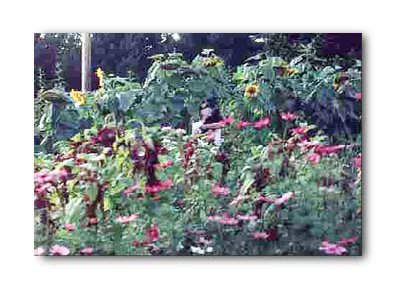
The author is dwarfed by towering sunflowers in his lush garden. GARDENING IN THE NEW MILLENNIUM (Orchard photos taken July 3, 2015) The virtual world wide drought conditions now unfolding will mean mass starvation, famine on a Biblical scale, so growing your own food may be vital to survival. This also means you will have to protect your crops from predation by those who would rather steal your food than grow their own. Drought will mean that many of the dependable crops for your area can no longer be easily grown, so alternate crops like drought tolerant amaranth and millet will be life savers, literally. A tremendous advantage to amaranth ("Love Lies Bleeding") and millet is that very few people will recognize them as food crops!
See some fabulous photos of an autumn harvest from Seed for Security. We will need "fuel foods" to have the strength to work and survive!
Greenhouse gardening in the near future might well be necessary for the survival of the family unit. Ozone depletion, increasing ultraviolet radiation, drought conditions, and famine will be obstacles to overcome. Growing edibles in greenhouses may well be necessary. For an idea of the wide variety of greenhouse designs available, visit www.FarmTek.com. You can build your own greenhouses, of course, as I have (scroll way down). A greenhouse can also be used out of season to grow transplants for next season and cool weather crops all winter for Northern gardeners. Designed by Robyn Parry, noted Permaculture expert in Australia, the "NO DIG GARDEN" could easily be used inside a greenhouse. In colder climes or harsh conditions, the "No Dig Garden" combined with a portable or hoop greenhouse could be a lifesaver. Now there is an excellent new article on No Dig Gardening that should be read by everyone, No Dig Gardening - A Beginner's Guide, by Elizabeth Waddington. You will need to save your own seed for replanting, which means understanding pollination and cross pollination. If you do not have seeds to save and wish to purchase garden seeds commercially prepared for long term survival, "Seeds for Survival" offers a good selection.
Water for gardens in drought conditions could mean that so called "grey water" will need to be used for irrigation, and it can be filtered through a straw bucket filter (see " Making Lye Water") to remove most of the sediments and soaps. A rain water catchment and storage system is also vital (see "Booklets by Miles"), as even morning dew accumulating in the house rain gutters can be collected in a severe water shortage for watering plants as needed. Gardens may be hidden by planting tall hedge rows of edibles along the sides of the garden, such as sunflowers, Jerusalem artichokes, or even climbing vines of pole beans or Scarlet Runner beans, as I describe in The Secret Garden. In some cases it will be necessary to switch crops to those normally thought non edible: dahlia's grown instead of potatoes for edible tubers, amaranth and millet for grain, Turk's Turban squash instead of pumpkin or squash. The Secret Garden booklet is available from me for $3.95. Click here.
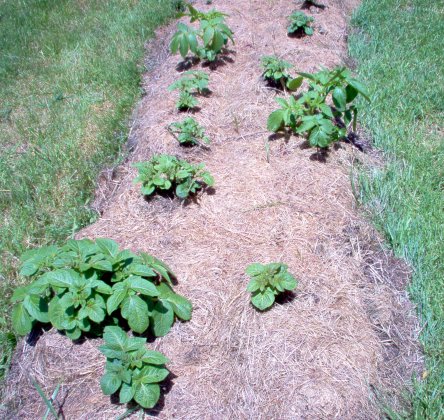
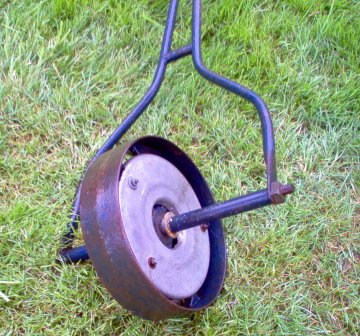
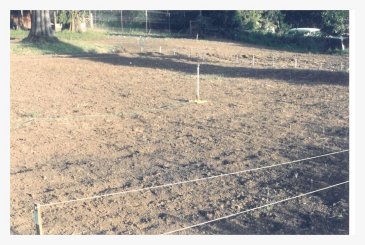
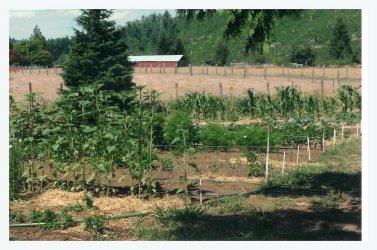
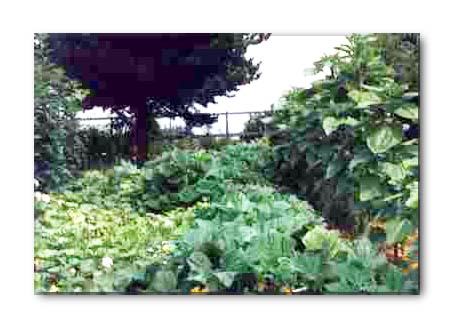
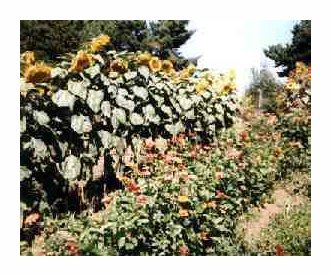
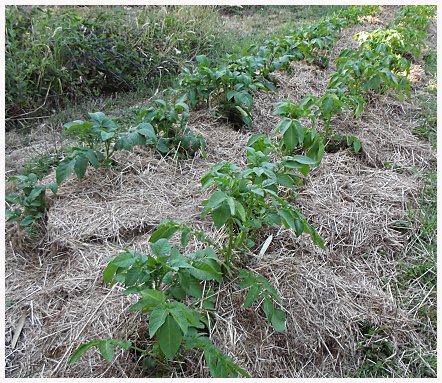
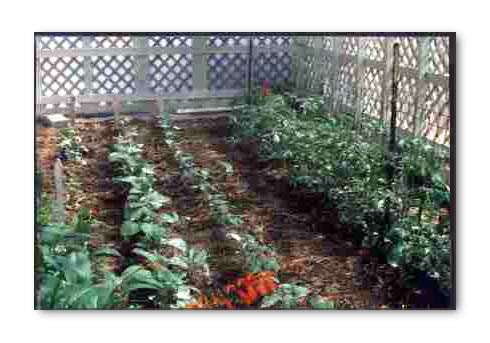
Buckwheat in foreground, orchid greenhouse (also used for starting seeds) in background Those living in safe rural areas will most likely be able to continue normal row gardening, as they will be in a more secure location with more land for gardens. Those living on small lots in a suburban setting can use French Intensive, or double-dug, gardening techniques to improve their yield per square foot. Greenhouse gardeners may also utilize the French Intensive method of gardening. The pH level should be tested and adjusted to be about 6.5 for maximum production, as most garden plants prefer soil in the 6 to 7 pH range: the varieties preferring more acid soil are not well adapted for French Intensive or greenhouse growing. The ideal, of course, is a garden producing edibles all year. ROW GARDENS Most gardeners use the standard row crop planting method. First, the soil is prepared, the area planned well, then plotted, and the rows staked and string lined. Tilling between the rows before the seedlings are well established is possible, as the string lines provide a guide line. As the plants grow, the string lines can be removed. Plant roots are fed from subsurface water if the ground is compacted. That is why excessive walking between the rows is discourage - footprints compact the soil so weeds grow better! Now extend that thought just a bit. Once the seeds are planted, the soil above them should be compacted to establish that capillary action. Some people simply walk down the planted rows like on a tight rope to compact the soil over the seeds, but that is rather primitive. I made a row compactor to do that job in a controlled, even manner. Depending upon the garden plan, crops may be interplanted. With this method, flowers such as calendula and cosmos may be planted to attract bees, butterflies and insects for pollination (You will need viable seeds: no bees, no seed!), while neighboring rows of vine crops such as squash are grown between concealing rows of sunflowers and Jerusalem artichokes. Rows of beans or cabbage, etc, should have the area between the rows covered with straw or grass clippings to suppress weeds as well as conserve moisture.
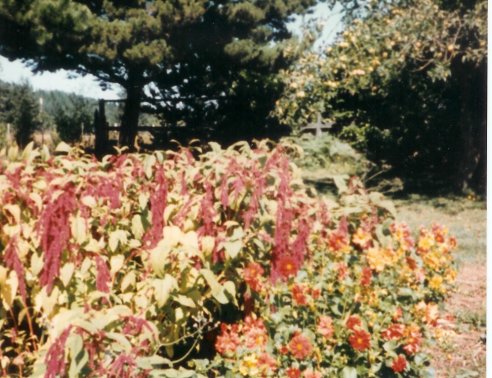
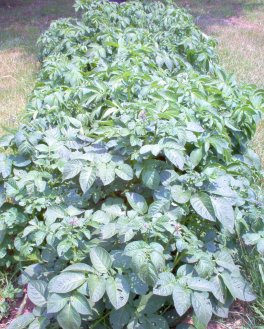
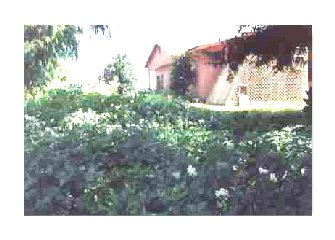
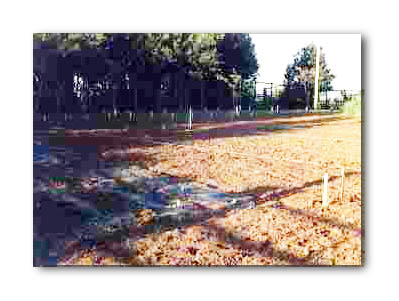
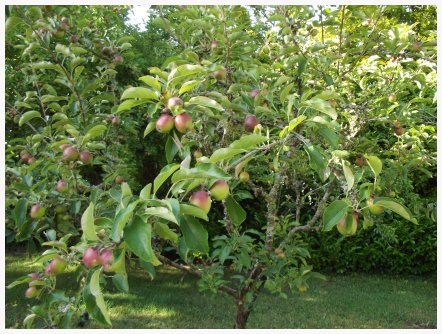
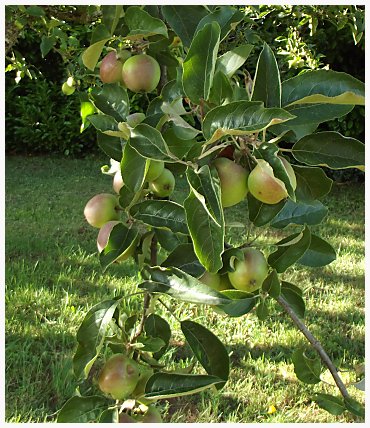
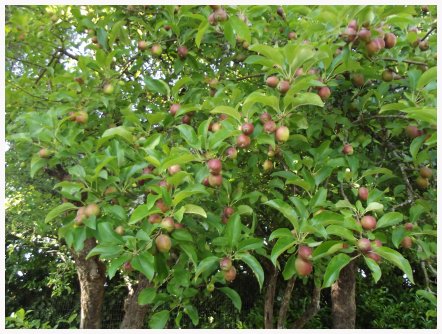
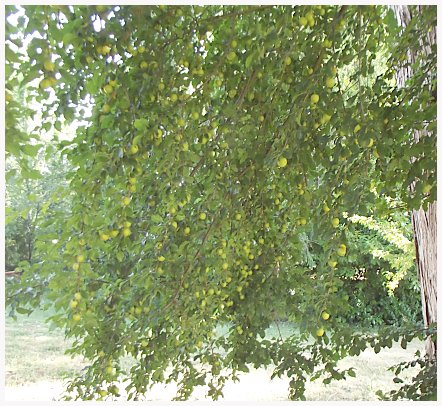
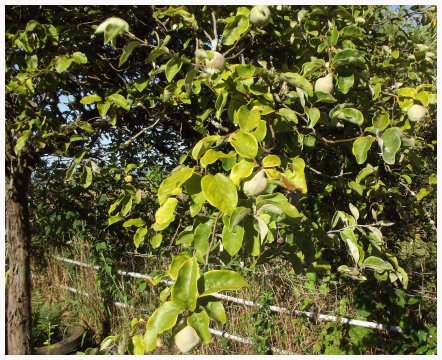
[North side of garden ready for planting; South side planted; interplanted flowers and cabbage; sunflowers interplanted.] Open field gardens such as shown above should have a ground cover for the winter to prevent erosion. Some people use a blend of subclover and Austrian field peas as a winter ground cover, which works well in colder climes. Living in a temperate area, I prefer to use fava beans as a cover crop, as they overwinter well, fix nitrogen in the soil at a higher rate than legumes, have a huge root structure which breaks up heavy clay soils and adds humus to the subsoil, and they can be eaten! Photos from the orchard on July 3, 2015
`
`
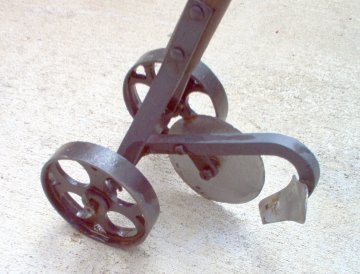
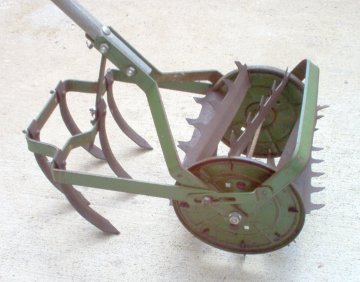
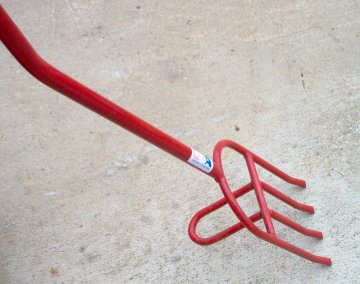
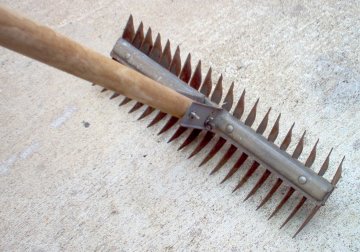
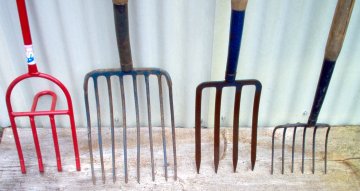
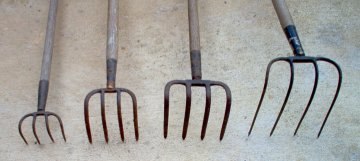
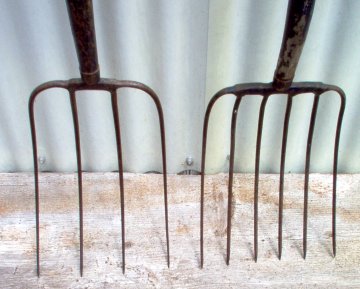
Mankind existed and grew crops before the invention of the tractor and rototiller. Shovels, digging forks, hoes, and wheel cultivators all will make soil sufficiently friable for planting a garden, but it is hard work. (See Choosing Gardening Tools by New England Gardener). That is when the French Intensive mound system can be a life saver - after the first dig.
Distinctly different areas of the country often require different gardening plans. I live in the Maritime Northwest, 10 miles from the Pacific Ocean. New England Gardener lives on the opposite side of the country in Vermont. Growing conditions between us are quite different! For the views of an excellent gardener on the East Coast, see the following articles by New England Gardener.
Those interested in learning more about walk behind tractors can join an e-mail Yahoo Group devoted to this endeavor, moderated by New England Gardener. See http://groups.yahoo.com/group/simplicity_walking_tractors/ ~~~~~~~~~~~~~~~ CREATIVE IRRIGATION by Tom T. from Georgia Farmers don't have to drown their crops with scarce water. I had an uncle who had a large garden far from a water source. He mounted a 55 gal. drum filled with water on his lawn tractor trailer. He got milk jugs, cut small holes in the bottoms of two sides, and "planted" these jugs between plants with only the neck showing above the top of the soil. The two small holes on the sides of the jug face the plants to the sides. The holes are very near the bottom of the sides. This technique will work well on any size garden. The only problem I've encountered with this irrigation system is the jugs floating and lifting out of the soil in heavy rains if the jugs are empty. You may have to weigh the jugs down with some gravel if the jugs float and give you a problem. He put mulch around the plants to preserve the moisture in the soil. He drove his lawn tractor between rows of plants and used a long hose with a stiff tube attached to the end that was long enough to reach the bottle tops. He just drove down the rows gravity filling each submerged jug in seconds. He never even had to stop the tractor which was moving at idle speed He just moved the wand from jug to jug filling each as he drove by. The jugs fed the roots of the plants, not the topsoil which evaporates too fast. His plants were always green during droughts when the larger farms using wasteful aerial irrigation lost their crops. This submerged bottle system is a simple technique that is cheap and easy to do. Even just direct watering each plant base instead of aerial spraying the water is a vast improvement for water conservation. It takes a lot of water to make "man made rain." Tom T. in Atlanta ~~~~~~~~~~~~~~~~~~~ GREENHOUSE BUILDING
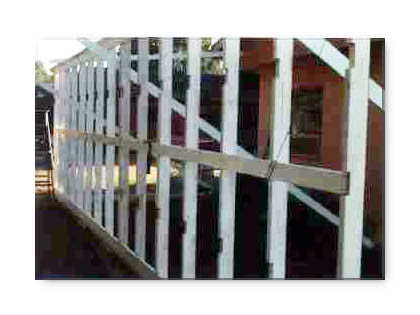
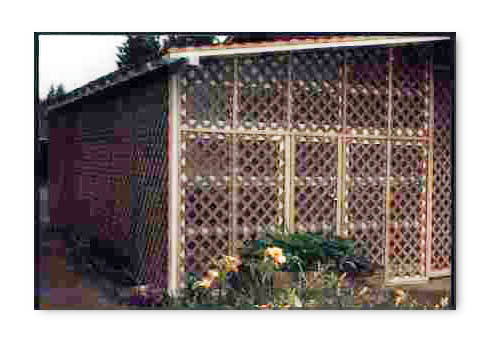
Building a greenhouse is not too difficult for most people if the project is planned thoroughly. The greenhouse can be built with simple 2 x 4 construction, and can even be a "lean to" style against a home or outbuilding on a South facing side. The thumbnail photos above show, left to right: long side wall up; rafters and bracing in place; removable end bracing (screws, not nails); end wall finished; and peppers happily growing in rows in the finished greenhouse. Much more on this subject at GREENHOUSES FOR GARDENING. PRESERVE YOUR PRODUCE!
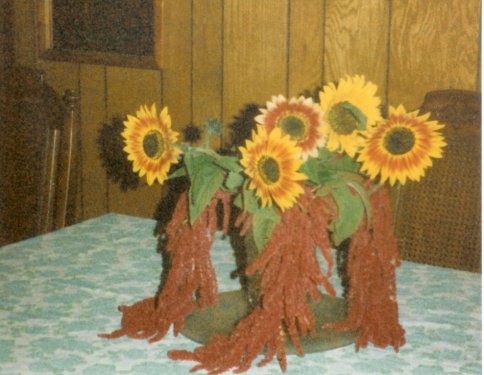
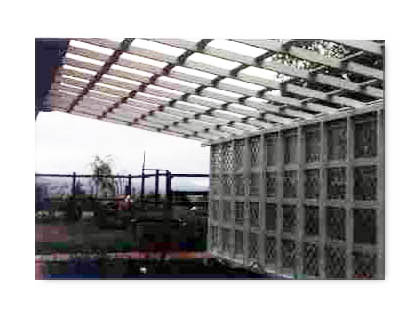
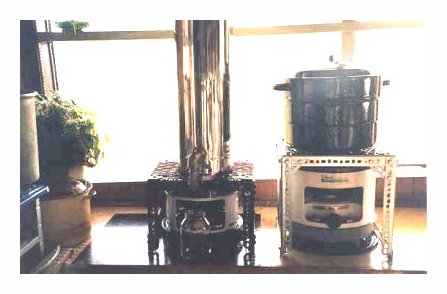
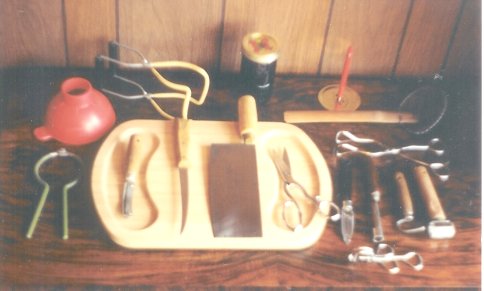
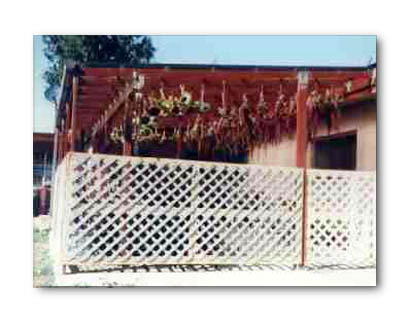
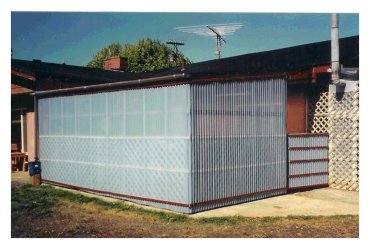
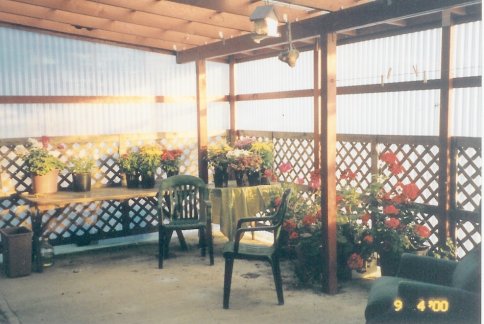
Crops must be preserved by dehydration or canning. Canning of garden produce even if the electricity is off is still possible with a kerosene powered kitchen. See " #11, Home Built Items," for tips and tools that make massive canning projects much easier. DRYING GRAINS & HARDENING SQUASH FOR LONG TERM STORAGE No edible vegetables, fruit or grains can afford to be "windfalls" to be eaten by raccoons or left to rot in the fields...your life may well depend upon this vigilance! A covered patio (with translucent panels) is excellent for drying grains and seed pods by hanging bundles from the rafters. The photos below show amaranth and sunflowers hung from the patio rafters and drying, and the patio when enclosed with PVC panels to increase the heat for quicker drying.
On the concrete patio itself, squash may be properly cured for a week in the hot sun, and be safe from evening dew.
Don't forget there can be no long term gardening without plants being pollinated, and the most efficient pollinators are honeybees. Sure, you can purchase pollinated seeds and grow a crop this year, but what about next year? The brassica's (cabbage family) and many other plants need to be over wintered before they make viable seeds.
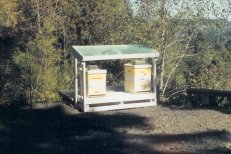
That may mean you have to become a beekeeper. Raising honeybees is not a simple task - hundreds of books have been written on the subject, including a good one by me entitled "The Honey Factory." The two hives shown above, photographed in April, 1995, produced 645 pounds of honey in that year alone - a world record for two hives sitting side by side. Of course that is not normal, as the average is about 45 pounds of honey per hive. My average production is about 200 pounds of honey per hive per year, except in drought years when the nectar flow is abysmal. With advance planning, good site selection for the hives, and knowing what to do and when to do it, a good surplus of honey can be produced which will supplement your food supply to great advantage. See "Beekeeping" for more information.
|
1. Food |
2. Manna Meals |
3. Water |
4.
Sanitation | 5. Medical, health
|
| 6. Kerosene heaters and cookers | 7. Lighting | 8. Wood cooking and heating | | 9. Communications | 10. Essential Tools | 11. Home built items | | 12. Electrical; generators and power | 13. War preparedness | 14. Gardening |
|
|
|||||||||||||||||||||||||||||||||||