A guide to self reliant living |
||||||||
|
6. Kerosene heaters and cookers 12.
Electrical; generators
Miles Stair's
SURVIVAL
Miles Stair's
SURVIVAL |
7. Lighting, by Miles Stair
We now enjoy the benefits of electric lighting, powered by electricity delivered to our homes through the national power grid, giving no more thought to lighting than it takes to flip a switch or write a check to pay the monthly electric bill. Few realize the grid is very fragile: a few years ago a tree fell in the mountains, touched several high voltage lines, and the ripple effect took out the power to 9 western states. In January, 2000, someone sabotaged a single transmission tower in central Oregon by simply cutting a guy wire support, and when the tower fell parts of three states lost electricity. The power grid intertie works both ways! It can feed power from one part of the country to another, but if one segment goes down, it can pull the entire system down with it.
Imagine the scenario if a group of dedicated terrorists made a concerted effort to sabotage the grid - no electricity for a long time. But far worse is planned. Spetznaz troops were actually caught several years ago on top of Hoover Dam. Alexander Lunov has stated that Russian backpack nukes are already buried on American soil -- and targeted for Grand Coulee on the Columbia River and Hoover on the Colorado, among other infrastructure targets. Recent reports say that Osama bin Laden has purchased 20 of the Russian backpack nukes, some of them already on American soil. The Chinese military has published articles on how they would target America's infrastructure PRIOR to any conflict. By any measure, our electrical grid is a fragile, far flung target -- a tempting target for any terrorists, and one relatively easy to take out. It is therefore entirely prudent to plan on living without electricity provided by the national power grid. But how are we to provide lighting for our homes? The vast majority of American homes would get really dark after the remains of pine scented Christmas candles were used up -- perhaps a few hours at best. The answer, of course, is to provide lighting for ourselves.
Running a generator for electric lighting can work for a short power outage, but is a gross waste of precious fuel for any prolonged use. For nonelectric reading light we must return to advanced 19thCentury technology - kerosene lamps.
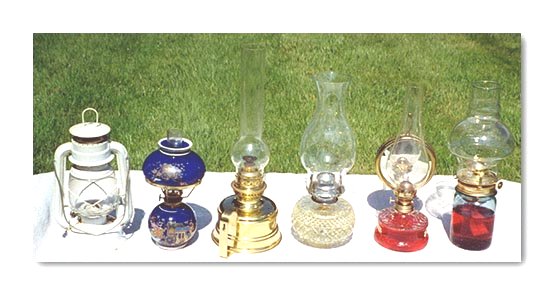
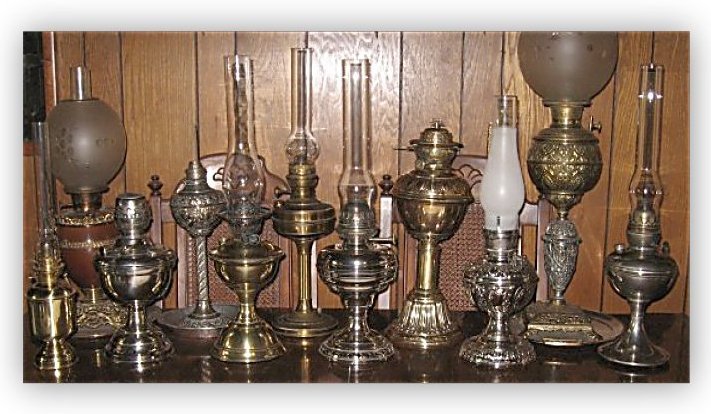
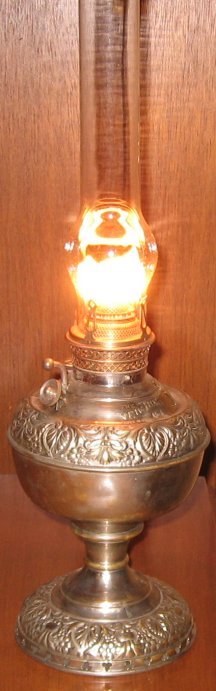
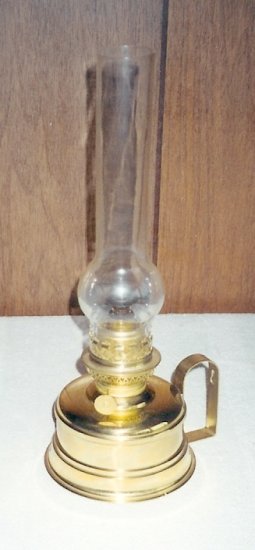
Victorian Era center draft lamps were designed and manufactured for daily use before electric lighting became available. They are the finest lamps ever made and work now as well they did when new, given a bit of tender loving care. See how to operate these lamps at my lighting site - www.MilesStair.com Pressure gas lanterns, such as the Coleman, are commonly used for camp lighting, and are widely available. But these gasoline fueled lanterns are NOT designed for indoor use, are noisy, produce noxious fumes, and require fuel which may not be available. The unprepared will use Coleman lanterns until the supply of fuel or parts disappear, so it would be a wise choice to stock up on mantles as barter stock, as most campers only keep a few spares around. Coleman did make a good kerosene pressure lantern: these operating instructions are courtesy of New England Gardener.
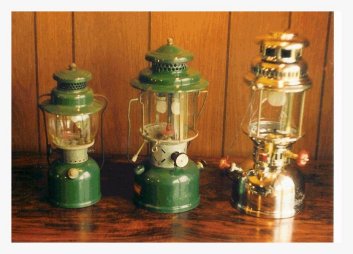
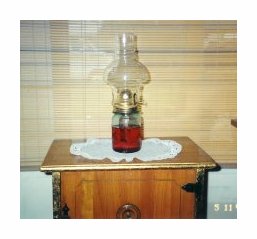
The best possible pressure lantern is the Petromax , followed closely by its clone, the Butterfly 828R (right, above). Either of these units are so well made and versatile as to make the Coleman appear to be a toy (Coleman single mantle left above, double mantle in the center). And the Petromax has been perking along virtually unchanged for over 80 years, providing reliable lighting in the bush under extremely adverse conditions. They burn just about anything that could reasonably be called a fuel - kerosene, diesel, gasoline, corn oil, alcohol, etc, although for indoor use only kerosene should be used. I highly recommend the Petromax or its "Butterfly" clone, providing one follows the Petromax operating instructions and the Owner's Manual very carefully. In the event of hostilities or dangerous conditions, however, it is would be wise to keep the Petromax out of use for a time, as they produce sufficient light to act as a beacon to have - nots. Why advertise? Rebuilt Petromax lanterns are now available for very reasonable prices from one source. I have not checked them out, merely provide you with the link to GENIOL U.S.A., Inc. for your information. For average use, regular wick style kerosene lamps and lanterns will provide the greatest use. Exotic models such as the Aladdin provide excellent light output, but the mantles and chimneys are quite fragile. At over $100.00 each, these models are also expensive. The Kosmos provides less light than an Aladdin, but is incredibly sturdy and half the price of an Aladdin. The wicks and chimneys for Kosmos lamps are about a quarter the cost of similar parts for an Aladdin lamp. No contest there at all. The Czech mirror wall lamp is an excellent lamp, designed for years of service. They provide sufficient light to illuminate a room - while hanging safely from a wall. At a cost of only about $20.00, these units are highly recommended. They do look cheap compared with a Kosmos lamp, but they work, and you can get 4 of them for the price of one Kosmos Consierge!!! The best buy for quality and light is the Mason Jar Burner lamp from Lehman's - if they still have them. These units consist of a short, hooded chimney, a #2 burner, an adaptor to fit a small mouth Mason jar, and a wick. See the Kerosene Lamp Test for more details. There are of course cheap and fragile glass kerosene lamps sold at most discount stores, but these units are NOT designed for heavy duty use - they are more like occasional "mood enhancers." Nice to have, lovely to use occasionally, but I would not want to depend upon these alone for years of service. Also, extra chimneys are usually not available, rendering the lamp useless if breakage occurs. Kerosene lanterns are best defined as the Dietz style, with a wire bail for easy carrying and wire guards that provide limited protection for the glass globe. This style of lantern is known for reliability and sturdiness. Even old railroad lanterns can provide years of service if cleaned properly . I have a bunch of them in various styles, sizes and vintages, and recommend them highly. If you have a motor home, camper or trailer, the sturdiness of this style of lantern makes them highly desirable for portable lighting. Burn kerosene in kerosene lanterns! LAMP FUEL
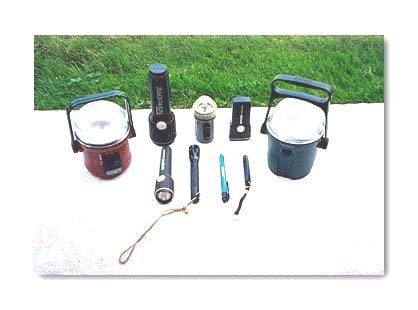
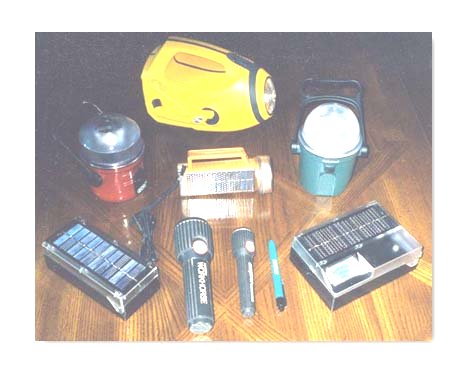
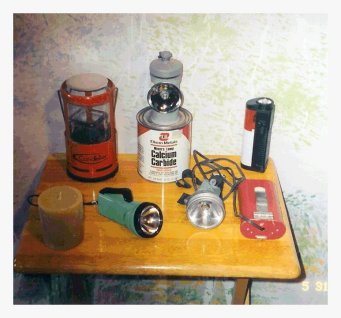
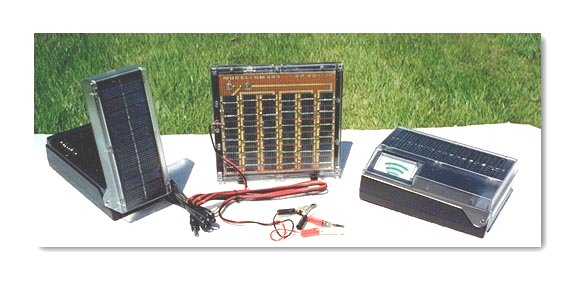
Perhaps one of the biggest jokes in the world is "Liquid Paraffin Lamp Oil," priced at about $20.00 per gallon. As few people these days have any familiarity with the history of lamps, their design, or their fuel, they actually buy "Liquid Paraffin Lamp Oil" to burn in kerosene lamps. The lamps were all basically designed before 1890 to burn coal oil, so they are still called "oil lamps" even though coal oil was replaced by kerosene well over 125 years ago. But some marketing genius realized that kerosene is called "paraffin" in England, but by that name is a solid waxy substance in the US, so why not call clear kerosene "Liquid Paraffin Lamp Oil" and fleece the unwary? It worked! I've seen people buying "Liquid Paraffin Lamp Oil" for $19.95 a gallon!!! Spending real money to ruin a perfectly good lamp. If you absolutely must have scented lamp oil, you can easily make your own for pennies per gallon. FLASHLIGHTS AND LANTERNS Kerosene lamps do not project a spot or beam of light such as heavy duty flashlights and lanterns. Heavy duty battery lanterns are of great utility outside at night, while flashlights are very handy indoors. Both require the use of batteries, and fortunately we have NiCad batteries available at very reasonable cost. Most of us have NiCad batteries and solar chargers, and the flashlights into which they fit. Virtually all flashlights or lanterns sold these days proudly advertise their super bright Krypton bulb. And you have undoubtedly discovered that the amp draw from those Krypton bulbs quickly depletes NiCad batteries. Solar chargers typically only hold two NiCad D cell batteries - and it takes a full day of sun to recharge them. A problem, obviously. The solution is to use bulbs that aren't as bright, but have much less amperage draw (see LED Lights). And, in some cases, to use a lantern with a low light option that really extends the battery life. See the Battery Primer by New England Gardener for more details. For lanterns that use four D cell batteries, Radio Shack sells a durable lantern with a high and low power setting. The model 61-866 comes with a Krypton bulb, of course, but it can be easily removed and replaced with a standard PR-13 bulb. The combination of the low power setting and a PR-13 bulb greatly extends the useful life of NiCad batteries, and LED bulbs that replace the standard PR series are even better. I have never found a flashlight holding two D cell batteries with a high low power option, but it isn't required. If you like to dig around in little bins at a hardware store, you can find three replacement bulbs for replacing Krypton bulbs which will extend battery life. The standard bulb for two D cell flashlights is the PR 2, the heavy duty bulb is a PR 6, and now there is a special bulb made for NiCad batteries, the PR 1. The PR 1 will greatly extend battery life of NiCad's when compared to a Krypton bulb, and is worth the effort to find. To keep NiCad batteries charged, solar chargers will work well. The chargers come in several styles: pure chargers with a meter, and chargers with a pigtail which can be used to charge small appliances or power a radio. As most models of solar chargers can only charge two batteries at a time, I recommend one of each type. It is possible to make your own 12 volt battery adaptors as well. It is possible to power regular 110 volt AC resistance bulbs with an inverter powered by a 12 volt DC RV battery, but that requires a much larger (and vastly more expensive) solar panel. This system works - for those wealthy enough to afford it. The rest of us will have to make do with quality kerosene lamps for regular lighting and battery powered flashlights and lanterns to project directional light. A new alternative for lighting has appeared on the scene - LED lights. A few years ago, LED lights were mere novelties, but now they are extremely practical, drawing very little energy, and by selecting the correct LED lights they can be powered directly from a 12 volt RV battery...recharged from a solar panel. The pioneer in this field is "New England Gardener," and his comments appear on the link above. Those comments will be expanded as he writes to me, and soon there will be photos to go with his comments. Ultimately, we will all be making candles.
| 1.
Food | 2. Manna
Meals | 3.
Water | 4.
Sanitation | 5. Medical, health
|
| 6. Kerosene heaters and cookers | 7. Lighting | 8. Wood cooking and heating | | 9. Communications | 10. Essential Tools | 11. Home built items | | 12. Electrical; generators and power | 13. War preparedness | 14. Gardening | |
|
||||||