|
A guide to self reliant living |
||||||||
|
6. Kerosene heaters and cookers
12.
Electrical; generators
Miles Stair's SURVIVAL
Miles Stair's
SURVIVAL |
KEROSENE HEATER WICKS
Remember that a kerosene heater will not function without a wick. We are rapidly heading into uncertain times with an unsure economy when normal supply channels may well be disrupted. For the sake of safety it would be wise to have on hand at least a few spare wicks for each kerosene heater you own -- it is a good investment for a secure, warm future.
There are many manufacturers of kerosene wicks, such as the CUI brand which is popular in England and Canada. These are fine wicks, and half the price of factory wicks. It is your choice. [And five years after writing this about CUI wicks, I now have them in stock at my Wick Shop.] To find a wick for a common brand name heater, use the alphabetical list. To find a wick for a really odd or rare kerosene heater, perhaps with a peculiar brand name, you will have to measure the existing wick diameter and length, following the directions I have provided. I can almost always find a wick that will fit precisely.
Remember that the capillary action of wicks is virtually destroyed by water...cotton in particular will absorb water, then the lighter kerosene is denied a capillary "path" to the top of the wick. Performance (clean, odor free heat output) is seriously degraded by even a little water in the kerosene. To circumvent that problem with cotton wicks, add a half eyedropper full of 91% to 95% alcohol to the tank of fuel before the wick is "burned dry." The alcohol will absorb the water and burn it off with the kerosene. The alcohol burns at a higher temperature than kerosene, so red dye kerosene will burn cleaner with alcohol or "Wick Cleaner." If a fiberglass wick is saturated with water, it is best to remove the wick and wash it with alcohol (and air dry) before reinstallation in the appliance. The same alcohol trick can be used to clean the wick if the wick becomes saturated with diesel or oil by mistake [No guarantees, though. The wick may well have to be replaced.]. If you are using red dye kerosene, using an eyedropper of alcohol every tank full will keep the wick from needing to be burned dry as often. Pure alcohol is not that hard to find...it's in almost every hardware store, sold as Shellac Thinner. It's wood alcohol, so don't let anyone drink it or they will go blind! If you find yourself with only cloudy kerosene and no alternative fuel available, the kerosene can be slowly filtered through a chamois cloth in a large funnel. Wring out the chamois and repeat until the fuel is clear. Or if you're high tech, funnels which filter out water are readily available. Due to the high degree of combustion efficiency with kerosene heaters, it is not necessary to add any scents to the kerosene -- why add an aroma when none is present? (That does not hold true for kerosene lamps, as they do not have a combustor unit and thus are relatively inefficient.) "Burning dry" circular kerosene heater wicks is important to their efficiency. If the wick does not raise and lower smoothly, it is time to burn it dry. It is best to visually examine the wick after every use: if you see tar balls on top of the wick, siphon the fuel out of the tank and burn the wick dry. If the tar on the wick becomes too thick, the wick can tear when retracted to turn off the stove, and the wick must be replaced. To avoid this problem, take the stove outside and blow out the flame. AFTER the stove has cooled down, gently crush the top of the wick with smooth faced paddle bladed pliers. My favorite pliers for this use is the Ace Hardware "Flat Nose Pliers" #ACE2004216. The wick should then retract. Empty the fuel tank, raise the wick and burn the wick "dry" to burn off the tar deposits - outside under cover, as this process will produce some odor. How often to "burn dry" a wick? There are a lot of factors involved here. A new or nearly new wick burning "water clear" 1-K kerosene should use at least 30 gallons of fuel before needing to be "burned dry." When using red dye kerosene some lots will not need to have the wick burned dry for up to 15 gallons of kerosene consumed, while other batches of red dye kerosene are bad enough to require burning the wick dry every 5 to 10 gallons of kerosene. The red dye can cover up a lot of sins. When should a kerosene heater wick be replaced? After the wick is burned dry, examine the top of the wick.
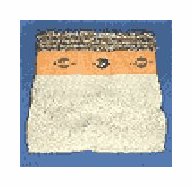
Kerosene Heater Wick Source - Click the graphic below.
|
|
||||||