
CONDUCTING GARDEN TRIALS
by
New England Gardener
You can only learn what crops will do
well in your own garden by experimenting. Try a small
area of several varieties, and pay close attention to how
much work they are to take care of, how well they yield,
and how well you like the taste of them.
To me, the most important crop is dry
baking beans, because they are high in protein. We let
the string beans fully mature and dry, after several
pickings, and of course there are varieties intended to
be grown as dry beans. Peas may be the better choice
where you live, or lentils, both of which have even more
protein than many beans.
|
|
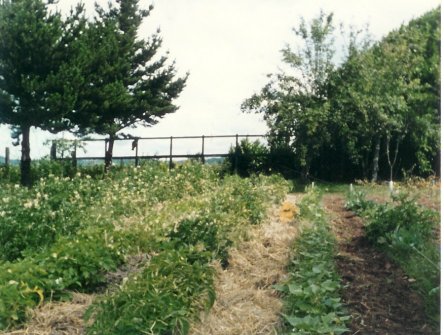
Rows of snap beans grown by
Miles Stair for trial. The winner for my
particular micro-climate was Eastern Butterwax bush beans.
To determine which variety is best for your microclimate, a garden
trial is necessary. I was looking for the fastest maturing
plant with the heaviest yield and best disease resistance |
Shell beans, sometimes called
horticulture beans are harvested later than string beans,
and the immature seeds are eaten. They can also be left
to fully mature, and dry to be used like baking beans.
They both make hearty soups too.
If you are not familiar with the
various kinds of beans, look for canned ones to try in
the ethnic section of your grocery store. Your own will
taste better though. Miles found Eastern Butter wax beans
did best in his climate. Provider green beans won in our
trials here, and Derby was not too far behind. After they
mature, and dry, we bake those too, but I don't remember
what color the seed is. Olympic or Olympia, peas yielded
the best here, but I don't see them anymore. Agway (a
chain of farm supply stores) was the last to have them,
but I have been ordering Dakota from seed houses, and
that's fairly close.
|
The
Secret Garden
This booklet develops
the concept that gardening in the new Millennium
may be very different, and presents plans on
survival gardening, maximum yield of edibles per
area, how to make a "French Intensive" garden as
well as an all-year vegetable garden. Order here.
|
Many varieties of sweet peas don't do
very well here, but the string beans are less fussy. We
have grown the Alaska peas, and dried them for soup when
mature. They are better for that than the ones we grow to
eat fresh, but they don't yield very much, so we don't
usually bother with them. We never did well with peas you
have to trellis, and a few years ago we did trials of
pole beans, including several heirloom ones Nan's father
and grandfather grew only ten miles south of here. None
of them fared much of anything at all, even though we had
them check how we planted them, and put up the poles for
them. They both had been sure we were doing something
wrong, so they checked carefully, but they just won't
grow here.
I think it's good to do trials of one
or two crops every year, to learn what grows best right
in your garden. For potatoes, it's either Kennebec or
katoden. I love the thick, crusty skins on baked Green
Mountain potatoes, but they don't bear half as much as
the other two varieties, so I only grow a few.
You should rotate all your crops, so
you don't grow anything in soil you used for that crop
last year. Potatoes like new ground that was grass last
year best, and because of soil born diseases, cut the
seed potatoes, and leave them in a cool dark place until
the surfaces are dry. Some people then coat them with
agricultural sulfur, to prevent soil born disease from
lowering the yield.
Colorado potato beetles are a major
pest here. They lay there eggs in the soil near the
potatoes, so move them as far as you can from where they
grew last year.
If you are able to widely separate
where you grow them, and are at an elevation above 800
feet, you will probably be able to save your own seed
potatoes from year to year most of the time. If you could
trade with a neighbor that is not to close, that will
help too. Before modern soil sterilization techniques,
seed potatoes were grown in the Catskills of New York, an
elevated plain, or in Colorado.
The other crop that really needs to be
rotated is the cabbage family, including broccoli,
cauliflower, kale, Brussels sprouts. They can get
clubroot, and it can live in your soil for twenty years,
infecting any cabbage family crop you try to grow there,
and ruining the yield. You need a two year rest after
growing these crops in the same spot. You may be lucky,
and not get it, but if you do, it's a big problem. Pull
all the roots from these plants after harvest, and burn
them, or get them far from the garden. Don't compost
them. Transplant the ones you want to save for seed to a
separate isolated bed, for their second year. -
New England Gardener

