|
A guide to self reliant living |
||||||||||||||||
|
6. Kerosene heaters and cookers
12.
Electrical; generators
Miles Stair's
SURVIVAL Miles Stair's
SURVIVAL |
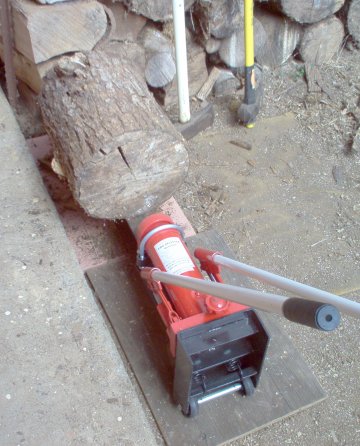
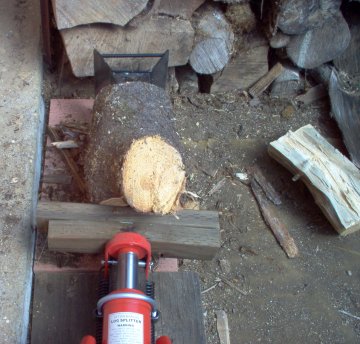
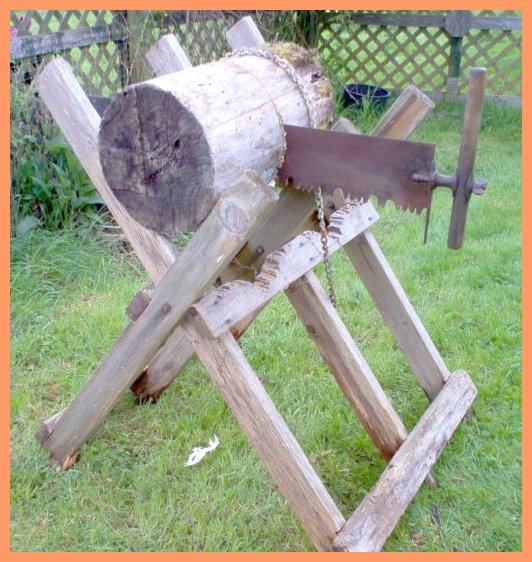
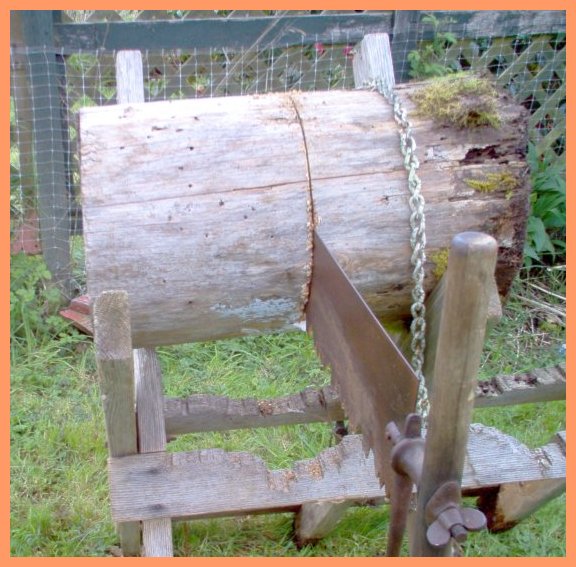
HYDRAULIC LOG SPLITTER Log splitting tools are highly specialized for performing a single task - safely and efficiently splitting wood. We use saws to cut lengths of log rather than gnaw through them, and chain saws are more efficient than crosscut saws. Similarly, hydraulic log splitters are more efficient than mauls, sledge hammers and wedges. For ultra long term use, simplicity is always best: a crosscut saw does not need gasoline, spark plugs, etc; and sledge hammers, wedges and mauls will (with proper care) last longer than a hydraulic log splitter. But for ease of use - to save your back! - a hydraulic log splitter makes a lot of sense if the firewood being split is at all tough. Lodgepole pine and other incredibly soft woods with a diameter less than 6" can be split with a six pound maul so easily that using a hydraulic log splitter is a waste of time, but tougher woods yield easier to a hydraulic log splitter. Both a hydraulic log splitter and manual tools will be needed at times, so don't throw away your wedges and mauls when you get a hydraulic log splitter! About six years ago, a tree blew down in a neighbor's yard, so I could get that firewood for free. One problem. The tree that blew down was an old growth spruce with a base diameter of over six feet, and 70 feet long. No way in the world could sections from that tree be split using a hydraulic log splitter because the 16" sections were far too heavy to move. And with knots one foot in diameter, many sections could not be split using any method. So I "cubed" that entire tree using a large chain saw. A 16" section would be cut off, rolled away from the trunk of the tree to a positive stop (a large section of limb), then cut horizontally from left to right in 4 to 8" slices depending upon knots. After cutting horizontally for a foot or so, I would drive in a wooden wedge to keep the cut open, and not cut the last inch or so on the right side. After all the horizontal cuts were made, the wooden wedges were knocked out and the section of log cut vertically every 4" or so. The resulting chunks were rectangular and stacked nicely. Those without a huge knot were split into chunks before use, while those pieces which consisted almost exclusively of a knot had to be sliced again using a chain saw. I went through one chain for my chain saw on that log, but I got 10 cords of wood from the effort!
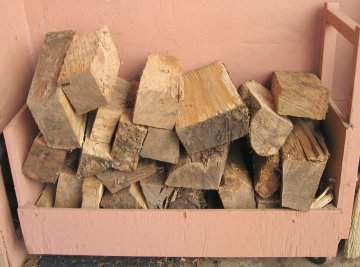
In the photo below you can see several blocks of myrtle that I had to "cube" because the tree was too large in diameter to split whole sections. "Cubing" works, but you have to cut with the grain - the chain saw bar must point down the log, not across the grain from the top of a cut section. Trying to cut the end of wood fibers is an exercise in futility and just wears out a perfectly good chain saw chain with no real benefit.
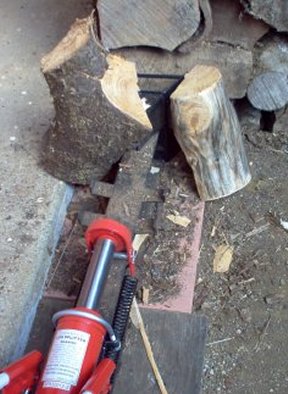
Defeat!
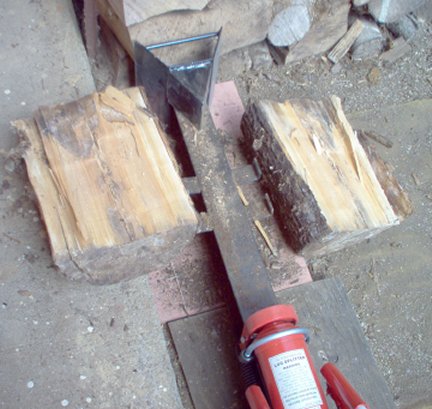
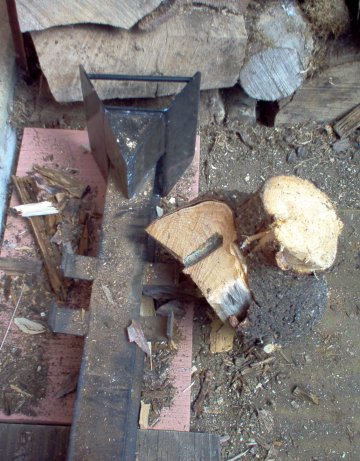
CARE AND MAINTENANCE OF A HYDRAULIC LOG SPLITTER Before storage, the log splitter should be cleaned off and polished. Look at the photo above. The main support rail is covered with wood chips and the wedge clearly will have some paint removed down to bare metal. If green wood is being split, sap will accumulate on the main support beam and wedge: all sap and residue must be removed or the metal will rust. Usually auto cleaner/polish will remove sap, but if not, sap can be dissolved with mineral spirits. The surface is all painted metal, the same as automobiles, so an automotive cleaner/wax will keep the metal rust-free in good condition. Always store the log splitter with the bleed valve (release screw) open, so the hydraulic ram is completely retracted and not under pressure. That will prevent loss of hydraulic fluid past the seals during storage. Put the levers or operating pumps into the fully retracted position, so the small hydraulic pump pistons are not exposed. They are bare metal and can rust in storage, and if the surface of the pistons becomes rough, they will greatly decrease the useful life of the rubber seals and gaskets. THE HYDRAULIC UNIT For proper operation, the hydraulic cylinder must be bled of air. If the log splitter has a notable lack of power, the hydraulic cylinder may have air in the system or be low on hydraulic fluid. Adding hydraulic fluid: 1. Remove the oil filling plug and add hydraulic fluid until it is 3/4th full. 2. Then bleed the system of air. Bleeding the cylinder: 1. Extend the piston rod to its maximum length. 2. Remove the oil filling plug. 3. Turn the release screw counterclockwise as fast as possible; the piston rod will retract into the cylinder and push air out of the oil filling hole. 4. Replace the oil filling plug.
RELATED LINKS:
|
|
||||||||||||||