|
A guide to self reliant living |
||||
|
6. Kerosene heaters and cookers 12.
Electrical; generators
Miles Stair's SURVIVAL
Miles Stair's
SURVIVAL |
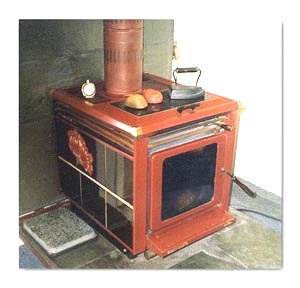
CHIMNEY FIRES There is no one easy answer to chimney fires, as many situations are different. Flue fires in a real, brick chimney are a real problem, as the draft controls necessary to shut off the flow of oxygen to the chimney are simply not present, and the mortar between the bricks could be old and cracked. Generally, in the case of the brick chimney flue fire, the easiest way to put out the fire is to throw a glass of water directly on the fire: the water will flash into steam, rise up the chimney and inhibit oxygen, and snuff out the fire. Sometimes a second glass of water is needed, but not often. (Note: The steam can damage a chimney and it must then be inspected before use.) Some people have reported success in putting out chimney flue fires with a mug or drinking glass full of salt thrown on the wood, but I have not tried this. Airtight stoves and tight fitting, stainless steel, insulated stove pipe are a different matter entirely. Due to the nature of the stoves (particularly if they have an automatic draft control for temperature regulation) they WILL build up a layer of creosote in the chimney, and that creosote WILL burn. If a flue fire gets started in an airtight stove, a small glass of water thrown on the fire will flash to steam and inhibit the flue fire, BUT it may also severely damage the stove: glass doors can break, the steel or cast iron may not be able to adjust to the temperature difference and crack, etc. Everyone with an airtight stove should have their own chimney cleaning brush and rod, and then plan on inducing a controlled chimney flue fire once a month. The use of dried potato peels or newspaper -- but absolutely no wood! -- will raise the temperature of the flue sufficiently to induce a controlled "burn" that is simply a flash of heat in the chimney. A chimney temperature gauge should be on the stovepipe about 5 feet above the stove (if possible) and when the temperature reaches about 500 degrees, all dampers should be shut down and the fire starved of fuel and oxygen. The residual oxygen in the stove will keep the fire going until the temperature reaches 550 degrees or so, the go out and rapidly cool down. The dampers may then be open to induce a flush of cool air through the pipe, so it cools down faster -- in a half hour the pipe will be just slightly warm to the touch.
What the controlled flue fire does is convert the gooey, tar-like creosote into a fluffy carbon deposit that DOES NOT adhere to the walls of the stove pipe. One stroke with the chimney cleaning brush produces huge flakes of fluffy carbonized creosote that will fall down into the stove, where it can be easily removed. We heated exclusively with wood using the same stove and stove pipe for twelve years, and once a month in the heating season I would induce a flue fire (on a day it wasn't raining), wait an hour, then go up on the roof and stroke the stove pipe with the cleaning brush (a brass brush, not a plastic one). This regular cleaning stops the creosote build up at a certain point, removes it cleanly, and prevents a super, uncontrolled flue fire that can be dangerous. Now that my back is really bad and we heat with kerosene space heaters, we only need to use the wood stove as a back up heat source for an occasional fire. That does not mean I can ignore the chimney, though! All it means is that I have to clean the chimney less often. NOTE: Words have a precise meaning. Waiting until a chimney is so clogged with creosote to induce a chimney fire is dangerous. Creosote is gummy, and the recommendation that chimneys only be cleaned with a plastic bristle brush means the goo is simply inconvenienced a little - an unintentional chimney fire is almost guaranteed. Similarly, a statement of "let a professional handle it" ignores the many people who simply cannot afford to hire a professional chimney sweep, and we all know that those stoves and a badly creosoted chimney will still be used. Added Dec. 9, 2010. It is better to help prevent a creosote buildup than have a chimney fire, of course. Burning hardwood is better than burning softwood. Douglas fir is one of the worst woods to burn because of creosote buildup. Many people burn what they can get, of course, from downed limbs, trees, or even driftwood. I burned downed trees from various sources for decades, and of course there is no choice then as to hardwood versus softwood - you take what is free.
To help prevent creosote buildup I have
been testing a new product called "Timburn
Firestarter with their patent pending
"HomeSafer Chimney Formula." No
product can totally eliminate creosote
buildup, but Timburn Firestarter does seem to
slow the formation of creosote
significantly. As with any
product, be sure to follow the directions
carefully. It is designed to be used
when starting a fire, NOT when adding wood to
an existing fire.
NOTICE OF A DIFFERENT OPINION ON CHIMNEY CLEANING December 21, 2007
Cleaning the chimney
serving a stove by having a "controlled burn"
is extremely dangerous and could easily cause
a house fire. This is NOT recommended by the
National Fire Protection Association, the
Chimney Safety Institute, or the Midwest
Chimney Safety Council. What IS recommended
is an annual or twice-annual inspection and
sweeping by a professional, CSIA Certified
Chimney Sweep or at the very least, sweeping
it yourself once a month and having an
inspection by a professional once a year who
is trained to see dangerous damages. The idea
is to avoid chimney fires altogether, which
can and do cause internal damages to chimneys
making them unsuitable for further use. A
second fire may very well escape the chimney
and spread to the rest of the house. What
this person is saying is very irresponsible
and could cause loss of property and life if
people take his/her advise. NOTICE: Chimney fires, flue fires, are dangerous. No matter what you do or how you do it, flue fires can still occur. No once accepts liability for the actions of others (including "professionals"), and in the case of wood stoves and chimneys attached thereto you are on your own and must use discretion and care in the use of a wood stove.
|
|
||