|
A guide to self reliant living |
|||||||||||||||||||||||||||||||||||||||||||||||||||||||||||||||||||||||||||
|
6. Kerosene heaters and cookers
12.
Electrical; generators
Miles Stair's SURVIVAL
Miles Stair's
SURVIVAL
; |
Generators Generators for survival use do create some interesting problems. A generator must be sized correctly for the work for which it is intended, but fuel must also be stored for long term use. Therein lies the dilemma. A large generator uses a lot of fuel, but too small a generator for the task required is almost worthless. So the trick is to purchase a generator large enough for the single biggest task required, then use it solely for that job. When the primary requirement is finished, then the generator can be used for other things. Examine the chart below to see the various wattage draw needed for various appliances, and pay particular attention to the highest wattage use. Wattages listed are only approximates. Check your electrical device for actual wattage.
With the chart above, you can mix and match various appliances to fit within the maximum surge wattage of a generator. The easiest way to illustrate this is to give you an example. I wanted the minimum possible generator to run a one horsepower well pump. I got a 3,000 watt generator with a surge rating of 3,600 watts. It is a strain on the generator, but it will start the jet pump motor. Once started, the generator can easily handle the well pump. Repeated starting would take quite a toll on the generator, so I only use it in emergencies to run the well pump to fill my 1250 gallon storage tank - when rainwater in the summer is insufficient. The pump runs continuously until the tank is filled - it does not cycle on and off with a surge for every cycle. Once the water tank is filled, the water can flow by gravity into the house and the generator can be used for other purposes. To keep the food in a freezer and/or refrigerator at the proper temperature usually requires several hours a day of generator use. Note that the surge wattage of starting both at once would be 4,000 watts - too much for my generator. But I can plug in one unit, let it get started and the generator stabilized at 1,200 watts, then plug in another with a 2,000 watt surge, and the 3,000 watt generator will handle that. Once both a freezer and refrigerator are operating, they draw only about 2,400 watts, well within the capacity of a 3,000 watt generator, and a small television could be watched at the same time. The whole purpose of using the smallest sized generator is to minimize fuel consumption. Typically, a 2,000 watt generator uses a 5 hp gasoline engine, a 3,000 watt generator requires a 7 hp engine, and a 6,000 watt generator usually has a 12 hp engine. A 7 hp engine uses less than half the fuel of a 12 hp engine, usually. So for a given amount of fuel in storage I get double the running time of my generator if I had to run a 6,000 watt generator. Normal refrigerators and freezers requires two hours of run time per day to keep them at their most efficient temperatures, so let us examine the fuel usage per 4 hours. Note that generator fuel consumption is rated at 50% draw, so the "real" fuel consumption would be greater than that listed. The example above applies only to my particular use of a one (1) hp well pump. I use that size jet pump for that particular reason! One neighbor of mine put in a 2 hp submersible well pump, and he has to use a 6,000 watt generator to just run his well pump. That means twice as much fuel must be stored, the generator is much more expensive, and of course the larger generator is more than twice as heavy and difficult to move about.
Obviously, fuel must be stored for using the generator in an emergency. The larger the generator, the greater the amount of fuel which must be stored. In the illustration above, the "real world" gasoline consumption of a 5500 watt generator would be about 8 gallons per 4 hours of use per day, so for a week of use, 56 gallons of fuel must be stored. If a water pump or other electrical device needed to be run for two hours a day, fuel consumption could jump to 12 gallons per day, 84 gallons per week. If a 3500 watt generator could do the same job, fuel consumption would be only about 45 gallons per week. It is pretty obvious that choosing the right size generator becomes very important simply from the standpoint of the amount of gasoline which must be stored for emergency use!
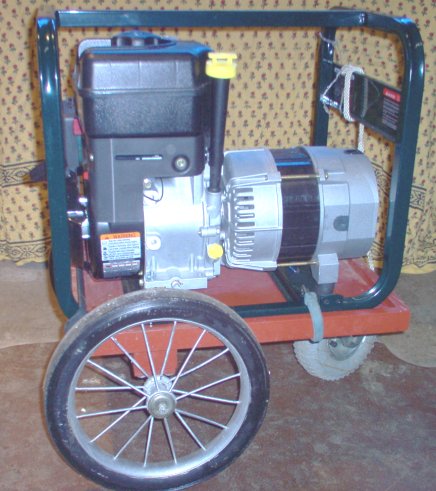
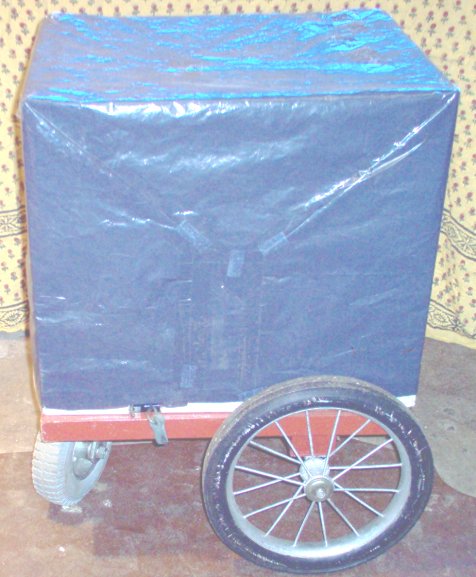
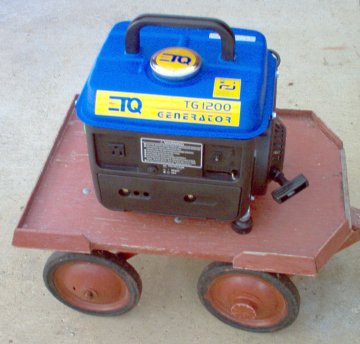
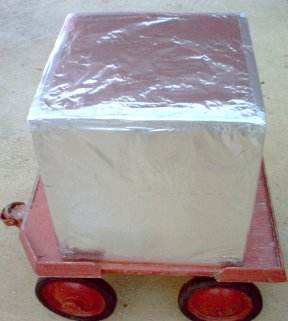
The Faraday boxes are extremely useful in keeping generators clean in storage, and thus the generator is ready for use when needed.
GENERATOR STORAGE A generator should NEVER be stored with fuel in the carburetor. As the gasoline evaporates it forms a varnish that can gum up the entire fuel system. It is better for the generator if it is run once a month - both for the engine AND the alternator portion. Now the problem. Most small generators have air cooled engines. To cope with the temperature extremes encountered during operation, the tolerances are greater than with water cooled engines. When started, the engines are cold and fuel can leak past the piston rings and contaminate the oil. The oil then becomes corrosive. When the engine is run until the oil is hot, the volatile corrosives boil off and the oil is safe for storage. The solution is to put enough gasoline in the fuel tank to run the generator for about 30 minutes. Start the engine, wait until it is warmed up and running efficiently, then plug in a 100 watt light bulb in a "trouble light" or clamp on light. The light wattage draw of the light bulb will exercise the alternator enough to keep it energized, yet not have enough draw to hurt the alternator when the generator runs out of fuel. That's right. You only put enough fuel in the tank to run the engine long enough to warm up, then let it run out of fuel. Then there cannot be any residual fuel in the carburetor or fuel lines, the engine oil will have become hot enough to volatize any gasoline seepage when it started under full choke, and the generator will then be ready for storage for another month. Wait until the engine has completely cooled down before covering it with the Faraday box! For long term storage, it is best to run the engine out of fuel (as above), remove the spark plug, squirt in some oil, then turn the engine over several times to make sure the oil covers the cylinder walls and rings. Replace the spark plug, then pull the starter cord until resistance is felt. That will indicate compression, the piston will be at the top of its stroke, and most of the cylinder wall will be below the piston rings and protected by the engine oil. Gasoline is a corrosive! It is not uncommon for engines in long term storage with the piston at the bottom of the stroke to get a rusty cylinder. By oiling the cylinder through the spark plug hole and leaving the piston at the top of the stroke, if any rusting takes place it won't be on the area scrubbed by the piston rings. If in doubt that the piston is at the top of its stroke, put a pencil through the spark plug hole until it touches the piston, then pull the starter cord. The pencil will move in and out as the piston goes up and down. When the pencil is mostly out of the cylinder, the piston is at the top of its stroke...leave it that way and replace the spark plug.
|
1. Food | 2. Manna Meals | 3. Water | 4. Sanitation |
5. Medical,
health |
| 6. Kerosene heaters and cookers | 7. Lighting | 8. Wood cooking and heating | | 9. Communications | 10. Essential Tools | 11. Home built items | | 12. Electrical; generators and power | 13. War preparedness | 14. Gardening |
|
HOME
|
PROPHECY |
PREPARATIONS |
QUICKENING NEWS |
COMMENTARY BY MILES |
| GUEST SUBMISSIONS | BOOKLETS BY MILES | CONTACT INFORMATION | | LINKS | RADIATION INDEX & JET STREAM | DEVOTIONAL ITEMS | | PHOTO INDEX | LIBRARY | SURVIVAL SHOP
|
|
|||||||||||||||||||||||||||||||||||||||||||||||||||||||||||||||||||||||||