|
A guide to self reliant living |
||||||
|
6. Kerosene heaters and cookers
12.
Electrical; generators
Miles Stair's SURVIVAL
Miles Stair's
SURVIVAL
|
KILLING HONEYBEES Sometimes it necessary to kill honeybees, particularly now that Africanized Honeybees (AHB) are in the Southern tier of states. The safest way to kill a swarm or cloud of honeybees is with very warm water, detergent, and a pressure sprayer, the same way professionals kill bees when a tractor trailer of migratory bee hives overturns or a colony of Africanized bees is encountered. VERY WARM WATER Most of the pressure sprayers on the market have plastic components, so using boiling water is not advisable. The hottest tap water you can manage is sufficient for this purpose. DETERGENT Any type of grease cutting detergent (not soap!) will work - laundry detergent, automotive degreaser, etc.
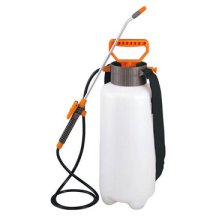
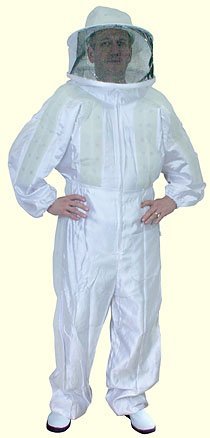
PRESSURE SPRAYER A pressure sprayer is used to give yourself some room from the colony by being able to spray up to 20 feet away. WHY IT WORKS Honeybees have exoskeletons, hard plates on their bodies which must move into or against another plate, as opposed to skin as we have. To keep the plates supple, they are coated with a waxy substance that keeps moisture in the bee and literally prevents the bee from bleeding to death. The spray of hot detergent water knocks any bees out of the air, as it saturates their wings and body, so they can no longer fly. It also quickly cuts through the waxy coating, thus all the plate joints "leak" bodily fluids and the bees die quickly. OTHER METHODS OF KILLING BEES In my many years as a beekeeper and president of a county bee club, I have seen many different methods attempted to kill bees, but none are as effective as hot water and detergent. One fellow tried to use a CO2 fire extinguisher and freeze the bees to death: it just made them REALLY angry. Another tried to use a powerful shop vac to suction the bees in and kill them by contact with the inside of the dust bin at high velocity: It works, but only if you can get the suction wand within a couple of inches of a bee. Those further away will be angry and try to get you. Insecticide does not work as quickly as hot water and detergent, and costs a whole lot more. KILLING YELLOW JACKETS IN THE GROUND This can get tricky, as usually you just see a few yellow jackets in the air and almost none at the entrance of their nest in the ground. So suit up and go looking for yellow jackets with a quart of finely ground flour in one gloved hand. When you see yellow jackets, throw some flour on them, then try to follow them back to their nest. The sun will reflect off the flour and give you a darn good chance of spotting the yellow jackets in the air from a distance. When you find the nest entrance, watch it for a few minutes to make sure that yellow jackets are not using a close by additional entrance. Once you have determined the entrance (or two, but not usually), throw a handful of flour directly on the opening and then leave. That night, when all the yellow jackets have returned to the nest, you can kill them all. Before it gets dark, fill a quart jar with gasoline, then put a lid on the jar. Then find a flat board at least a foot square...it can be plywood or a scrap of lumber. After dark SUIT UP, grab a flashlight, the jar of gasoline and the board and go looking for the nest. The flour on the entrance will glisten in the light from the flashlight, so it will be easy to find. Get ready, then pour the gasoline into the entrance of the nest and quickly cover with the board. Your work is done, so go back to reading. The board will keep the gasoline fumes in the nest where they will very quickly kill the entire colony of yellow jackets, including the queen and the brood. That yellow jacket nest is history.
RELATED LINKS:
|
|
||||