|
A guide to self reliant living |
||||
|
6. Kerosene heaters and cookers
12.
Electrical; generators
Miles Stair's SURVIVAL
Miles Stair's
SURVIVAL |
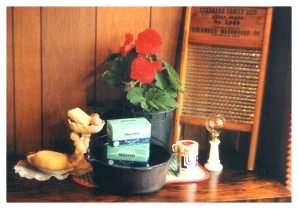
MAKING BAR SOAP There are many different ways and recipes for making bar soap, but the basic ingredients are lye and lard. Most people who make soap now use regular Red Devil Lye and any type of lard or fat, There are still people who make bar soap using lye water, and the ability to make soap from lye water could be very beneficial in the future.
CAUTION: LYE (Sodium Hydroxide) is caustic, corrosive, causes severe burns, and can be fatal if swallowed. Keep lye away from eyes, skin and mouth to avoid serious burns. Keep lye away from all contact with acids, children, pets, and husbands. If accidental contact occurs with skin, flush repeatedly with cold water. Yes, it is wise to have a healthy fear of lye or any caustic chemical. However, just remember that all the mothers before us have made soap using what was at hand. Women seemed to have survived to pass on the secret. For purposes of ventilation plus the volume of the batch, the soap making process is best done outside over a kerosene cooker or wood stove in a canning kitchen. It requires a large kettle, cast iron if you have one. Under primitive conditions, a wash tub over a small camp fire will work. The stirring is hard work, so bending over the tub is less tiring if the kettle is elevated. HOMEMADE SOAP WITH LYE WATER This is not so much a scientific recipe as an art form, and only practice will make it perfect. Lye water is boiled in a large stainless steel or cast iron pot, then 10 pounds or so of lard is added slowly, all the time being stirred with a long wooden spoon or slat. Then more lye water is added and the stirring continues until it thickens about like syrup. The harder the lard and the thicker the boiled mixture becomes determines how hard the soap will become. The soap is then poured into an enameled pan or even a wooden tray with shallow sides (2 inches or so) and allowed to cool. As it cools it gets harder, and when it is hard enough to hold shape it is sliced into "bars." When cold, the hard bars can then be levered out of the pan or tray and used as with any bar soap. There are many failures with this method due to the variable strength of the lye water, the type of ashes used (hardwood ashes make hard soap), and the type of fat available. But the failures are still soap - just not hard bar soap. The soft soap may still be used for dish washing, shampooing or general cleaning. It used to be a badge of honor for housewives to be able to produce only hard bar soap, and soft soap was looked at with disdain. After several generations passed and almost no one made soap and therefore had no memory of the pride of their grandmothers in making hard bar soap, soft soap became socially acceptable and is now widely used in America. So don't worry about whether the soap will be really hard or not: that comes with practice.
HOMEMADE BAR SOAP USING COMMERCIAL LYE This method cheats, using commercial lye and other ingredients to ensure that the end result is almost always hard. Perfume or scents may even be added to this formula if desired. Ingredients:
Save fat drippings in quart jars. When you have three quarts, thoroughly clean it by boiling it in an equal amount of water. Place kettle in a cold place so the fat can firm up. Cut fat from kettle sides. Pour off water and waste. Scrape off excess wastes from bottom of the lard cake. Clean kettle and replace lard cake. Melt over low heat. Dissolve the lye in one (1) quart cold water and let stand until cool (when the lye dissolves it heats the water), then add to melted fat slowly. Stir constantly. Mix other ingredients together and add to first mixture. If desired, 1/4 cup of pine oil may be added at this time. Stir until the whole mixture is thick and honey colored. Pour into a pan lined with clean white cloth (getting fancy now!). Before the soap becomes hard, mark pieces into the desired size or form into balls. When hard, set the pieces in such a way that they may dry out completely. The cooking process goes very quickly on this small batch of soap, but the lye, ammonia, pine oil, or even essential oils will give off fumes. If this soap is made in an indoor kitchen, the windows should be wide open and the house well ventilated. It is possible for the fumes to cause temporary allergy like symptoms, which is why even with a small batch it is better to make the soap outside. Now, since you are the only one in the neighborhood who knows how to make soap, you will have a monopoly on this item in bartering for other things you need. Wrapped in nice pretty paper, you are guaranteed a high "price" in trade for your soap. ------------------
|
|
||