|
|
|||||||||||||
|
6. Kerosene heaters and cookers
12.
Electrical; generators
Miles Stair's SURVIVAL
Miles Stair's
SURVIVAL
|
MAKING FARADAY CAGES
The reality of needing to protect all electronic equipment against EMP from a nuclear explosion over our shores is becoming imminent. We now live in perilous times. The world is a becoming dangerous place, with China now threatening Taiwan with annihilation from hundreds of neutron bombs. Russia is modernizing their military infrastructure with an emphasis on first strike capability, they have an stretegic alliance with China, and Putin is exporting "special nuclear materials" to Iran, Syria and Egypt. President Clinton renounced "launch on attack" in favor of absorbing a first strike without retaliation, while President Bush wants "first strike" authority to attack anywhere with nukes without warning, and it is easy to see that our enemies are virtually being invited to hit us with nukes! Iran has plans to do just that! Nuke Over U. S. Could Unleash Electromagnetic (EMP) Tsunami The information to follow on building "Faraday cages" is timely indeed. A single atmospheric nuclear detonation releases enough electromagnetic pulse (EMP) to equal 100,000 volts per meter (V/m). A single detonation 200 to 400 miles over the center of the continental United States would fry every unprotected computer chip from coast to coast, and from the middle of Canada to the middle of Mexico. And we are now into Solar Cycle 23, with solar flares common and expected to continue until the first of next year. CME's are capable of extreme damage to modern computerized equipment! Sure, we have our windup BayGen radio's and spare lap top computers, but unless electronic equipment is protected from an electromagnetic pulse, they will be fried!
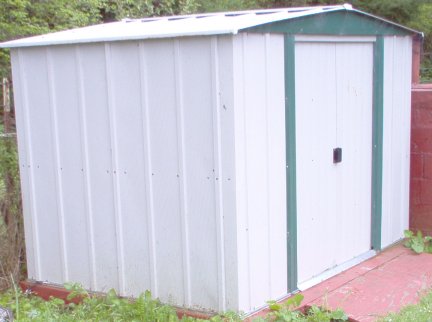
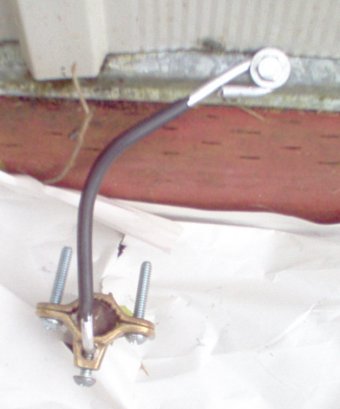
When Einstein and the others first refined and purified uranium, they took time off and studied its properties. That is when they discovered the "rays" that were harmful, as well as the phase transformations. In the course of their work, one of the scientists discovered that simply covering an object with a grounded copper mesh would stop virtually all electromagnetic radiation, whether proton or neutron. Obviously, they had to protect their monitoring equipment! Thus was born the "Faraday cage." The copper mesh, like 1 inch chicken wire, worked well in large uses, like covering buildings, and it is still in use today: FEMA headquarters buildings are dome-shaped earth-bermed structures, and under the earth is a copper mesh that extends out from the base and is secured by grounding rods. As an Electro Magnetic Pulse (EMP) travels to earth, whether from a Coronal Mass Ejection (CME) or a nuclear detonation in the atmosphere, it hits and runs along electrical power lines as well, building up voltage and amperage, which is what happened during the last solar storm a dozen years ago, blowing out transformers and leaving 6 million people in eastern Canada without power for weeks. To prevent that problem, if you have a hard-wired generator, the wiring from the generator to the house should run in conduit that is grounded. The generator itself can have the frame grounded for added insurance, but that ground wire MUST be insulated and run to a different ground rod well away from the ground rod for building and conduit! See the article on EMP and various grounding techniques for electrical appliances, plus grounding metal sheds for generators. "Electric fields travel in straight lines, unless bent by other fields. Theoretically, the bottom of a cage doesn t need to be closed. If someone could offer me actual EMP test data that an open bottom is OK, I d consider believing it. However, if you re in an area of high ionization, the field could bend around. Complete enclosure is the best technical solution. "Faraday cage material: Electric fields are best conducted by materials that conduct electric current the best silver is #1 and copper is #2. Aluminum is ~60% of copper. Iron/steel is farther down the scale. Aluminum is a good poor man s foil against EMP; double wrap it to be safe. I prefer copper foil." Ikstrums, Sept. 2, 2005
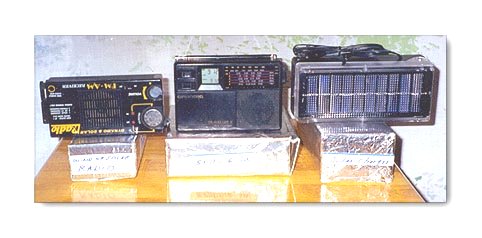
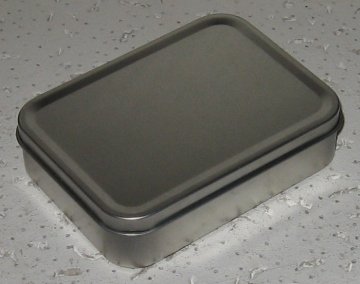
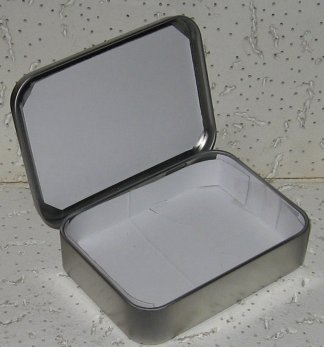
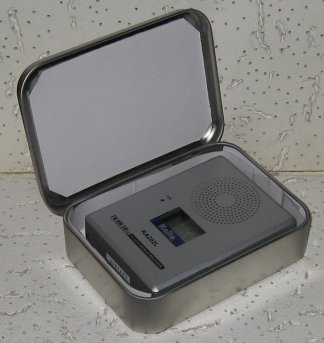
With radio's and smaller appliances, a Faraday cage can be built by using two cardboard boxes: one should fit tightly inside the other, and the item to be covered should itself fit reasonably well inside the smaller box. That is about the most work involved--finding the right size boxes! The outer box is then covered with aluminum foil or Mylar, as from a cheap "space blanket." A grounding wire is then taped to the foil. I then cover the foil with black 6 mil plastic, taped securely in place, to protect the foil from ripping. At the end of the ground wire I attach a cheap small alligator clip from Radio Shack. The item to be protected is placed inside the inner box, which acts as insulation from the outer box, and any EMP hitting the foil and is bled away by the ground wire.
Some medium sized electrical equipment can also easily fit into boxes covered with foil for EMP protection. My laptop computer, for example, fits easily into a Faraday box made from a box that held reams of paper: the entire lid is removable, allowing easy access to the laptop in its case, but is safely stored when not in use. For larger items which cannot be boxed, such as living room TV sets, etc, I tape a Mylar space blanket to a piece of 6 mil black plastic sheet, using double-sticky tape every foot or so to make sure the Mylar stays in place (it is slippery). I leave a 2 inch edge of black plastic showing all around the space blanket, and while taping down the edges I put on a short lead of ground wire. When it appears that EMP or CME's are on the way, the blanket can be draped over the appliance, the alligator clip attached to a small, unobtrusive ground wire behind the cabinet, and any electromagnetic radiation will be diverted to the ground wire. Very cheap, simple, and once done, items can be "draped" for protection very quickly indeed. The "EMP Blankets" roll up for storage, but can be unrolled and thrown over a TV/VCR setup, a computer/monitor combo, etc. As EMP comes from altitude and is line of sight, it's OK that the bottom isn't covered, as the bottom of the units sit on non conductive wood. The time to build Faraday cages or blankets is NOW, as when they are actually needed it will be far too late. Each box should be labeled on the ends and the top for the exact appliance they were built for, to eliminate any confusion when they must be protected in a hurry. Any electrical appliances not in use should be stored in the Faraday cage, where they will be kept clean, neat, in a known location, and protected against any sudden EMP surge. NOTE: There are electrical engineers who say that only ferrous metal boxes will protect against EMP-enhanced weapons, while other sources say EMP is not a problem at all. I'll take the middle ground.
A nuclear ground burst over 200 miles away should only result in 50,000 volts per square centimeter (sc) on your equipment, so the above Faraday cages should work. An air burst within 200 miles can result in up to 100,000 volts per sc, and that would require grounding of any Faraday cage to a separate ground rod well away from any house ground rods. An enhanced EMP weapon exploded at 200 miles elevation can yield over 120,000 volts per sc within up to 600 miles below the detonation point, and that would definitely require insulated metal boxes which are grounded. Remember, in the battle of warhead versus armor, the warhead usually wins, as the warhead can be made bigger. However, for those who build simple Faraday cages and live in an area not likely to receive a direct or close nuclear attack, the foil cages described should work. Those under a direct or close nuclear attack would probably not survive to use their electronic equipment in any case. For a more details examination on EMP and its effects, click at left. ~~~~~~ Question from reader Augustino: August 11, 2010 Miles - Response.
|
|
|||||||||||