|
A guide to self reliant living |
||||||||
|
6. Kerosene heaters and cookers
12.
Electrical; generators
Miles Stair's SURVIVAL
Miles Stair's
SURVIVAL |
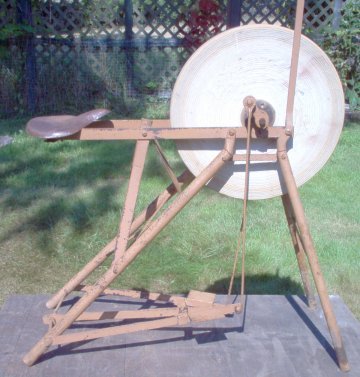
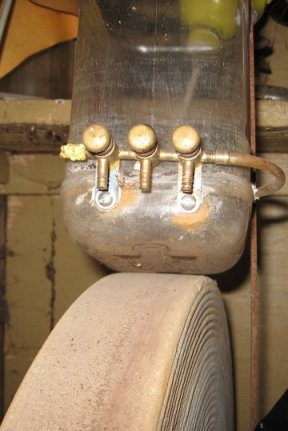
PRESERVATION OILS, LUBRICANTS, GRINDING AND SHARPENING STONES, FILES.... PRESERVING OILS One oil does not fit all uses. Preservative oils are not created equal. Lubricating oils for machinery generally lack rust proofing qualities. Shafts on food grinders, choppers, strainers, etc, should be lubricated with food grade oil, which usually means olive oil, but for long term storage they should be preserved with rust preventative oil. WD-40 has some fine uses, but the spray cans are for tourists. WD-40 is available by the gallon and can be used with a small hand-pump sprayer much more efficiently than a spray can. Though, their new silicone spray lubricant comes with torch technology to help to remove stuck nails and parts much quicker and deeper than other products. The finest rust preventive oil I have ever found is NAPA brand Chain and Cable Lube (part number "Mac's 1370"). NAPA is a national chain of auto parts stores, this particular product is unique to NAPA; other "chain and cable lubes" do not come close in quality, some being simply a sticky, long polymer goo. The discovery of the ability of NAPA Chain and Cable Lube to penetrate into the pores of steel and prevent rust has been known to loggers for many years. Out here in the rain forests of southwest Oregon, loggers would often find discarded wire rope, particularly chokers. The rain and salt spray created by the Pacific Ocean would render chokers absolutely stiff with rust after a single year on the ground. These hardy men would clean off the dirt, spray one side with NAPA Chain and Cable Lube, let the foam dissolve into a thin oil and penetrate the cable, then after awhile turn the cable over and spray the other side. Sometimes a second coat was needed, but often by the end of the day the choker was limp and supple as new. Use NAPA Chain and Cable Lube on all bare metal to prevent rust: especially warranted for saws, blades, or any metal which can rust, and you will have preserved your irreplaceable tools. Each spray can will cover a multitude of metal, while extra cans held in reserve should see you in good stead for years. SHARPENING STONES Sharpening stones come in many variations, shapes, grades and compositions, making it is hard to describe all of them. I have Arkansas stones, "mud" stones, "Carborundum" stones of silicon carbide, aluminum oxide stones, etc., in different sizes and shapes. Crystrolon and India stones are electric furnace abrasives. Arkansas stones are made of natural novaculite rock in ultra fine grit. "Queer Creek" mud stones are made from a high silicone content sandstone. All have a purpose, so special attention must be taken when considering the ultimate use of the stone. In years past, when most knife and edged tools had a hardness of 48 to 52 on the Rockwell "C" scale, standard Carborundum stones worked well, and still do for mild steels. Since the advent of 440 C, 154CM, and other hard, tough steels in the early 70's, with a hardness of 58 to 64 R. "C", harder stones such as aluminum oxide, give better use. Arkansas stones are generally used as hones. Once an edge has already been sharpened on an aluminum oxide stone, it can be honed or buffed with an Arkansas stone, but that is an extra step that need not be performed. Arkansas stones made their reputation back in the days when the only alternative was rough carborundum stones. Arkansas stones are expensive and relatively fragile, so with the finer grades of aluminum oxide stones now available, they are no longer the only stone upon which to depend. My particular choice as the best all around sharpening stone is a 2 inch by 8 inch aluminum oxide combination stone, with course and fine grade compositions on each side. This size is large enough for virtually any use. I keep a spare stone marked just for use with hand plane blades. All sharpening stones should be lubricated while in use, so the pores can float off and not clog the pores of the stone. Special honing oil is available, but kerosene works very well as a lubricant. In an emergency, even water may be used as a lubricant. If a stone cuts too rapidly, it can be tempered by soaking it in a pan of hot petroleum jelly, filling the pores of the stone with a thick lubricant. If the pores have been filled due to improper lubrication, clean your stone by soaking it in kerosene, then wash off the surface with a brush soaked in kerosene. This technique can even be used to reclaim almost worthless old stones that most people would consider useless or have already discarded! GRINDING WHEELS Hand cranked grinding wheels are extremely handy for a wide variety of uses, and I wouldn t be without one. They can be used to sharpen drill bits, put an edge on shovels, grind nicks out of hatchet blades, etc. I use a medium grit aluminum oxide wheel on my grinder, and can replace it easily with a fine grit wheel when necessary. Foot pedal grinding wheels are very rare, but useful.
FILES You are going to need metal cutting files. This is a given. Small triangular files are used to sharpen hand saw teeth. Mill bastard files (6" and 8") are used to sharpen cross cut saw teeth, axes, shovels, hoes, etc. When sharpening saws, the correct offset for the teeth must be maintained. A plier type tool works well on hand saws, but with the larger teeth of cross cut saws, tapping with a hammer, then checking against a gauge works best. Files are made from extremely hard carbon steel always susceptible to rust. Files need to be used with care. When using a file, stroke away from you, lift the file, then bring the file back for another stroke. DO NOT drag the file back over the steel, as that only serves to dull the teeth and clogging them with debris. Protect files in storage from rust with a good rust preventive oil. Before use, and before storage, clean files with a wire brush and kerosene. Treated with respect, files will last for decades! CARE OF TOOLS Treat each tool as if it were the last one you will ever own. It may come down to that! Storage in a dry, well ventilated area is mandatory. Obviously, all dirt, grass, etc, should be removed with a scraper or wire brush, even washing with soap and water if necessary, then thoroughly dried and oiled before storing away for a future use. Wooden tool handles should be scraped smooth with a piece of plate glass, or sanded, then stained and coated with linseed oil. It can easily take 3 days for linseed oil to soak in and "dry," and several coats will be needed; select an area in which to hang the tools while they are drying. I use Old English walnut stain and furniture polish as the first coat, then successive coats of linseed oil. I am pleased to say my tool handles look like finely finished gunstocks. A smooth, well finished tool handle will not cause blisters or slivers on your hands during hard use! There are of course many different ways to store tools and equipment, this is your decision. One fellow I know grew up on a farm during the Great Depression, in North Dakota. In the fall, the job for the boys was to wash off all the disks, plows, harrows, etc, clean and dry them thoroughly, then take them into a barn or shed for winter storage. There they were elevated and placed on blocks, any bearings lubricated, then the entire implement coated with linseed oil. In the spring, those tools were in perfect operating condition, ready for use. Tools in use all the time, such as shovels, received a different treatment. They would fill a 5 gallon bucket with sand, saturate the sand with used engine oil, then place it in a covered location. After a shovel was used, it was washed off and the blade stuck into the oily sand. The next time the tool was used, it was clean, sharp, and rust free. It doesn t matter which technique of tool preservation you use as long as it s effective. The main objective is to protect and preserve your tools so they will be there to serve you far into the future. ------------------
|
1. Food | 2. Manna Meals | 3. Water | 4. Sanitation | 5. Medical, health |
| 6. Kerosene heaters and cookers | 7. Lighting | 8. Wood cooking and heating | | 9. Communications | 10. Essential Tools | 11. Home built items | | 12. Electrical; generators and power | 13. War preparedness | 14. Gardening | |
|
||||||